


描述
Product Overview
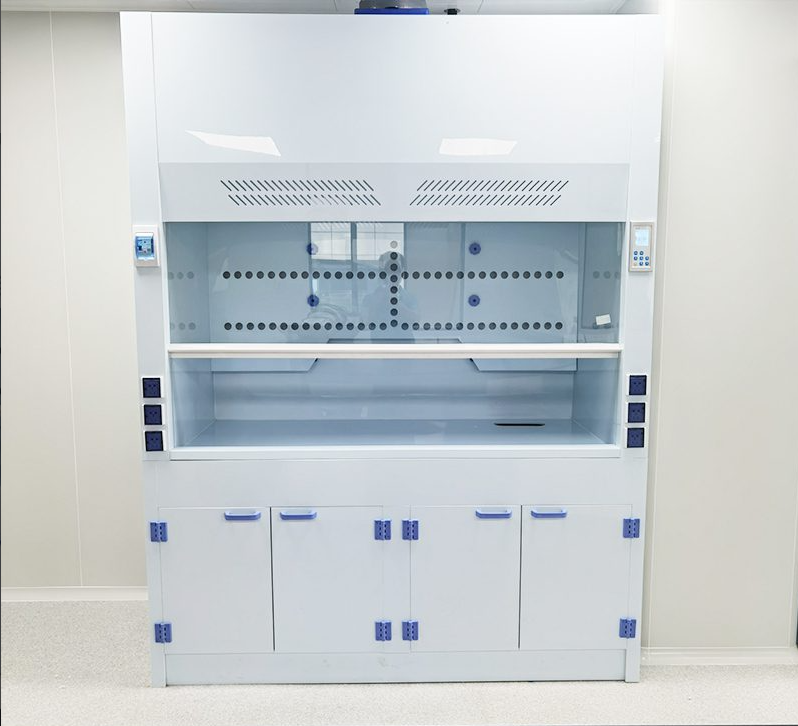
Polypropylene Laboratory Fume Hood is a PP vertical fume hood for laboratory chemical operation, corrosive fume collection, and acid or alkali resistant ventilation. Model XC-23 is listed by XICHENG LAB as a standard PP fume hood with velocity control function, white color, corrosion resistance, acid and alkali resistance, and customization support for laboratory furniture and exhaust ventilation projects.
This product is designed for laboratories, chemical plants, hospitals, schools, and other experimental rooms where the fume hood body may be exposed to corrosive chemical conditions. The source product data lists an 8 mm PP plate welded cabinet body, PP work table, toughened glass window, PVC white board adjusting door frame, and standard size options of 1200x800x2350 mm, 1500x800x2350 mm, and 1800x800x2350 mm.
For buyers comparing laboratory fume hood materials, the main reason to consider a polypropylene fume hood is chemical resistance. PP construction is commonly selected when acid fumes, alkali fumes, wet chemical operation, or corrosion-sensitive laboratory work may shorten the service life of ordinary painted steel furniture. The final selection should still confirm the chemical list, working temperature, exhaust route, face velocity target, and project standard before ordering.
Product Selection Summary
- Definition: Polypropylene Laboratory Fume Hood is a corrosion-resistant PP fume hood used for laboratory fume collection and controlled exhaust during chemical operation.
- Model: XC-23, listed as a standard PP vertical fume hood for laboratory furniture and ventilation equipment applications.
- Good fit: Suitable for laboratories that require PP material, acid and alkali resistance, corrosion-resistant cabinet construction, and standard or customized fume hood sizing.
- Not a good fit: Not the first choice for high-temperature processes outside normal-temperature use, non-ventilated chemical storage, or rooms without a planned exhaust path.
- Key specs: Buyers usually compare model number, material, cabinet size, hood type, function, corrosion resistance, color, customization, warranty, packaging, and ventilation requirements.
- Quote inputs: XICHENG LAB needs required size, quantity, laboratory application, chemical process, exhaust route, utility needs, destination country, and customization request.
Why PP Material Matters for Laboratory Fume Hoods
PP material matters when the laboratory process may involve corrosive vapors, acid handling, alkali handling, or wet chemical operation. A fume hood cabinet made from PP plate can be more suitable than ordinary steel furniture when the project needs corrosion resistance in the hood body, work table, accessories, and inner operating area.
The XC-23 source product description lists the cabinet body as 8 mm PP plate porcelain-white welding. This detail is important for buyers because cabinet material and plate thickness affect chemical resistance planning, structural rigidity, cleaning expectations, and long-term maintenance. The source data also lists PP injection-molded handle and hinge accessories, a PP board table, a toughened glass window, and PVC white board material for the adjusting door frame.
PP is not a universal answer for every laboratory. Before selecting a polypropylene fume hood, the buyer should confirm chemical compatibility, operating temperature, exhaust air condition, work process, and whether fire, heat, solvent, or special compliance requirements call for another material strategy. For normal-temperature corrosive chemical operation, PP fume hood construction can be a practical choice when matched with the correct ventilation design.
Source Product Specifications
| Item | Value |
|---|---|
| Product name | Fume Hood / Polypropylene Laboratory Fume Hood |
| Model NO. | XC-23 |
| General use | Laboratory Furniture |
| Function | Velocity Control |
| Feature | Corrosion Resistance, Acid & Alkali Resistant |
| Hood type | Standard |
| Color | White |
| Material | PP Material / Stainless Steel listed in source data; PP construction is the focus of this product page |
| Cabinet body | 8 mm PP plate welding, porcelain white |
| Work table | PP board |
| Window | Toughened glass |
| Adjusting door frame | PVC white board material |
| Application | Laboratory, chemical plant, hospital, school, and related experimental operation areas |
| Working temperature | Normal Temperature |
| Customization | Customized configuration accepted |
| Certification listed | CE |
| Warranty period listed | 1 Year |
| Minimum order | 1 PC listed in source data |
| Package | Bubble film |
| Transport package | Wooden frame |
| Place of origin | Guangdong, China |
Standard Size Options
The XC-23 source product page lists three standard PP fume hood sizes and one connected type PP fume hood size. Standard size selection should start with the laboratory bench layout, operator workflow, equipment placed inside the hood, exhaust duct route, and project ventilation design.
| Product Type | Specification | Remarks |
|---|---|---|
| Standard PP fume hood | 1200x800x2350 mm | 8 mm |
| Standard PP fume hood | 1500x800x2350 mm | 8 mm |
| Standard PP fume hood | 1800x800x2350 mm | 8 mm |
| Connected type PP fume hood | 2400x800x2350 mm | 8 mm |
A 1200 mm width fume hood is usually considered when the laboratory has limited bench space or smaller routine operations. A 1500 mm or 1800 mm width fume hood gives more working area for larger apparatus, wider chemical preparation tasks, or multiple operation points. The 2400 mm connected type should be reviewed as a project-specific option rather than selected only by width.
Construction and Component Details
The cabinet body, work table, window, door frame, and accessories influence how a fume hood performs in daily laboratory use. The source product description lists an 8 mm PP plate welded cabinet body with bending resistance and acid-base resistance. It also lists a PP board table, toughened glass window, and PVC white board material for the adjusting door frame.
- Cabinet body: 8 mm PP plate welding in porcelain white, used for corrosion-conscious laboratory fume hood construction.
- Accessories: Handle and hinge accessories are listed as PP injection molding for corrosion resistance.
- Work table: PP board work surface supports chemical operation where PP material is suitable.
- Window: Toughened glass gives visual access to the operating area while supporting normal fume hood workflow.
- Door frame: PVC white board material is listed for the adjusting door frame.
- Optional display: The source product description notes that a column control panel can use a TFT color LCD screen, with interface and company information customization available.
Laboratory Applications
Polypropylene Laboratory Fume Hood is suitable for laboratory environments where chemical resistance and controlled exhaust are part of the selection decision. The source product data lists laboratory, chemical plant, hospital, and school as application areas. In practical selection, the buyer should describe the exact process instead of only naming the building type.
- Chemical laboratories: For routine chemical operation, sample preparation, and work that may involve corrosive fumes.
- Hospital laboratories: For laboratory rooms that need corrosion-conscious work areas and controlled exhaust planning.
- School laboratories: For teaching or training labs where PP fume hood construction and standard sizes may fit project furniture layouts.
- Chemical plant laboratories: For testing rooms, QA laboratories, or preparation areas connected to plant operations.
- Wet chemistry areas: For processes where corrosion resistance, work surface cleaning, and exhaust collection must be considered together.
Ventilation and Velocity Control Considerations
The source data lists the function of this PP fume hood as velocity control. For a laboratory fume hood, velocity control should be understood as part of the ventilation design rather than a standalone feature. The final airflow depends on fume hood size, sash opening, exhaust duct condition, fan selection, project standard, and whether the system uses constant or variable air volume control.
Before ordering, buyers should confirm the required face velocity target, exhaust volume, duct route, fan pressure, and whether airflow monitoring or integration with a building management system is needed. If the fume hood exhaust contains acid gas or corrosive fumes, the exhaust path may also require a wet scrubber or other laboratory exhaust treatment equipment before discharge.
XICHENG LAB can review fume hood selection together with related products such as exhaust fans, PP ducting, air dampers, airflow control valves, VFD fan control, and laboratory exhaust treatment equipment. This is important because a fume hood cabinet alone does not define the full safety or ventilation performance of the room.
Customization Options
The source product data lists customized service and notes that the front of the cabinet can include a customer logo. It also notes that the control panel display interface, contact number, and company information can be customized when a TFT color LCD screen is used. For project inquiries, customization should be defined clearly before quotation.
- Cabinet size or connected fume hood layout
- Logo placement on the front of the cabinet
- Control panel display interface and company information display
- Work table, window, door frame, and accessory configuration review
- Ventilation interface, duct route, exhaust fan, and treatment equipment coordination
- Packaging, shipping, and project documentation requirements
How to Select the Right PP Fume Hood Size
Selecting the right polypropylene fume hood size is not only a question of width. A buyer should consider the operator’s working space, chemical containers, apparatus height, sash operation, duct route, and whether the laboratory furniture layout allows service access. A 1200 mm fume hood may be enough for compact chemical operation, while 1500 mm or 1800 mm options provide more working width for larger processes.
- Confirm the work process: List the chemicals, containers, apparatus, and normal operating steps.
- Confirm the installation space: Measure available width, depth, height, and service clearance in the laboratory room.
- Choose a listed standard size: Start with 1200x800x2350 mm, 1500x800x2350 mm, or 1800x800x2350 mm if the room layout allows.
- Check ventilation design: Confirm face velocity target, exhaust volume, fan pressure, duct path, and discharge requirement.
- Review corrosion condition: Confirm whether PP material is suitable for the chemicals and normal operating temperature.
- Define customization: Send logo, display interface, cabinet, packaging, and project documentation needs before quotation.
Fit / Not Fit
| Good Fit | Not A Good Fit | Consider Instead |
|---|---|---|
| Laboratory chemical operation requiring PP material and corrosion resistance | High-temperature work outside normal-temperature use | Stainless steel fume hood or another material strategy after technical review |
| Hospital, school, laboratory, or chemical plant furniture projects | Rooms without an exhaust route or ventilation plan | Ductless fume hood only if filtration and chemical compatibility are confirmed |
| Projects that can use 1200, 1500, 1800, or connected 2400 mm PP fume hood sizes | Simple storage or non-ventilated chemical handling | Chemical storage cabinet, laboratory furniture, or local exhaust solution depending on the process |
| Corrosion-sensitive wet chemistry or acid/alkali resistant ventilation projects | Applications where PP is not compatible with the chemical or thermal condition | Confirm chemical compatibility and material selection before purchase |
Related Products for a Complete Ventilation System
A polypropylene laboratory fume hood is often one part of a larger laboratory ventilation system. The cabinet collects fumes at the working area, but the exhaust result also depends on ducting, fan selection, airflow control, and exhaust treatment. If corrosive exhaust cannot be discharged directly, a scrubber or other treatment product may be needed.
- Ducted Laboratory Fume Hood for general ducted laboratory exhaust applications.
- Laboratory Fume Hoods for comparing ducted, ductless, polypropylene, stainless steel, and walk-in fume hood options.
- Laboratory Exhaust Treatment for wet scrubbers and treatment equipment used with acid gas or corrosive exhaust.
- Airflow Control Valves for laboratory airflow control and ventilation system coordination.
- VFD Fan Control for exhaust fan speed control when the project requires adjustable airflow.
Information Needed for Quotation
To quote a Polypropylene Laboratory Fume Hood accurately, XICHENG LAB needs enough project information to confirm size, material suitability, customization, packaging, and ventilation requirements. Sending only the product name usually leads to repeated clarification, especially when the project involves corrosive chemicals or laboratory exhaust treatment.
- Required model or product name: PP vertical fume hood / XC-23
- Required size: 1200x800x2350 mm, 1500x800x2350 mm, 1800x800x2350 mm, 2400x800x2350 mm connected type, or custom size
- Quantity and destination country
- Laboratory type, chemical process, and corrosion condition
- Normal operating temperature and any special chemical compatibility concern
- Required exhaust path, face velocity target, airflow, or fan information if available
- Customization needs for logo, control panel display, service fittings, packaging, or documentation
- Project drawings, tender specifications, or existing laboratory layout if available
FAQ
What is a polypropylene laboratory fume hood used for?
A polypropylene laboratory fume hood is used for laboratory chemical operation, corrosive fume collection, and acid or alkali resistant ventilation. Model XC-23 is listed for laboratory, chemical plant, hospital, school, and related laboratory furniture applications.
What standard sizes are available for Model XC-23?
The listed standard PP fume hood sizes are 1200x800x2350 mm, 1500x800x2350 mm, and 1800x800x2350 mm. The source page also lists a connected type PP fume hood at 2400x800x2350 mm. Custom sizing can be discussed according to project requirements.
What material is used for the cabinet body?
The cabinet body is listed as 8 mm PP plate welding in porcelain white. The source product description also lists a PP board work table, toughened glass window, PP injection-molded handle and hinge accessories, and PVC white board material for the adjusting door frame.
Is this fume hood suitable for acid and alkali resistant applications?
Yes, the source product data lists corrosion resistance and acid and alkali resistance as product features. Buyers should still confirm the actual chemicals, concentration, temperature, and operating process before final selection because chemical compatibility depends on the working condition.
Does this product include velocity control?
The source product data lists the function as Velocity Control. In a project, velocity control should be reviewed together with hood size, sash opening, exhaust fan, duct pressure, airflow target, and any required control or monitoring device.
Can the fume hood be customized?
Yes. The source product page lists customization support. XICHENG LAB can discuss cabinet size, customer logo placement, control panel display interface, company information display, packaging, and other project-specific details.
Is PP material always better than stainless steel for fume hoods?
No. PP is useful for many corrosion-resistant laboratory applications, while stainless steel or another material may be better for high-temperature, mechanical, cleanability, or specific chemical conditions. Material selection should follow the chemicals, temperature, cleaning method, and project standard.
What should I send for product selection?
Please send the required hood size, quantity, laboratory application, chemical operation, exhaust or airflow requirement, destination country, and any customization request. Drawings, tender files, and photos of the installation area help XICHENG LAB confirm whether a standard XC-23 PP fume hood is suitable.