


Description
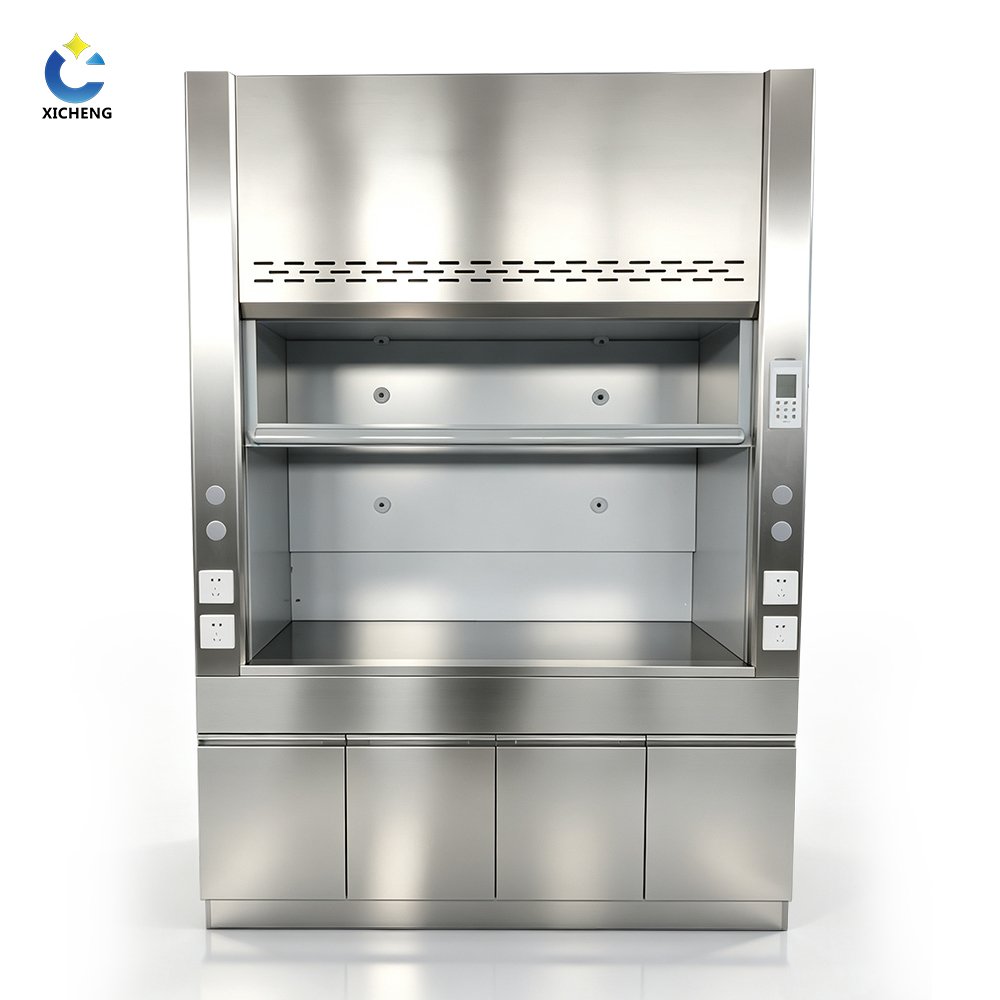
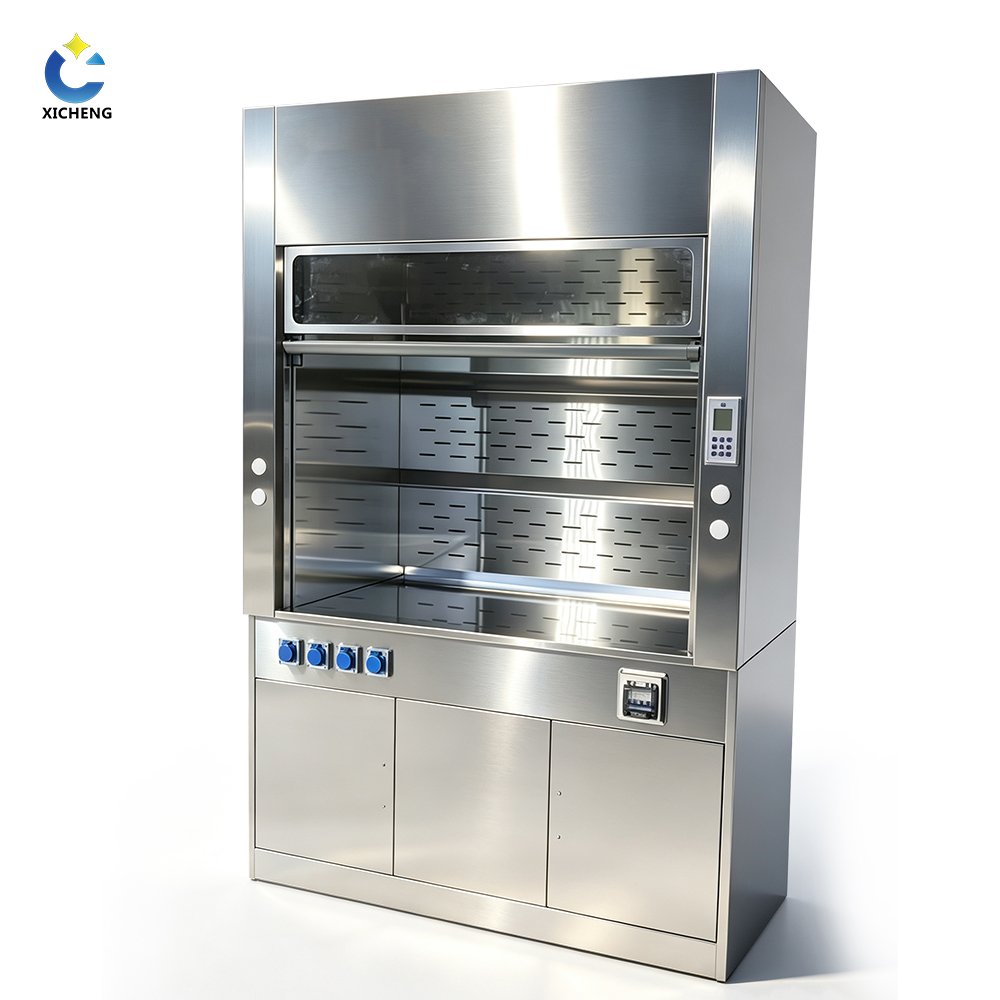
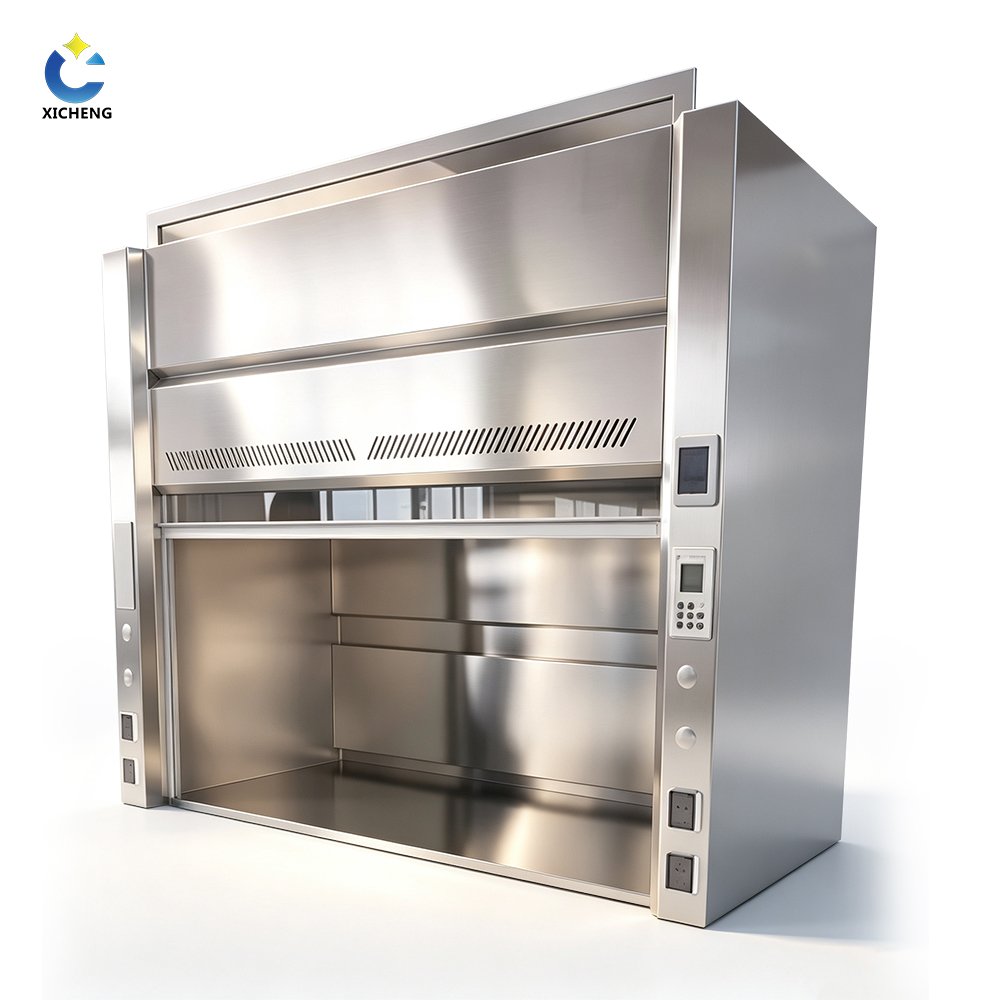
This stainless steel fume hood is a made-to-order, floor-standing ducted enclosure for chemical laboratory ventilation, sample preparation, and work that releases vapors or odors. Its steel grade, dimensions, work area, utilities, controls, and exhaust interface are configured around the approved process and laboratory layout.
- Stainless steel cabinet and work-area configuration, with 304 or 316 grade selected against the process conditions
- Vertically adjustable tempered-glass sash for access and visibility
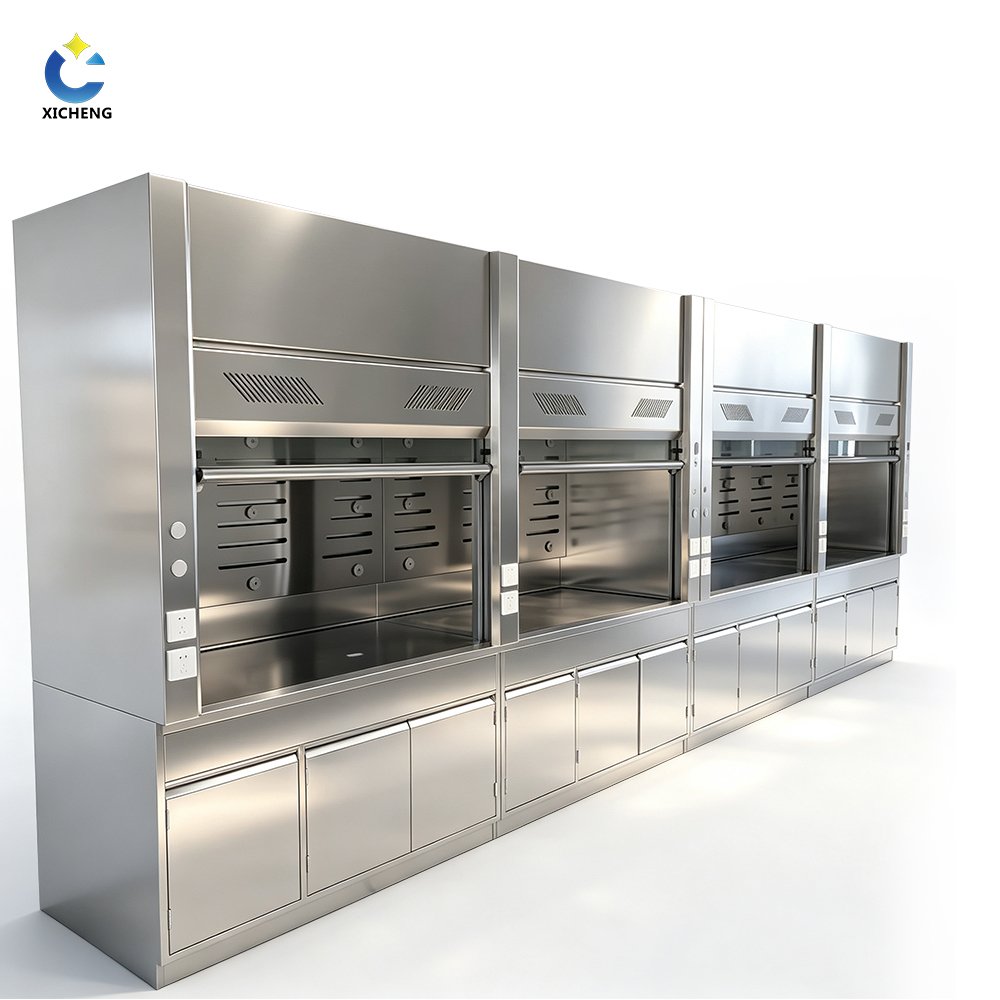
- Reference sizes of 1200, 1500, and 1800 mm, plus a connected 2400 mm layout
- Worktop, utilities, lighting, airflow monitoring, controls, and base-cabinet options
- Ventilation scope can include ducting, fan duty, airflow controls, and exhaust treatment when specified
Product overview
What this stainless steel fume hood is
A stainless steel fume hood is a ventilated laboratory enclosure that draws room air through the sash opening and sends contaminated air to a ducted exhaust system. It gives the operator a defined work zone for procedures that release chemical vapors, odors, or light airborne contamination. The sash provides access while forming a physical barrier at the front of the work area.
This configuration uses a floor-standing base and a full-height superstructure. Reference widths are 1200, 1500, and 1800 mm. A connected 2400 mm layout can be used when the apparatus or workflow needs a wider opening. The final internal dimensions, worktop layout, exhaust collar, and utility positions are shown on the approved drawing.
Hood body and exhaust system boundary
The hood body includes the enclosure, work surface, sash, lighting provision, service locations, and exhaust connection. It does not by itself set the airflow at the sash. Duct resistance, fan duty, sash position, room make-up air, and the control strategy all affect containment during operation.
The supply boundary should distinguish a hood body from a complete exhaust package. Ductwork, fan, CAV or VAV controls, room-pressure controls, and a wet scrubber can be supplied when listed in the agreed scope. When they are not listed, the customer or ventilation contractor provides and coordinates them.
How to evaluate fit
Material selection starts with the process. The chemical name alone is not enough. Concentration, temperature, liquid or vapor exposure, contact time, cleaning agents, and the likelihood of spills all affect whether stainless steel is suitable. Apparatus size, heat load, required services, and the working sash height affect the mechanical and ventilation configuration.
Before selection, confirm the available installation space, access route, ceiling clearance, duct path, power supply, and fan location. These inputs determine whether the hood should use 304 stainless steel, 316 stainless steel, another liner, or a different fume hood material.
Key features
Stainless steel construction for laboratory workflows
The stainless steel enclosure creates a rigid, cleanable metal work zone for day-to-day laboratory use. Smooth, accessible surfaces make visual inspection and routine cleaning more practical than porous or heavily jointed finishes. This configuration is relevant to analytical, pharmaceutical, quality-control, and research laboratories where surface condition and housekeeping affect the workflow.
304 and 316 stainless steel are available material options. 304 is widely used for general laboratory furniture and cleanable work areas. 316 may be selected when the process needs improved resistance to a defined chemical environment. Neither grade is suitable for every acid, halide, oxidizer, or heated process, so the exposed worktop, hardware, drain, exhaust connection, and downstream components need to be assessed against the submitted chemical list.
Airflow-aware layout and service integration
The reference range covers 1200, 1500, and 1800 mm widths at 800 mm depth and 2350 mm overall height. A connected 2400 mm configuration can be reviewed for a wider work area. Internal clearance, sash opening, base cabinet, service panels, and exhaust-collar location can change with the apparatus and room layout.
Worktop arrangement, sink or cup sink, electrical outlets, water and gas fittings, lighting, control panel, airflow monitor, branding, and connection interfaces can be specified with the hood. Equipment should be positioned so it does not obstruct the rear extraction path or occupy the sash opening. The drawing defines the location and material of every selected service point.
Technical specifications
Reference configuration and order-specific items
| Item | Specification status |
|---|---|
| General use | Laboratory furniture and localized exhaust enclosure |
| Product type | Floor-standing, ducted fume hood |
| Main material | Stainless steel; 304 or 316 grade and exposed components confirmed for the process |
| Primary function | Laboratory fume capture and ducted exhaust; compatible with CAV or VAV projects |
| Reference external sizes | 1200, 1500, or 1800 x 800 x 2350 mm; connected 2400 x 800 x 2350 mm |
| Reference face velocity | 0.3 to 0.5 m/s at the defined sash position; final value set by the ventilation design |
| Front sash | Vertically adjustable tempered glass |
| Work surface | Stainless steel or another project-specified surface |
| Controls | Basic switching, display, airflow monitor, CAV, or VAV options as specified |
| Utilities | Electrical, water, gas, vacuum, sink, or cup-sink provisions as required |
| Exhaust connection | Collar position and diameter defined on the approved drawing |
| Origin | Guangdong, China |
| Customization | Available for dimensions, layout, finish, services, controls, and exhaust interface |
The size range and face-velocity value are planning inputs. They do not replace the approved shop drawing or exhaust calculation. The final order specification records the selected steel grade, sheet construction, internal dimensions, sash opening, collar size, services, controls, and supplied accessories.
Reference sizes and custom dimensions
Size selection factors
Nominal width is only the first sizing decision. The internal work area must fit the apparatus while leaving clearance around it for airflow. Allow for support stands, tubing, cables, service fittings, and the movement needed to load or maintain the equipment. Tall apparatus may also change the working sash opening and exhaust requirement.
Room conditions matter as much as the equipment. Check door and corridor access, ceiling height, base-cabinet clearance, service entry points, and the duct route before approving a size. An 1800 mm hood can require more exhaust air than a 1200 mm hood at the same sash opening because the face area is larger.
Reference metric size options
The dimensions below are common planning configurations rather than fixed manufacturing limits. The hood width, depth, height, internal work zone, base arrangement, sash, worktop, utilities, and exhaust connection can be configured around the approved equipment and room layout.
| Nominal width | Reference external size (W x D x H) | Planning use |
|---|---|---|
| 1200 mm | 1200 x 800 x 2350 mm | Compact single-user station or smaller apparatus |
| 1500 mm | 1500 x 800 x 2350 mm | General chemical and analytical work |
| 1800 mm | 1800 x 800 x 2350 mm | Larger apparatus or more working clearance |
| Connected 2400 mm | 2400 x 800 x 2350 mm | Extended, multi-apparatus, or project-specific layout |
Layout review before ordering
The order drawing should show the external dimensions, usable internal width and height, maximum sash opening, work-surface height, base arrangement, service positions, and exhaust-collar location. It should also identify removable panels and the clearance needed for installation and maintenance.
For connection to an existing exhaust system, provide the available airflow and static pressure at the connection point. For a new system, provide the proposed duct route or room drawing so the fan, duct size, and controls can be evaluated with the hood.
Stainless steel construction details
Cabinet, baffle, and worktop construction
The hood body uses a stainless steel cabinet and work-area configuration. The selected grade, sheet construction, reinforcement, finish, baffle layout, and joint treatment depend on the approved specification. A cleanable work area benefits from smooth internal surfaces and accessible corners, while equipment-heavy applications may need additional support beneath the worktop.
The work surface can be arranged as a flat top or supplied with a raised edge, cup sink, full sink, drain, or equipment cut-outs. Every penetration affects how spills, cleaning water, and service lines move through the cabinet. These details need to be shown on the drawing before manufacture.
Window, sash frame, and hardware
The vertical sash uses tempered glass to maintain visibility while separating the operator from the work zone. The sash frame, guides, counterbalance, handle, stops, and seals need to move freely without narrowing the intended airflow path. Access panels should remain removable after installation.
Hardware includes hinges, fasteners, service fittings, drain components, and internal supports. These parts can face a different exposure from the outer cabinet. Their material and location should be checked when the process involves corrosive condensate, frequent wash-down, or aggressive cleaning agents.
Stainless steel grade and chemical compatibility
304 and 316 stainless steel are common laboratory construction options, but the grade name does not guarantee compatibility. Chloride-containing media, strong acids, oxidizers, elevated temperatures, and prolonged wet contact can attack stainless steel or its joints. Surface contamination and unsuitable cleaning products can also shorten service life.
The chemical schedule should list the chemicals, concentration range, operating temperature, physical form, contact duration, and cleaning method. If one component faces a harsher exposure than the rest of the hood, the work surface, liner, drain material, or downstream exhaust component can be specified separately rather than treating the cabinet as a single-material system.
Applications
Chemical laboratory and fume control use
The stainless steel chemical fume hood is intended for bench-scale procedures that release vapors, odors, or light airborne contamination and require ducted local exhaust. Typical work includes reagent preparation, sample treatment, transfer work, and analytical procedures. The process must remain within the material and ventilation limits set for the final configuration.
Apparatus should sit far enough inside the enclosure to allow air to enter across the front opening. Large equipment should be raised or positioned so it does not block the rear extraction path. Do not use the hood for permanent chemical storage because stored containers reduce working space and disrupt airflow.
Pharmaceutical and analytical work areas
Pharmaceutical, quality-control, and analytical laboratories may select stainless steel when they need a cleanable metal work zone, frequent inspection, or a coordinated finish with other laboratory furniture. Utility points and electrical outlets can be located around balances, instruments, and sample-preparation equipment.
A chemical fume hood is not a clean bench or biological safety cabinet. It protects the operator by exhausting air away from the room. It does not provide product protection or HEPA-filtered sterile airflow unless a separate engineered system provides those functions.
Industrial testing and research facilities
Industrial R&D and testing laboratories often use nonstandard apparatus, longer operating cycles, or higher utility loads. For these installations, the drawing should include equipment weight, heat output, dimensions, service connections, and the access required for maintenance.
Processes involving high heat, explosive atmospheres, radioisotopes, perchloric acid, or unusually aggressive chemicals need a dedicated hazard review. A general stainless steel fume hood configuration does not establish suitability for those applications.
Ventilation system compatibility
Fume hood body within the ventilation system
The hood contains the source and directs contaminated air toward the exhaust collar. The fan and duct system create the pressure difference that moves air through the sash opening. Stable containment depends on the complete path from the room, through the hood and ductwork, to the final discharge point.
Face velocity needs to be assessed at a defined sash position. A reference range of 0.3 to 0.5 m/s can support preliminary planning, but the project requirement, risk assessment, and commissioning test determine the final target. Excessive airflow can create turbulence and increase energy use. Insufficient airflow can reduce containment.
Hood body versus complete exhaust system
The hood body does not automatically include an exhaust fan, external ductwork, airflow-control valve, room-pressure controller, or scrubber. These items can be supplied as a coordinated package, or the hood can connect to a system designed by the customer’s ventilation contractor.
The supply scope should identify the boundary at every connection: exhaust collar, power supply, water and gas services, drain, control signal, fan starter, and building-management interface. This avoids gaps between the equipment supplier and the site contractor.
Inputs for ventilation selection
Ventilation selection requires the hood width, sash opening, target face velocity, duct route, fittings, fan position, discharge height, and any treatment equipment. Room volume, make-up air, pressure relationship, ambient temperature, and simultaneous hood operation may also affect the design.
For CAV or VAV systems, state the required control sequence, monitor type, alarm functions, emergency mode, valve interface, and building-management signal. This information allows the hood, airflow-control components, and exhaust equipment to be reviewed as one operating system.
Customization options
Controls, monitoring, and branding
The front fascia can carry a customer logo or project identification when branding is included in the order. Control options range from basic light and fan switching to a display for operating status, airflow information, alarms, and selected equipment commands.
A display does not replace the airflow-control system. Its functions depend on the controller, sensor, valve, fan interface, and control sequence. The supplied scope should identify every displayed value, command, alarm, and communication interface.
Utilities and work-area layout
Specify a flat worktop, raised edge, cup sink, full sink, drain, equipment cut-out, and the preferred stainless steel grade as required. Mark every electrical outlet, water fitting, gas fitting, vacuum point, and equipment penetration on a dimensioned room or bench layout.
For controls, state the power supply, fan arrangement, airflow strategy, alarm functions, emergency mode, interface language, and building-management requirements. Supply branding files in vector or high-resolution format with the required position and size.
Configuration scope
Each stainless steel fume hood is manufactured to the approved project configuration rather than supplied as one fixed standard SKU. The quotation, technical schedule, and approved drawing define the final steel grade, dimensions, work zone, services, controls, and exhaust interface.
Customization can cover the superstructure, base cabinet, worktop, sash, services, lighting, controls, exhaust collar, access panels, and connection interfaces. It can also include airflow valves, actuators, dampers, duct components, fans, or exhaust-treatment equipment.
Each custom item needs a clear description on the drawing and supply schedule. Generic language such as “standard accessories included” does not identify utility standards, plug types, fitting materials, or control functions for a site-specific order.
Selection notes
When a stainless steel fume hood is a good fit
A stainless steel fume hood is suitable when the laboratory needs a rigid, cleanable metal enclosure with custom worktop and service options. It is often selected for analytical, pharmaceutical, quality-control, and industrial laboratories where frequent cleaning, equipment support, and a coordinated metal finish are required.
The decision still depends on the process. Select stainless steel because its grade and construction suit the actual exposure, not because the material name sounds more durable than another option.
When chemical compatibility needs review
A compatibility check is required for chloride-containing chemicals, strong acids, strong oxidizers, elevated temperatures, prolonged liquid contact, abrasive residues, or aggressive cleaning agents. The same check applies when condensate can collect in the hood, drain, duct, or fan.
If the exposure is unsuitable for the proposed steel grade, the solution may use a different work surface, an internal liner, a different drain or duct material, or a PP or FRP hood. Changing the exposed component can be more practical than specifying one material for the complete system.
Information needed for selection
Provide a process description with the chemical list, concentration range, temperature, quantity, and operating time. Add the apparatus dimensions, required working clearance, utilities, preferred hood width, and installation drawing.
For the exhaust side, provide the target face velocity or site standard, sash position, duct path, fan location, and treatment requirement. This information allows the configuration to be matched to the equipment and identifies unresolved requirements before manufacture.
Packaging and quotation information
Packaging, minimum order, and warranty
The reference minimum order quantity is one unit. Warranty terms are confirmed in the formal quotation and depend on the agreed operating and maintenance conditions. Custom accessories and third-party components may carry separate warranty terms.
The hood is prepared for transport with protective packing and a wooden frame or case selected for the size and shipping method. Connected or unusually large units may be separated into installation sections to reduce handling risk. The packing list should identify each loose accessory and connection component.
Origin and production schedule
XICHENG manufactures the equipment in Guangdong, China. Production planning depends on the material grade, approved drawings, order quantity, control components, and other selected items. A hood with a standard external size can still need additional engineering time when the worktop, services, or control sequence is site-specific.
The formal quotation should state the drawing-confirmation period, production lead time, packing method, and delivery terms. The schedule should be tied to the approved configuration rather than a generic capacity statement.
Information needed for a quotation
Send the quantity, destination, preferred dimensions, application, chemical information, apparatus size, required utilities, and requested stainless steel grade if already specified. Include the exhaust route, fan scope, control requirements, and any scrubber or treatment requirement.
For custom installations, provide room drawings and photographs of the installation area. The response can then separate confirmed items from assumptions and define a clear equipment boundary.
Datasheet and technical review
Datasheet for the selected configuration
After the main configuration is selected, the datasheet records the model reference, external and internal dimensions, stainless steel grade, work surface, sash, services, electrical supply, controls, exhaust connection, accessories, packing method, and supply scope.
Read the datasheet with the approved drawing. A table can list a service point, but the drawing shows its exact position and whether it conflicts with apparatus or access panels.
Information needed for technical review
The technical review uses the process summary, chemical exposure, apparatus layout, room dimensions, service schedule, and ventilation information. Where a site standard or consultant specification applies, include the relevant section and any required tests or documentation.
Keep unconfirmed values marked for confirmation. Inserting a generic value can create conflicts later, especially for steel grade, sash opening, collar size, airflow, electrical standard, and utility fittings.
Optional Fume Hood Airflow and Sash Control Integration
The stainless steel fume hood can be integrated with sash sensing, a local controller, an airflow-control valve, exhaust-fan control and room-air coordination as a complete CAV or VAV package. Each control component is optional scope and must be listed in the quotation and control schedule. The stainless cabinet does not by itself establish airflow performance; containment is confirmed only after the hood and ventilation system have been installed and commissioned together.
Choose CAV or VAV from the Operating Requirement
A CAV system maintains one scheduled exhaust airflow at the approved sash position. A VAV system varies exhaust demand from sash position or measured face velocity and requires a control valve with the specified response. Choose between them from the operating sequence, process heat, expected sash use, room make-up air and required recovery time, while also confirming that sensing points and airflow-control components suit the cleaning and exposure conditions.
For a Venturi mechanism, compare the VAV Venturi Air Valve or CAV Venturi Air Valve. A rotating-blade solution can use the VAV Butterfly damper. Each valve still needs its own size, pressure, material, sensor, actuator and commissioning schedule.
Local Controller, Display, Alarm and Emergency Functions
The local controller and display package can show operating values, receive sash-position or face-velocity input, generate audible and visual alarms, and issue an emergency exhaust command. The control schedule must define the measured variable, engineering units, alarm limits, delay and acknowledgement behavior, emergency priority and BMS points. Reliable display data depends on the selected sensor range, accessible calibration arrangement and an agreed site acceptance method.
Automatic Sash Control and Safety Inputs
An optional automatic sash-control system is shown with a control panel, controller, reel-type displacement sensor, anti-pinch hand sensor, synchronized drive and personnel detection. The controller supports manual, follow and energy-saving modes and can accept presence, foot-switch and anti-pinch inputs according to configuration. The project must define movement limits, obstruction response, manual release, loss-of-power behavior and periodic safety testing. Automatic movement does not replace the hood operating procedure or airflow alarm.
Room Supply, Exhaust Tracking and System Boundary
The hood exhaust command affects room air balance. Where several hoods or other exhaust devices operate together, coordinate the valve signal with room supply, general exhaust and the target pressure relationship. The room controller, sensors, valve actuators, fan/VFD logic, BMS points and final testing remain separate scope unless the quotation lists them.
For a stainless-steel hood, coordinate the selected grade and cleaning regime with sensor penetrations, wiring routes and the exhaust-valve construction. A stainless cabinet does not mean the controller, actuator or every exposed airflow-control component uses the same grade.
For a project-ready control quotation, provide hood width, maximum working sash opening, target face velocity or airflow modes, valve location and available pressure, room supply/exhaust schedule, fan/VFD arrangement, sash-control requirement, alarm and emergency sequence, BMS protocol, point list and failure behavior. The returned proposal should identify every supplied sensor, controller, display, valve, actuator, cable and field responsibility.
Related products
Laboratory control and ventilation components
A complete fume hood installation may also require laboratory airflow-control valves, fume hood control systems, valve actuators, dampers, duct components, an exhaust fan, and project-specific exhaust treatment. These products should be selected from the same airflow and control basis used for the hood.
Where a wet scrubber or other treatment unit is required, provide the contaminants, concentration, temperature, airflow, and discharge requirement. The hood captures the source, while the downstream system determines how the exhaust air is conveyed and treated.
Related fume hood categories
Compare this stainless steel configuration with PP fume hoods for highly corrosive chemical environments and FRP fume hoods for composite construction requirements. The laboratory fume hood category provides the full material range.
Material comparison should use the process conditions, cleaning method, fire requirements, mechanical load, and expected service environment. No single hood material is the best choice for every laboratory.
FAQ
What is a stainless steel fume hood used for?
It is used for laboratory procedures that generate vapors, odors, or light airborne contamination and need ducted local exhaust. Common tasks include reagent preparation, sample treatment, transfer work, and analytical procedures, subject to the approved chemical and airflow limits.
Why choose stainless steel for a chemical fume hood?
Stainless steel provides a rigid, cleanable metal work zone and supports custom worktops, utilities, and equipment layouts. It is selected when those properties match the process. The material still requires a compatibility check because stainless steel is not resistant to every laboratory chemical.
Should I choose 304 or 316 stainless steel?
The choice depends on the chemical exposure, concentration, temperature, moisture, cleaning agents, and required finish. 316 stainless steel can offer better resistance in some environments, but the grade alone does not guarantee suitability. Confirm the material after the process information has been reviewed.
Is stainless steel suitable for every chemical?
No. Chlorides, strong acids, oxidizers, heat, and prolonged wet exposure can damage stainless steel or its joints. Some processes are better served by PP, FRP, a special liner, or a different work-surface and exhaust-component combination.
What sizes are available?
Reference external sizes are 1200 x 800 x 2350 mm, 1500 x 800 x 2350 mm, and 1800 x 800 x 2350 mm. A connected 2400 x 800 x 2350 mm layout can be considered for larger work areas. Final internal dimensions and sash opening are shown on the order drawing.
Can the hood be customized?
Yes. Options include dimensions, stainless steel grade, work surface, sinks, service fittings, outlets, lighting, controls, airflow monitoring, exhaust connection, base cabinet, finish, and branding. The drawing and supply schedule define the final scope.
What exhaust volume should be allowed for a stainless steel fume hood?
Comparable 1200 to 1800 mm stainless steel fume hoods are often planned across a broad range, roughly 700 to 2100 m3/h, because width, sash opening, hood geometry, and duct resistance vary. Do not use a generic range as a fan selection. The required duty needs the final hood drawing, design face velocity, duct route, fittings, treatment equipment, and site static pressure.
Are the fan, ductwork, and scrubber included?
Only if they are listed in the supply scope. The hood can be supplied alone or as part of a coordinated package with ductwork, fan, airflow controls, and exhaust treatment. System selection requires the hood airflow, duct route, contaminants, and site conditions.
Contact the Xicheng Engineering Team Today.
Send us your process chemicals and concentrations, operating temperature, preferred fume hood size, target face velocity, required utilities, and laboratory layout or CAD drawings. Our engineers will prepare a material-specific fume hood configuration, exhaust-system integration proposal, and quotation within 24 hours.
🎯 Shenzhen Office: No. 34 Zhenxing Road (Shengtaian Heavy Industrial Park B), Loucun, Guangming New District, Shenzhen, Guangdong, China
☎️ WhatsApp: +86 181 2647 8161
📬 Engineering Mailbox: fanalax34@gmail.com