


Description
PP/PVC Backdraft air air-air damper selection Summary
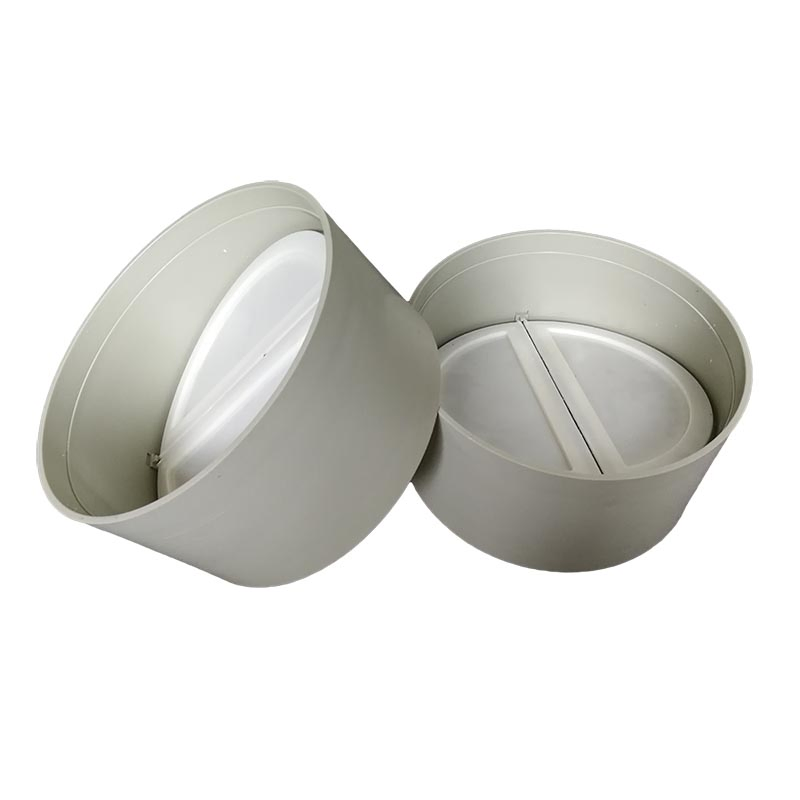
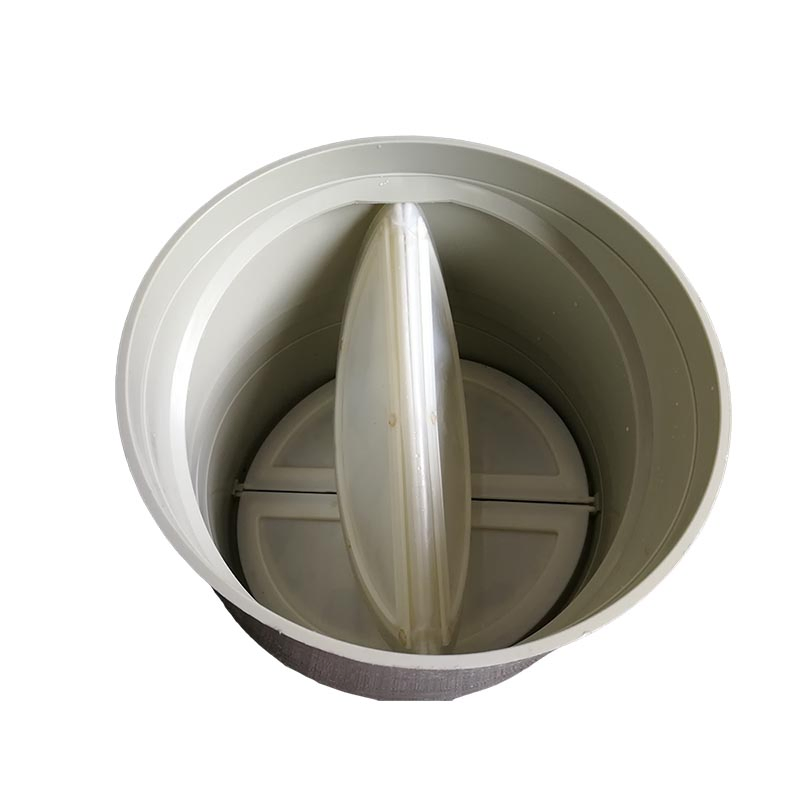
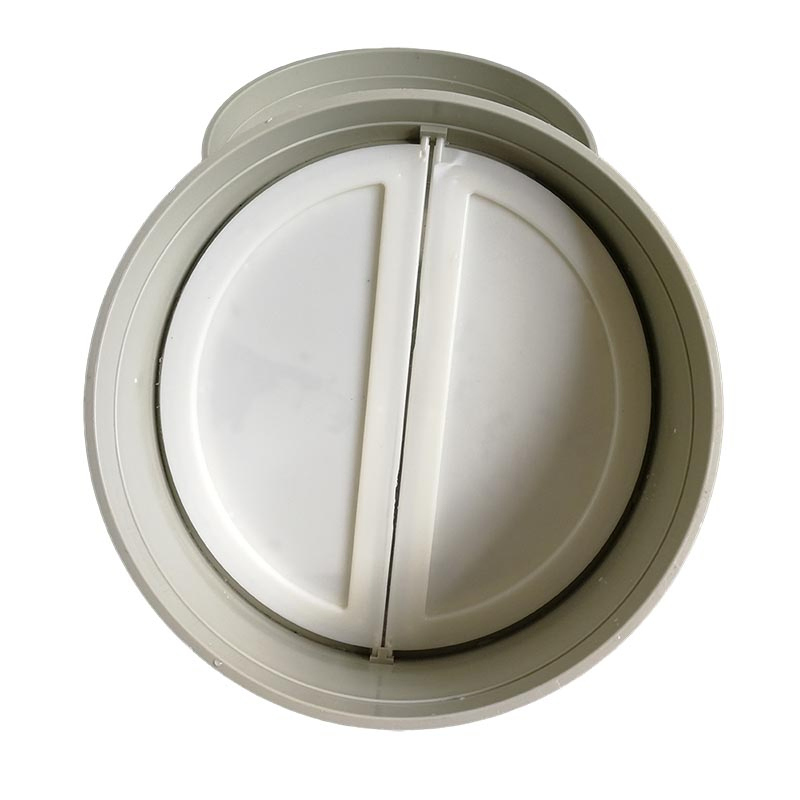
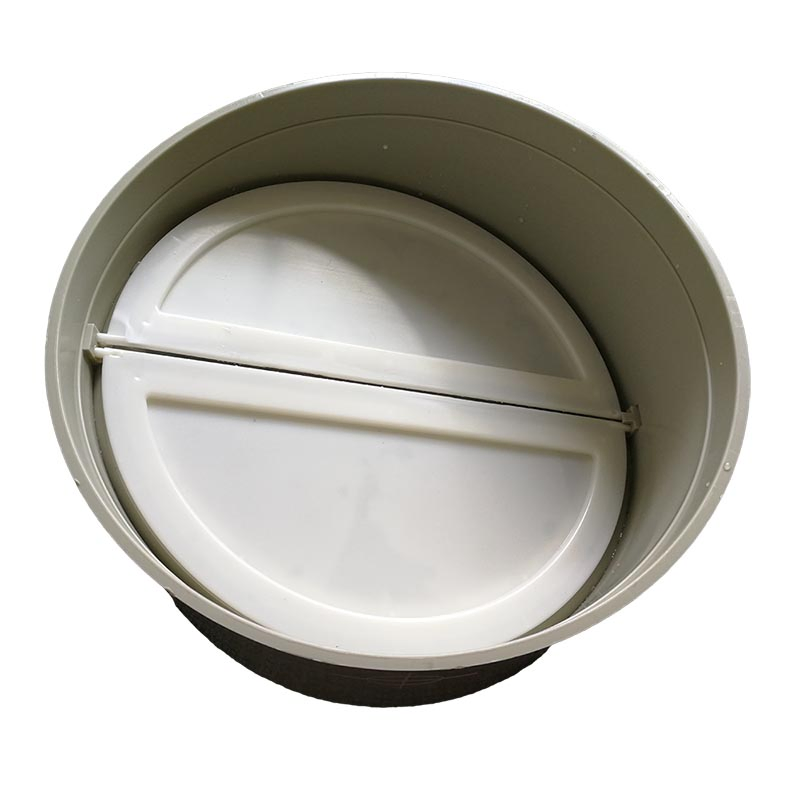
This PP/PVC backdraft damper is a passive one-way air damper for laboratory and process-exhaust branches. Forward airflow moves the inclined blade toward open. When the fan stops or pressure reverses, the blade returns toward closed to limit reverse flow into an idle branch or equipment connection. The air damper does not generate airflow, measure airflow, hold a commanded blade position or provide certified airtight isolation.
Shortlist this product only after the non-return duty is defined. The same duct diameter can produce different blade behavior when airflow, available pressure, orientation, connection geometry or deposits change. For a made-to-order air damper, the approved drawing and tag schedule must identify the configuration that applies to each location.
Key Product-Family Data
- Product configuration: PP/PVC backdraft damper
- Function: passive reverse-flow limitation in gas ductwork
- Materials: PP and PVC family configurations
- Reference size scope: OD 160-2000 mm
- Shapes: round or square
- Construction: injection molded or fabricated/processed
- Round connection: socket ends are available for the molded configuration
- Published temperature condition: below 80 C, subject to project review
These data define the available PP/PVC backdraft damper family, not one universal stock configuration. The reference OD range does not mean that every diameter is produced with the same method, socket, blade, shaft or reinforcement. Larger round units and square units may require fabricated construction even when a smaller round unit is injection molded.
Material must also be assigned to the complete exposed assembly. Selecting “PP” or “PVC” for the body is incomplete when the shaft, blade support, stops or sealing details see the same exhaust stream. The quotation should therefore return a component material schedule or identify any part that still requires chemical-compatibility review.
Round versus square construction is a project decision rather than a cosmetic option. Round molded socket ends may suit matching plastic ductwork, while fabricated round or square connections can be prepared around the actual duct dimensions and installation method. Final overall dimensions, clear opening and mating tolerances belong on the approval drawing.
Choose This Product Family When
Use this PP/PVC non-return air damper where an idle laboratory exhaust branch, shared exhaust header, standby fan path or waste-gas duct connection needs passive non-return action. PP or PVC construction can be considered when the selected material and all exposed components are compatible with the actual gas stream, temperature, moisture and deposits.
The project must also tolerate passive blade behavior. The blade responds to the pressure acting on it; it does not receive an electrical command. This is appropriate when the required result is to oppose unintended reverse flow, but not when the control sequence must positively open, close or modulate the duct at a specified signal.
- Non-return objective: identify what must be protected from reverse flow, such as an idle branch, stopped fan, process connection or upstream piece of equipment.
- Normal forward duty: provide minimum, normal and maximum airflow plus the pressure available at the air damper location. The blade must open without consuming an unacceptable share of the system pressure.
- Reverse condition: state the expected reverse pressure, operating sequence and consequence of backflow. A general preference for “less leakage” is not a measurable acceptance criterion.
- Material exposure: identify chemicals, concentrations, normal and upset temperature, moisture, condensate and deposits. Review the body, blade, shaft, stops and other exposed parts as an assembly.
- Installation position: show horizontal or vertical duct orientation, required airflow direction, available envelope and access. Gravity and shaft position can change opening and closing behavior.
- Duct interface: provide actual round OD or square dimensions, wall thickness and connection method. Do not select a mating interface from nominal size alone.
If these six inputs are available, XICHENG can return a technically identifiable air damper configuration instead of a generic size-only quotation. If airflow, pressure, orientation or chemical exposure is still unknown, the product can remain on the preliminary shortlist, but performance and construction should not yet be treated as approved.
Do Not Select It from the Product Name Alone
“Backdraft damper” describes the function, but it does not define opening pressure, forward pressure drop, closing response or reverse leakage. No universal value is established for every material, size, shape and orientation in the backdraft damper family. When one of these values affects fan selection, containment or cross-contamination risk, state the required operating point and acceptance method in the RFQ.
Do not use this backdraft damper as a fire damper, smoke damper, blast air damper, pressure-relief device, liquid valve or lockable maintenance-isolation device. It is also not a replacement for a balancing air damper, motorized shutoff air damper, VAV control valve, airflow sensor or branch controller. Those functions require separately selected equipment.
If the system requires a commanded open/closed position, evaluate a motorized damper. If it requires a fixed commissioning position, evaluate a volume-control air damper. If it must regulate measured airflow as the system pressure changes, evaluate the appropriate VAV valve and control package. The correct alternative depends on the required function, not on which product has a similar duct connection.
Information Required for a Project-Ready Quotation
Prepare one data line for each air damper tag. Provide the service description and quantity; minimum, normal and maximum forward airflow; available forward pressure; expected reverse pressure; round OD or square duct dimensions; wall thickness and connection method; horizontal or vertical installation; airflow direction; available envelope and access; and any preferred shaft position.
For material review, provide the gas or vapor composition, concentration, normal and upset temperature, moisture, condensate, droplets, particulate or deposit tendency, and cleaning method. When reverse flow has a measurable consequence, add the maximum acceptable leakage and the pressure and test condition at which it applies.
Also identify documentation and commercial requirements: approval drawing, component material declaration, CE-related documentation for the quoted configuration, inspection or functional test records, quantity, destination, packaging constraints and required delivery schedule. Requirements that affect construction or testing must be agreed before production rather than added after the drawing is approved.
The XICHENG quotation should return the proposed body and exposed-component materials, molded or fabricated construction, connection and overall dimensions, blade and shaft arrangement, permitted airflow direction and installation orientation, applicable operating conditions, accepted performance or test scope, included documents, exclusions, unresolved technical items and price. Those returned fields, together with the approved drawing, define the ordered air damper.
Key Specifications
The table separates available PP/PVC backdraft damper family data from the fields that must be confirmed for each custom order.
Available Backdraft damper Configurations
| Specification Field | Available Product-Family Data | Order Confirmation Required |
|---|---|---|
| Product type | Passive backdraft damper / non-return air damper | Required forward-flow direction and reverse-flow condition |
| Product configuration | PP/PVC passive backdraft damper | Tag quantity and project identification |
| Service medium | Gas and ventilation air | Gas composition, concentration, moisture, condensate and particulate loading |
| Material options | PP and PVC product-family configurations | Body, blade, shaft, stop, sealing and exposed-component material schedule |
| Reference size scope | OD 160-2000 mm | Actual outside diameter or duct dimensions and mating tolerance |
| Shape | Round or square | Required geometry, clear opening and installation envelope |
| Construction method | Injection molded or fabricated/processed | Construction selected for material, size, connection and duty |
| Connection | Socket ends are available for the molded round configuration | Socket, welded or fabricated interface and final connection dimensions |
| Blade arrangement | Inclined-blade design within the made-to-order backdraft damper family | Blade, shaft and stop arrangement for the selected shape and orientation |
| Temperature condition | Below 80 C | Normal and upset temperature checked against material and exhaust chemistry |
| Color | Beige or gray | Required color and material-grade availability |
| Customization | Made-to-order round and square configurations | Approved drawing, quantity and project-specific performance criteria |
OD 160-2000 mm is a family reference, not a universal stock list. The quotation must match the requested material, size and shape to a suitable construction and return the actual connection and blade arrangement.
Product-Family Data and Order-Specific Fields
Available family data
The available data establish product identity and support shortlisting. They do not establish opening, pressure-drop or closure behavior in every duct system; those results depend on the selected geometry, components, orientation, deposits and operating pressure.
This distinction is important for a made-to-order product. Family data answer what can be configured; the approved order data answer what will be manufactured, how it may be installed and which performance requirement applies to that specific tag.
Approved order data
The approved order must identify component materials, dimensions, construction, airflow direction, orientation and operating conditions. When performance is critical, it must also state acceptable opening pressure, forward pressure drop and reverse leakage together with the test or acceptance method. No single value applies to every made-to-order configuration.
Certification and Test-Document Scope
The made-to-order backdraft damper family is listed with CE. If the project requires CE documentation, material records, inspection or leakage verification, the RFQ must identify the exact document and applicable configuration. Drawing and test requirements that affect construction must be agreed before production.
The submittal may include an approved dimensional drawing, material declaration, identification record, inspection checklist and agreed functional or leakage test record. The quotation should state which records are included and which require project-specific testing.
How a Backdraft damper Works
The passive backdraft damper responds to airflow direction and pressure across its inclined blade. It does not receive a position command or calculate airflow. Actual movement depends on the selected geometry, shaft arrangement and installation orientation.
Forward Airflow Opens the Blade
Forward airflow creates a pressure difference across the blade. The resulting force must overcome the closing tendency, shaft friction, contact resistance, deposits and gravity. The blade then rotates toward open and creates a passage through the air damper.
At low airflow or low available pressure, the blade may open only partly. A molded round unit and a large fabricated square unit should not be assumed to share the same opening behavior. State any maximum opening or forward pressure-drop requirement before manufacture.
Blade area, mass distribution, shaft position, stops and deposits all influence movement. This is why a nominal duct match does not prove that the air damper will open fully at the actual operating point.
Reverse Flow and Fan Shutdown Allow Closure
When the fan stops, the forward force falls and the blade can return toward closed. Reverse pressure acts in the closing direction, helping limit migration into an idle branch or non-operating fan path.
Closed does not mean airtight. Clearances, shaft penetrations, blade edges, stops, deposits and reverse pressure affect leakage. Where reverse leakage matters, specify the allowable value and test condition; do not use passive closure as a personnel-protection barrier.
In a shared header, different fan combinations can change both the direction and magnitude of pressure across the blade. Commissioning should test the operating combinations that create the real forward and reverse conditions, not only a single fan-on check.
Opening Pressure, Gravity and Installation Orientation
Gravity may assist closure, resist opening or alter the resting position according to shaft direction and blade geometry. A configuration intended for one mounting position cannot be assumed to work unchanged in every horizontal, vertical, upward-flow or downward-flow duct.
The approval drawing must show the airflow arrow, duct orientation, shaft direction and blade travel. No universal opening pressure applies to every made-to-order configuration; provide the actual available pressure and verify movement during commissioning.
Why a Backdraft damper Does Not Balance Airflow
A balancing air damper holds an intentional blade setting. The passive blade remains free to move with local pressure and therefore cannot establish a fixed design flow. A project may need separate balancing and non-return devices at different locations.
Use a CAV Venturi air valve for scheduled constant airflow or a VAV Venturi air valve when airflow must follow a changing setpoint. Their active control duties are different from passive blade movement.
PP and PVC Material Options
PP and PVC are available within the made-to-order backdraft damper family, but the body material alone does not establish chemical compatibility. Review every component exposed to gas, vapor, moisture or condensate.
PP Configuration for Corrosive Exhaust Ducts
PP is directly documented for this backdraft damper and is a logical candidate for PP laboratory or process-exhaust ductwork. Molded and fabricated/processed construction can address different sizes and shapes. Confirm chemicals, concentration, temperature, moisture, upset emissions and cleaning agents before selection.
Acid-, alkali- or corrosion-resistant product language is not a universal approval. Dry gas and condensed liquid can create different exposures, and an upset mixture may be more severe than the normal process stream.
Large fabricated blades may require different thickness, reinforcement and shaft support from molded round blades. The approved drawing must identify both material and mechanical arrangement because blade mass and stiffness affect movement.
PVC Configuration and Duct-System Matching
PVC can be considered where the connected duct and project standard use PVC. State PVC explicitly in the RFQ; current evidence does not confirm every reference size, shape or construction in PVC.
The family carries a below-80-C condition, but this is not an automatic allowable temperature for every PVC construction or chemical mixture. Review normal, upset and condensate temperatures with the complete exposure.
Component-Level Chemical Compatibility Review
Gas and vapor composition
List process chemicals, concentrations, mixtures, cleaning agents and credible upset emissions. In a shared header, include chemicals that may reach the reverse side from other branches.
General terms such as laboratory exhaust or chemical fumes are insufficient for approval. Identify oxidizers, solvents, acids, alkalis or other relevant constituents by the information available to the project engineer.
Temperature, moisture and condensate
Provide normal and maximum temperatures plus humidity, mist, condensation and deposit conditions. Condensate or crystals can concentrate exposure and obstruct blade movement; identify drainage and cleaning requirements.
If washdown or flushing is planned, include the cleaning fluid, temperature, direction and drainage path. The air damper should not become an unreviewed low point where contaminated liquid remains around the blade or shaft.
Blade, shaft, stop and sealing components
The approved schedule should identify the body, blade, shaft, stops, contact surfaces, seals where used, fasteners and fabricated joints. A material change is acceptable only when chemical compatibility and free blade movement remain suitable for the documented duty.
Sizes, Shapes and Duct Connections
Backdraft air air-air damper sizing must coordinate the duct opening, connection, blade movement and available pressure. The made-to-order backdraft damper family covers round and square configurations within a reference OD scope of 160-2000 mm, using molded or fabricated/processed construction as appropriate.
Reference OD 160-2000 mm Product-Family Scope
OD means outside diameter, not nominal size, clear internal diameter or socket dimension. The reference scope is not a continuous stock series and does not confirm every combination of material, shape and construction.
Provide actual round OD or both square duct dimensions, wall thickness, airflow and available pressure. XICHENG should return the clear opening, overall length and connection dimensions on the approval drawing.
Matching nominal size alone is insufficient. A restricted clear opening can add resistance, while a large blade can require additional review of mass, stiffness, shaft support and available opening force.
Injection-Molded Round Socket Construction
XICHENG backdraft-air damper information describes one-piece injection-molded round construction with socket ends. Confirm mating duct OD, socket dimension, insertion depth, tolerance and joining method. Excessive insertion, weld bead, adhesive or distortion must not enter the blade path.
Fabricated Round and Square Construction
Fabricated construction supports larger or project-specific round and square designs. Confirm body dimensions, clear opening, wall thickness, connection, blade swing, shaft direction, stops and external clearance. Do not assume that enlarging a molded design preserves the same opening behavior.
For a square unit, identify which side is horizontal in the installed position. For a fabricated round unit, distinguish body OD, collar or flange dimensions and clear internal opening. These details control both site fit and blade action.
Connection Drawing and Duct Coordination
The drawing must identify duct material, body and connection dimensions, airflow arrow, installed orientation, shaft direction, blade envelope and access. For flanges, include thickness, outside dimensions, bolt pattern and gasket requirement.
Support adjacent ductwork so its weight, misalignment or thermal movement does not distort the body. Avoid internal ledges and low points that collect condensate or solids. Resolve any difference between nominal size, actual OD, orientation and joining method before fabrication.
Coordinate inspection access before the duct is enclosed. Adjacent elbows, reducers, supports and equipment nozzles should not block the blade area or require dismantling a long duct run for routine examination.
Laboratory and Corrosive Exhaust Applications
The PP/PVC backdraft damper is intended for gas-duct locations that need passive one-way airflow. Application fit depends on available pressure, orientation and actual chemical exposure.
| Candidate Application | Non-Return Function | Conditions to Confirm |
|---|---|---|
| Laboratory exhaust branch | Limits migration toward an idle branch | Airflow, pressure, orientation and chemistry |
| Local equipment exhaust | Reduces backflow after fan shutdown | Containment duty, fan sequence and leakage criterion |
| Chemical-process duct | Opposes reverse transport through an idle line | Chemicals, temperature, condensate and deposits |
| Waste-gas treatment connection | Limits reverse flow toward upstream equipment | Fan/scrubber sequence, droplets and pressure |
| Shared exhaust header | Helps isolate non-operating branches | Operating combinations, reverse pressure and access |
| Standby fan duct | Opposes flow through a stopped fan path | Fan arrangement, orientation and isolation level |
These are candidate uses, not automatic approvals. Check every tag against the actual duct layout, fan sequence and acceptance requirement.
Laboratory General and Local Exhaust Branches
In shared laboratory systems, pressure from operating branches can drive air toward an idle duct. This non-return air damper can limit that path, but it must not reduce required fume-hood or local-exhaust airflow. Airflow monitoring and control remain separate functions. See related Laboratory Ventilation Components.
Provide the lowest operating airflow and available pressure for containment-critical branches. A blade that opens only partly can add resistance even though its non-return direction is correct.
Chemical Process and Waste-Gas Ductwork
Process and treatment ducts may carry mist, crystals or sticky deposits that obstruct the blade. Provide chemistry, contamination, cleaning and fan/scrubber operating sequences, including startup, shutdown and upset conditions.
A location near a scrubber, fan or process vessel may experience condensate, droplets or pressure changes different from the upstream branch. Review these local conditions rather than relying only on a general system description.
Shared Exhaust Systems and Idle-Branch Backflow
For a shared header, provide the duct layout and operating matrix. Passive closure limits reverse flow but does not create a certified gas-tight boundary. Define leakage and test conditions when cross-contamination is critical.
Access is important because a stuck or fouled blade can remain unnoticed while other branches continue operating. Include fan-off and branch-changeover checks in commissioning and periodic inspection.
Applications Requiring Additional Engineering Review
Escalate low available pressure, difficult orientation, high reverse pressure, deposits, quantified leakage, unusual temperatures, explosive atmospheres or high-consequence chemistry. This passive air damper is not a fire, smoke, blast, pressure-relief, liquid or maintenance-isolation valve.
Backdraft air air-air damper selection Procedure
Use the five steps below to turn a reverse-flow problem into a measurable product schedule.
Step 1: Define the Reverse-Flow Problem
Mark intended flow, the source of reverse pressure, fan combinations and the branch to protect. Decide whether the goal is ordinary backflow limitation or certified isolation. This passive air damper is not an airtight personnel barrier.
Step 2: Record Design Airflow and Available Pressure
Provide minimum, normal and maximum forward airflow, available forward pressure and credible reverse pressure. State any opening, forward pressure-drop or reverse-leakage limit as a project requirement.
Step 3: Confirm Orientation and Blade Action
Show horizontal or vertical duct position, flow direction and shaft orientation. The approval drawing must identify the permitted mounting direction, airflow arrow, blade travel and clearance.
Step 4: Select Material, Size and Connection
Provide chemistry, temperature, moisture and deposits; actual round OD or square dimensions; wall thickness; connection; and exposed-component requirements. XICHENG then proposes a molded or fabricated configuration.
Step 5: Define Leakage and Acceptance Requirements
When leakage is quantified, state the value, reverse pressure, orientation and method. Commissioning should confirm direction, free travel, opening under required forward flow and return toward closed during fan-off or reverse-pressure tests.
Selection is complete when the quotation, approval drawing, tag schedule and acceptance criteria describe the same configuration. Any unresolved field should remain visible rather than being replaced by a general family statement.
Fit, Not-Fit and Alternative Products
When a PP/PVC Backdraft damper Is a Logical Fit
Keep this passive backdraft damper on the shortlist when a gas-duct branch needs passive reverse-flow limitation, available pressure can move the blade, the orientation supports the intended action and PP/PVC materials can be approved for the exposure.
When Manual or Motorized Volume Control Is Required
Use a PP/PVC round air volume control damper for a retained balancing position. Specify a motorized damper when an electrical command must determine blade position; actuator position alone does not prove airflow.
When CAV or VAV Airflow Control Is Required
Use documented CAV/VAV equipment when airflow must remain constant or follow a changing setpoint. The VAV butterfly damper and Venturi air-valve families use defined control strategies that this passive backdraft damper does not provide.
Life-Safety, Isolation and Liquid-Service Exclusions
This passive air damper is not a fire, smoke, blast, pressure-relief or liquid valve, nor a lockable maintenance-isolation device. A specified leakage test can evaluate backflow performance but does not convert passive closure into certified tight shutoff.
A project can require balancing, active airflow control and non-return action at different locations. Each device should be selected for its own pressure drop, material, control duty and acceptance test instead of asking one blade to perform all three functions.
Installation and Commissioning
Installation must preserve the airflow direction, shaft orientation, connection and blade action shown on the approved drawing. Commissioning then verifies operation in the real duct system.
Flow Direction and Mechanical Orientation
Point the airflow arrow from the protected branch toward the downstream duct or fan. Install the body and shaft in the approved position; do not rotate or reverse the unit without reviewing gravity and blade movement.
Duct Connection, Support and Service Access
Follow the approved socket, flange or fabricated interface. Keep weld bead, adhesive, gasket and duct insertion outside the blade path. Align and independently support adjacent ductwork, and retain access to the blade, shaft and stops.
Fan vibration, thermal movement and field misalignment can change blade clearances. Inspect the assembled connection before closing access panels or insulating the surrounding duct.
Condensate, Deposits and Blade Clearance
Remove internal ledges and low points that collect liquid or solids. Where mist, crystals or sticky material are present, define drainage, inspection and cleaning methods compatible with PP/PVC and verify free travel after cleaning.
Fan-On, Fan-Off and Reverse-Flow Functional Checks
Before startup, confirm the tag, arrow, resting position and free travel. Test the lowest required forward-flow condition, then fan-off and branch-changeover combinations. Record airflow or pressure where required and investigate sticking, chatter, impact or incomplete movement.
If a leakage criterion applies, test at the specified reverse pressure and orientation. Blade movement or sound alone is not proof that the branch meets its airflow or reverse-flow requirement.
Inspection and Maintenance
Set inspection frequency from exhaust cleanliness, chemistry, operating cycles and failure consequence. Check deposits, deformation, connections, shaft/stops and reverse leakage. Repeat functional checks after cleaning, repair, duct modification or fan-system changes.
Record the condition found during inspection so the maintenance interval can be adjusted from operating evidence. A clean general-exhaust branch and a crystallizing process duct should not automatically share the same schedule.
Custom Construction and Quotation Deliverables
Made-to-Order Round and Square Designs
The PP/PVC backdraft damper can be configured as a round or square PP/PVC duct damper using a suitable molded or fabricated/processed construction. Customization must resolve the complete assembly, not only the outside dimension. The body, blade, shaft, stops, connection, airflow direction and allowed orientation should appear together on the approval drawing.
Tag-by-Tag RFQ Checklist
| RFQ Field | Buyer Input | XICHENG Quotation Output |
|---|---|---|
| Tag and quantity | Project tag, service and required quantity | Quoted configuration and quantity by tag |
| Airflow duty | Flow direction plus minimum, normal and maximum forward airflow | Proposed clear opening and product configuration |
| Pressure condition | Available forward pressure, reverse pressure and any pressure-drop limit | Applicable review notes and unresolved performance items |
| Duct interface | Round OD or square dimensions, wall thickness and connection method | Overall, connection and mating dimensions |
| Installation | Horizontal/vertical position, flow direction, shaft preference and service space | Allowed orientation, airflow arrow and clearance information |
| Material exposure | Chemicals, concentration, temperature, moisture, condensate and deposits | Proposed body and exposed-component material schedule |
| Closure requirement | Functional expectation or quantified reverse-leakage criterion and test condition | Accepted criterion, proposed test scope or stated limitation |
| Documentation | Required drawing, declarations, inspection and test records | Document list included with the supply |
What the XICHENG Quotation Should Return
The quotation should return one technically identifiable configuration for each tag: material, shape, nominal and connection dimensions, construction method, blade and shaft arrangement, allowed installation direction, applicable operating conditions, acceptance scope, documentation, exclusions and price. Any field that remains unresolved should be marked for review rather than replaced by a generic product-family statement.
Production should begin only after the buyer and XICHENG approve the same drawing and tag schedule. Those approved documents define the supplied air damper and provide the reference for incoming inspection, installation and commissioning.
Frequently Asked Questions
What is a backdraft damper used for?
It allows intended forward airflow and returns toward closed when airflow stops or pressure reverses. This non-return air damper is used to limit reverse movement through laboratory and process-exhaust duct branches.
Is a backdraft damper the same as a check valve?
In ventilation, backdraft damper, non-return air damper and air-duct check air damper can describe the same one-way function. This PP/PVC backdraft damper is for gas ductwork, not liquid piping.
Does a backdraft damper regulate or balance airflow?
No. Its blade responds passively to local pressure and flow direction. Use a manual volume damper for fixed balancing or a documented CAV/VAV solution for controlled airflow.
Does the air damper require an actuator?
The base passive non-return function is passive and does not require an actuator. Specify a different motorized damper when an electrical command must determine blade position.
Which PP and PVC sizes are available?
The made-to-order backdraft damper family has a reference scope of OD 160-2000 mm, with round or square and molded or fabricated options. Final material, size and construction availability requires quotation and drawing confirmation.
Can the air damper be installed horizontally or vertically?
Installation orientation must match the selected blade and shaft arrangement. The approved drawing should state the permitted direction; do not rotate the air damper at site without review.
What opening pressure is required?
No universal opening pressure applies to every made-to-order configuration. Provide the available forward pressure and any maximum opening or pressure-drop requirement for engineering review.
Does the closed blade provide airtight isolation?
No universal airtight or certified isolation rating is established. If reverse leakage matters, define the allowable value, reverse pressure, orientation and test method in the RFQ.
Can it handle corrosive laboratory exhaust?
PP or PVC may suit corrosive service after reviewing chemicals, concentration, temperature, moisture, condensate and every exposed component. The material name alone is not sufficient approval.
What information is needed for a quotation?
Provide tag quantity, airflow direction and range, forward and reverse pressure, duct dimensions, connection, orientation, exhaust chemistry, temperature, deposits, leakage criterion, documents and destination.
Contact the Xicheng Engineering Team Today
Send the duct size and shape, airflow direction and range, available forward and reverse pressure, installation orientation, exhaust composition and temperature, connection details, leakage requirement, quantity and drawings. XICHENG will review the selected backdraft damper configuration and return a technical proposal and quotation within 24 hours.
Shenzhen Office: No. 34 Zhenxing Road (Shengtaian Heavy Industrial Park B), Loucun, Guangming New Dist, Shenzhen, Guangdong, China
WhatsApp: +86 181 2647 8161
Engineering Mailbox: fanalax34@gmail.com