


Description
Automatic Sash Drive Pulley Overview
The automatic sash drive pulley transfers motor rotation through a toothed timing belt in a motorized laboratory fume hood. It forms the mechanical link between the drive shaft, belt and sash transmission, allowing the controller and motor to move the vertical sash through a repeatable path. Correct fit depends on the tooth profile, pitch, belt width, bore, shaft retention and alignment of the complete drive.
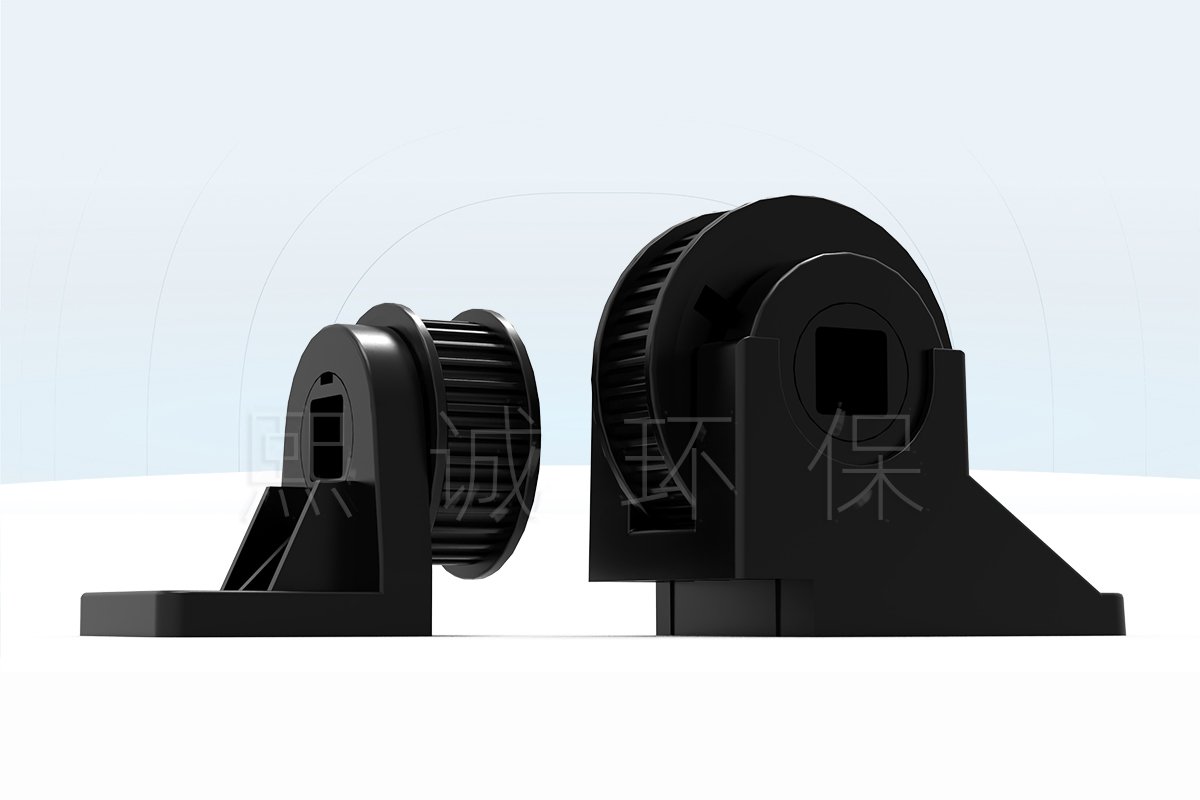
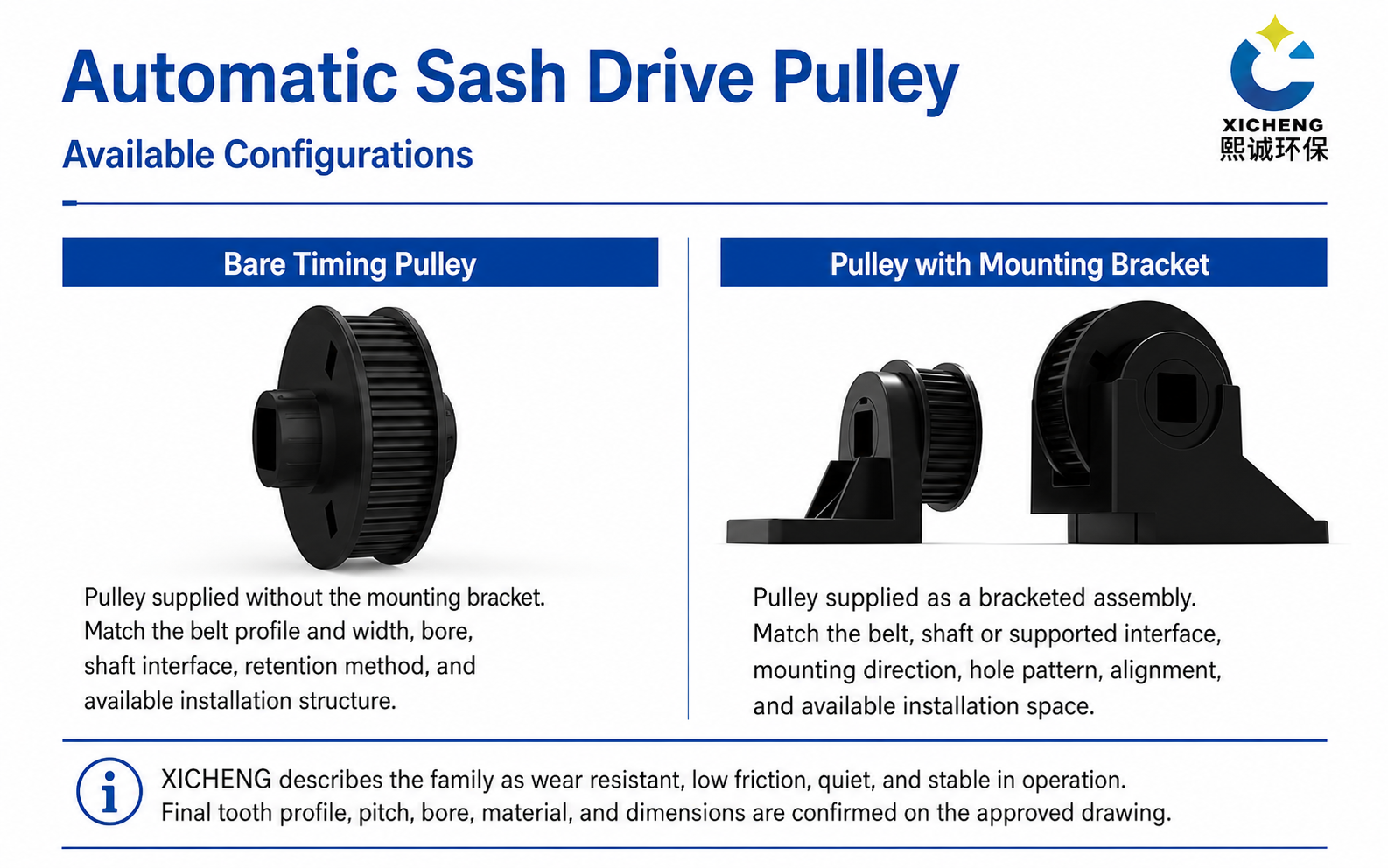
XICHENG supplies the product as a bare pulley or as a pulley with a mounting-bracket assembly. The bare version is intended for equipment builders that already control the shaft support and mounting centerline. The bracketed assembly combines the pulley with a support structure for installations that need a prepared mounting unit.
Choose This Pulley When
- The automatic fume hood sash uses a synchronous timing-belt transmission.
- The pulley can be matched to the existing or planned belt profile, pitch and width.
- The bore and shaft interface can be confirmed from a drawing or measured replacement part.
- The hood structure can maintain pulley alignment and suitable belt tension through full sash travel.
- The project needs either a bare pulley or a supported bracket assembly.
Key Decisions Before Ordering
A similar outside diameter does not establish compatibility. Match the belt teeth and width first, then confirm the bore shape, shaft fit, retention method, bracket geometry and installed centerline. For replacement work, record the existing belt code, pulley dimensions, shaft and mounting orientation before removing the original component.
What the Pulley Does Not Include
The pulley does not generate torque, detect sash position or decide when the sash may move. Drive force comes from the automatic fume hood sash motor. The automatic sash controller, position sensor and safety sensor supervise travel and obstruction response. These components are selected separately unless the order covers a complete automatic-sash package.
Product Configurations and Mechanical Selection Data
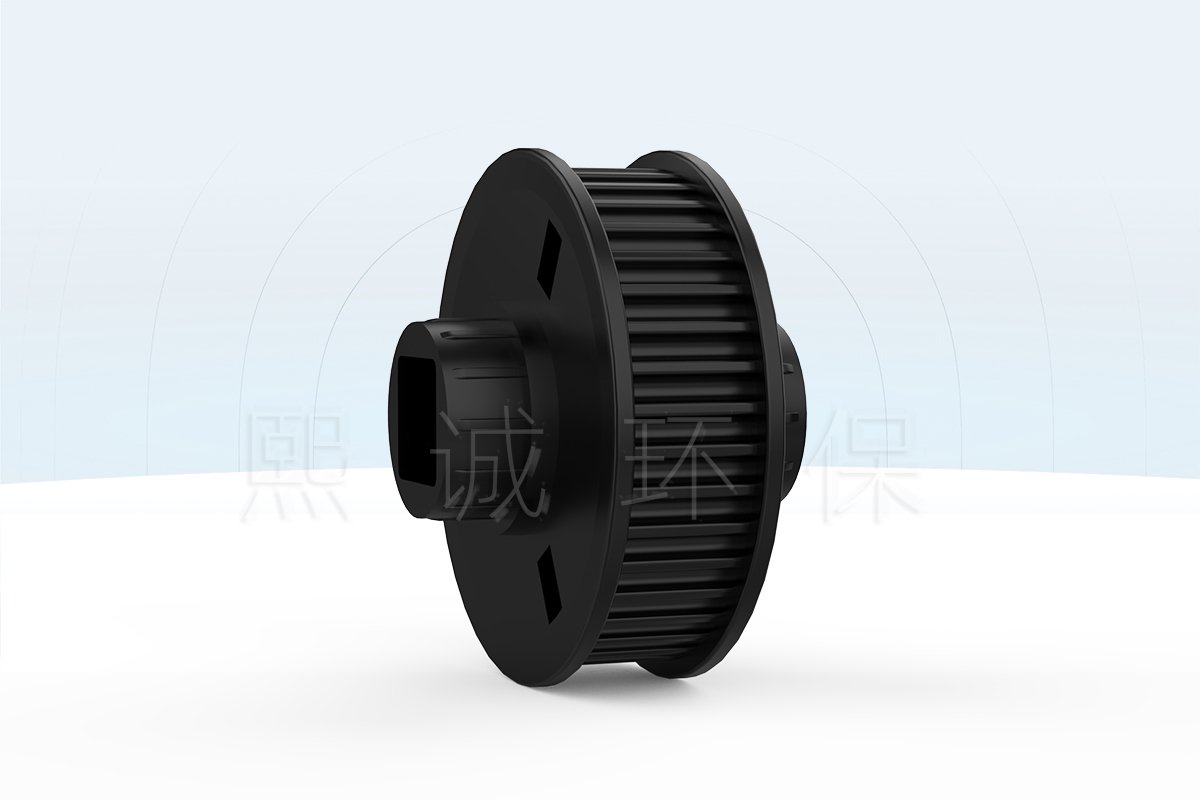
The XICHENG automatic sash pulley family is available as a bare timing pulley or a pulley installed in a mounting-bracket assembly. Both configurations perform the same transmission task, but they place different responsibilities on the hood builder and installer.
| Specification | Product Information |
|---|---|
| Product family | Automatic sash synchronous timing-belt drive pulley |
| Configuration 1 | Bare pulley without mounting bracket |
| Configuration 2 | Pulley supplied in a mounting-bracket assembly |
| Primary application | Motorized laboratory fume hood sash transmission |
| Drive method | Toothed timing-belt engagement |
| Operating characteristics | Designed for wear resistance, low friction, reduced heating and quiet, stable operation |
| Catalog reference | 5M40 reference available; final tooth, belt and bore details matched before ordering |
Bare Pulley Configuration
Choose the bare pulley when the hood or machine structure already provides the correct supported shaft, bearing arrangement and mounting centerline. The equipment builder is responsible for aligning the pulley with the mating drive, retaining it on the shaft and providing access for belt installation and tension adjustment.
Pulley with Mounting Bracket
Choose the bracketed version when the project needs a supported pulley unit rather than a loose component. Confirm the bracket orientation, mounting-hole pattern, shaft center height, belt approach direction and clearance around the hood frame. The bracket can simplify assembly only when its geometry matches the actual installation.
Mechanical Data Needed for Final Matching
| Selection Field | Information Needed |
|---|---|
| Timing belt | Tooth profile, pitch, width and existing belt code |
| Pulley teeth | Required tooth count and usable toothed-face width |
| Bore and shaft | Bore shape and size, shaft dimensions, insertion length and retention method |
| Bracket | Bare or bracketed supply, hole pattern, orientation and center height |
| Installation envelope | Available width, belt path, adjacent clearances and service access |
Timing-Belt Transmission and Mechanical Fit
A synchronous belt engages with the pulley teeth, allowing rotary motion to be transmitted without depending only on surface friction. In an automatic fume hood sash assembly, this positive engagement supports repeatable movement and can also provide a consistent mechanical relationship for position feedback. Reliable operation still depends on correct tooth engagement, shaft fit, alignment and belt tension.
Match Tooth Profile, Pitch and Width Together
The belt and pulley must use the same tooth profile and pitch. The belt width must also fit the usable toothed face without rubbing the flanges or running partly outside the pulley. A pitch reference alone is not enough if the tooth geometry, width or tooth count differs from the drive design.
Check the mating pulley or drive wheel at the same time. Mixed components can alter the transmission ratio, belt tracking and position calculation even when the belt can be physically installed. For replacement work, use the full belt code and measured pulley information rather than selecting only by color or approximate diameter.
Confirm Bore, Shaft and Retention
The product family includes a non-round bore arrangement, but the final dimensions must match the shaft used in the sash drive. Confirm the bore profile, fit, insertion length and axial retention. A loose fit can introduce backlash or position error, while an incorrect tight fit can damage the pulley or prevent full seating.
Maintain a Stable Belt Centerline
The pulley axis should remain parallel to the mating pulley and the belt should run through the center of the toothed face. Side loading can push the belt against a flange, increase noise and wear or pull the bracket out of alignment. Bracket stiffness and fastener support are therefore part of the transmission fit, not only installation details.
Relationship to Sash Position Feedback
XICHENG automatic sash systems can calculate sash opening from rotation of a synchronizing wheel when a compatible sensor and transmission ratio are used. The pulley provides the mechanical rotation; it does not create an electrical position signal by itself. Any position-sensing arrangement must be calibrated against the actual sash travel after the belt and pulley are installed.
Installation, Alignment and Functional Verification
Install the automatic sash drive pulley only after the sash guides, counterbalance and transmission path have been checked for smooth movement. The pulley should transmit the required motion; it should not be used to force a binding or poorly balanced sash through its travel.
Set the Pulley and Belt Alignment
Position the pulley so its axis is parallel to the mating drive and its toothed face is centered on the belt. Fully seat the bore on the shaft and apply the specified retention method. For the bracketed assembly, mount the bracket on a rigid structure and confirm that tightening the fasteners does not twist the pulley centerline.
Set Belt Tension for the Selected Drive
Apply the tension specified for the belt profile, span and sash transmission. Too little tension can allow tooth disengagement, backlash or inconsistent position feedback. Excessive tension increases bearing, shaft and bracket load and can create unnecessary noise or heat. The tensioning method should remain accessible after the hood panels are fitted.
Check the Complete Mechanical Path
Move the sash manually through its full intended travel where the design permits. Check belt tracking, tooth engagement, bracket stability and clearance from covers, cables, guides and counterweights. Both sides of a twin-sided sash transmission should move together without racking the sash in its guides.
Commission with the Motor and Controls
Run the motorized sash through controlled opening and closing cycles while observing the pulley and belt. Check for side tracking, unusual noise, heating, slip or movement of the bracket. Then verify closed, working-height and maximum-open position calibration together with the obstruction stop sequence.
Recheck alignment and tension after initial cycling and after any motor, bracket or belt adjustment. For service records, note the belt code, pulley configuration, shaft interface and mounting orientation so future replacement parts can be matched correctly.
Selection, Related Components and RFQ Information
Select the automatic sash drive pulley from the timing-belt and shaft interfaces, then choose whether the hood needs a bare pulley or a bracket-supported assembly. The product name identifies the function, but the mechanical drawing determines whether the component will fit and maintain reliable alignment.
New Fume Hood or Replacement Part
For a new hood, coordinate the pulley centerline, bracket, shaft and belt route before the upper frame or service panel is finalized. This leaves room for belt installation, adjustment and future replacement. For a retrofit, measure the existing pulley and bracket before removal and record the belt code, shaft, bore, fasteners and installed orientation.
Choose the Supplied Configuration
Order the bare pulley when the drive already includes suitable shaft support and mounting geometry. Order the bracketed assembly when the project needs the pulley and support as one component. State whether the bracket, shaft, fasteners or belt-tensioning parts must be included so the supply scope matches the installation responsibility.
Coordinate the Complete Automatic-Sash Drive
The pulley works with the automatic fume hood sash motor, timing belt, sash guides and counterbalance. A draw-wire position sensor reports sash opening, while the controller and safety sensor supervise movement. A mismatched pulley cannot be corrected through controller settings, so mechanical compatibility should be confirmed before electrical commissioning.
Information Needed for a Quotation
Send the belt profile, pitch, width and code; required tooth count; bore and shaft drawing; retention method; bare or bracketed supply; bracket hole pattern and orientation; available installation space; quantity and destination. For replacement work, include photographs with measured dimensions of the pulley, shaft and bracket.
XICHENG will match the pulley configuration to the supplied belt and shaft information and identify the included bracket, fasteners and applicable mechanical drawing.
Frequently Asked Questions
Are the bare pulley and bracketed pulley different product families?
No. They are two supply configurations for the same automatic sash timing-belt function. The bare version relies on the hood builder’s shaft support, while the bracketed version includes a prepared support assembly.
Can the 5M40 reference be used without checking the belt?
No. Confirm the tooth profile, pitch, width and tooth count against the selected belt and pulley drawing. A catalog code should not replace the mechanical fit check.
Can the pulley bore be selected from the product image?
No. The shaft fit requires actual bore dimensions, profile, insertion length and retention details. Similar-looking pulleys can use different shaft interfaces.
When should the bracketed assembly be selected?
Select it when the installation needs a supported pulley unit rather than a loose pulley. Confirm the bracket hole pattern, orientation, shaft center height and belt path against the hood structure.
Can this pulley run with any timing belt?
No. The belt must match the pulley tooth profile, pitch and usable width. Correct alignment and tension are also required for stable tracking and tooth engagement.
Does the pulley measure sash position?
No. It provides mechanical rotation. Position measurement requires a compatible sensor and calibrated relationship between pulley rotation and actual sash travel.
What should be checked after installation?
Check belt tracking, tooth engagement, tension, bracket stability, full sash travel, noise, heating and position calibration. Complete the test with the motor, controller and sash safety inputs operating together.
Contact the Xicheng Engineering Team Today
Send the belt code and width, pulley and shaft drawing, bore and retention details, bracket requirements, installation space and quantity. XICHENG will match the bare or bracketed pulley configuration to the automatic fume hood sash drive.
Shenzhen Office: No. 34 Zhenxing Road (Shengtaian Heavy Industrial Park B), Loucun, Guangming New Dist, Shenzhen, Guangdong, China
WhatsApp: +86 18126478161
Engineering Mailbox: fanalax34@gmail.com