


Description
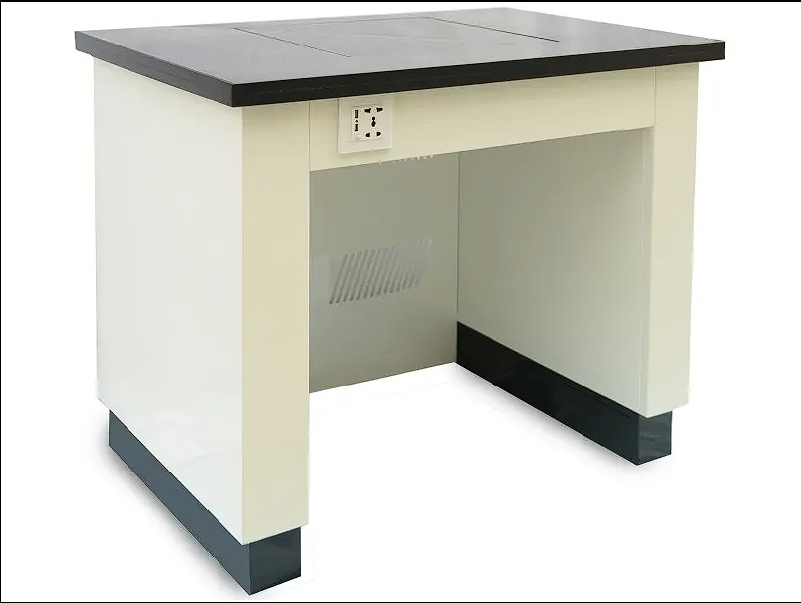
An anti-vibration balance table is a precision-weighing workstation, not simply a heavy laboratory bench. When sourcing an anti vibration balance table, buyers need to consider more than the overall footprint. An analytical balance can be affected by foot traffic, nearby equipment, an uneven floor, cabinet movement, door operation, air movement and the way its own mass is transferred into the table. For that reason, the balance platform, the passive support elements below it, the inner frame and the outer work surface need to be considered as a connected support path rather than as unrelated furniture parts.
The product family can be configured around a dedicated inset platform, a full granite top, a stainless open-frame support or a selected spring-and-damper construction. Those alternatives are not interchangeable names for the same build. They have different platform areas, support details, table structures and intended loading conditions. A laboratory balance table should therefore be selected from the instrument footprint, instrument mass, operating clearance, room layout and the vibration conditions at its installed location.
Key Specifications and First Selection
What separates an isolated balance platform from a general laboratory bench
A conventional bench can provide useful space for sample preparation, equipment support or paperwork, but it normally transfers the worktop and outer frame as one structure. An anti-vibration balance table introduces a defined balance location and a selected passive support path between that location and the surrounding table. The aim is to provide a more controlled foundation for precision weighing while retaining a practical laboratory work surface, access space and optional storage.
Mass is only one part of the decision. A granite worktop, a steel plate, elastomeric supports, an internal frame and a spring/damper arrangement each influence the way a selected configuration is constructed. The balance itself, its required measurement performance and the room conditions remain separate engineering considerations. The table should be specified as part of the weighing location, not as a substitute for balance setup, calibration or site acceptance work.
Reference cabinet configuration and early decision data
The table below gives a concrete starting point for comparison. It uses a cabinet-supported inset-platform construction as a reference configuration. Other available configurations use different materials, platform sizes and support arrangements, so the approved drawing and order schedule identify the fields that apply to the selected anti-vibration balance table.
| Decision Field | Reference or Available Configuration | Confirm Before Order |
|---|---|---|
| Product purpose | Precision-weighing workstation with a dedicated balance platform and selected passive support path | Balance type, weighing task and required operator access |
| Reference cabinet table envelope | 900 x 750 x 800 mm | Room clearance, working height, delivery route and adjacent furniture |
| Reference isolated platform | 450 x 450 x 12 mm steel plate within the cabinet-supported configuration | Balance footprint, feet position, mass and required surrounding clearance |
| Outer worktop | 30 mm synthetic-resin top with PP edging in the reference cabinet configuration | Cleaning method, chemicals, cutouts, peripheral equipment and edge detail |
| Support path | Eight rubber support points with an independent internal steel frame in the reference cabinet configuration | Selected passive-support arrangement, floor condition and expected disturbance sources |
| Alternative work surfaces | Full 38 mm granite top, selected heavy-mass platform or other project-defined worktop construction | Surface preference, chemical exposure, available loading and cleaning routine |
| Alternative frame/layout | Cabinet support, open stainless-frame table, one-station or selected multi-station arrangement | Storage requirement, legroom, service access and number of concurrent weighing stations |
| Advanced passive support | Selected spring-and-damper construction for a separately defined platform/load arrangement | Instrument mass, support travel, maintenance access and final configuration limits |
| Leveling | Adjustable feet; caster-plus-adjuster arrangement where selected | Floor variation, relocation need and final leveling procedure |
| Performance boundary | Isolation performance and supported weighing result are configuration- and site-specific | Instrument requirement, installation conditions and any required verification method |
Check these three conditions before selecting a layout
Start with the balance rather than the available table length. Record the instrument model, base footprint, support feet, operating mass, lid or door clearance and the area required for samples, weights, draft shields and routine cleaning. A balance that physically fits on a platform can still need a larger surrounding work surface or more service clearance than the balance outline suggests.
Next, look at the installed location. Foot traffic, pumps, centrifuges, doorways, lifts, ductwork, floor construction and adjacent workstations can all affect whether a simple rubber-supported platform, a heavier configuration or a more specialized passive support arrangement should be evaluated. Temperature swings, supply-air drafts and static-sensitive work should also be identified before the final location is fixed.
Finally, decide how many independent weighing stations the laboratory needs. A wider top is not automatically equivalent to two isolated balance positions. Where two balances will be used at the same time, the platform arrangement, support path, operator clearance and any cabinet or service division should be shown on the project drawing. Provide these inputs with the enquiry so that the proposed laboratory balance table can be matched to the actual weighing task.
Product Scope and Configuration Boundary
What a selected anti-vibration balance table can include
The supplied assembly is defined around the approved balance-table configuration. Depending on the selected layout, it can include the outer worktop, cabinet or open-frame support, a dedicated balance platform, selected passive support elements below that platform, an internal support frame, leveling feet and the agreed finish or edge treatment. Storage, an undershelf, a knee space, cable openings, power-access provisions or a service recess can also be incorporated when they are shown on the order drawing.
The key point is that the balance location is planned as its own part of the furniture. In an inset-platform arrangement, the outer worktop remains available for samples and routine work while the balance sits on a separately defined plate and support path. In a full-granite arrangement, the selected stone top performs a different role from an inset steel platform. In an open-frame construction, the visible support members and floor access become part of the selection. The resulting laboratory balance table should be described by the configuration, not only by a broad material label.
Passive support construction also has to be selected as a package. Rubber or elastomeric support points, heavy mass, isolated plates, internal frames and spring/damper mechanisms are different construction approaches. A selected configuration may use one of these approaches or a defined combination. The quotation and approved drawing should identify the actual platform material, support method, outer table construction, leveling arrangement and any load condition that applies to the specified build.
What requires separate confirmation or separate scope
An anti-vibration balance table provides the selected physical support arrangement. It does not supply the analytical balance, calibration weights, balance calibration, laboratory commissioning or an active vibration-isolation system unless those items are separately stated. The table alone also cannot establish a universal measurement result. Balance readability, repeatability, stabilization time and calibration performance depend on the instrument, setup, sample handling and the conditions at the installed location.
Building conditions need to be considered alongside the furniture. Severe floor movement, structural vibration, process equipment, door traffic, nearby lifts, unstable utilities, thermal gradients, supply-air drafts and electrostatic conditions can affect a precision-weighing location. A table configuration may reduce transmission through its selected passive support path, but it does not remove every site influence. If the project requires quantified isolation performance or documented verification, the required condition, test method and responsibility should be agreed before the balance table is released for production.
Similarly, utility work beyond the table needs a clear division of responsibility. The table can be prepared for a defined outlet, cable route or service opening where selected; building circuits, earthing arrangements, data services, gas lines, ventilation changes and final connection work are normally coordinated with the laboratory project. Clear scope at this stage prevents a precision-weighing station from being specified as ordinary furniture and then being asked to solve unresolved room or instrument issues after installation.
Reference Configurations and Platform Layout
Cabinet-supported inset-platform configuration
For laboratories that need a practical outer work surface as well as a defined weighing location, a cabinet-supported inset-platform configuration is a useful starting point. The outer top supports routine sample handling and equipment beside the balance, while the balance itself sits on a specified internal plate and passive support arrangement. This separation makes it easier to discuss the balance position, the outer worktop and the support path as different parts of one assembly.
A reference configuration uses a 900 x 750 x 800 mm cabinet table with a 30 mm synthetic-resin top finished with PP edging. The dedicated balance platform is a 450 x 450 x 12 mm steel plate. Eight rubber support points and an independent internal steel frame create the reference support arrangement; the published reference mass is approximately 90 kg. Those figures identify a complete configuration rather than a menu of universal values. A larger platform, different top, alternative support material, cabinet layout or different working height must be specified together on the approved drawing.
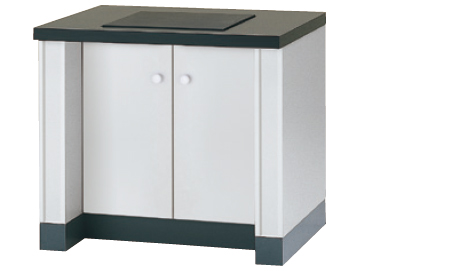
An inset platform is particularly helpful when the balance needs a defined location but the operator also needs bench space for weights, samples, notebooks or a nearby peripheral device. The final plate area should allow for the complete balance base and access around it, not just the nominal body size. Cabinet doors, drawers and knee spaces should also be arranged so that normal use or storage does not interfere with the weighing position.
Full-granite worktop configuration
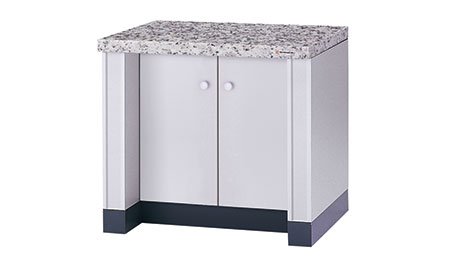
A full-granite configuration uses a different approach. Instead of isolating only a central plate inside a resin worktop, the selected working surface is a 38 mm natural granite top supported by the table construction and a rubber isolation layer. One reference cabinet version uses the same 900 x 750 x 800 mm overall envelope and has a published mass of approximately 94 kg. This form can be considered where a continuous stone surface is preferred for the balance location and surrounding work area.
Granite should be selected as a construction and cleaning decision, not simply because it is heavy. The final table still needs the appropriate support path, stable leveling and a layout that suits the balance feet, access clearance and items placed beside the instrument. Edge protection, cabinet structure, surface cleaning method and any cutouts must be considered before the granite arrangement is finalized.
Open-frame and multi-station layout choices
An open-frame balance table can make floor cleaning, access and corrosion-conscious material selection easier. One stainless reference arrangement is 900 x 600 x 800 mm with a 38 mm natural granite top, SUS304 square-pipe support and four rubber adjuster feet; its published reference mass is approximately 80 kg. The reduced 600 mm depth and open structure should be evaluated against the balance footprint, rear clearance and any need for storage rather than treated as a direct replacement for the cabinet-supported 900 x 750 mm form.
Some projects require more than one balance station. In that case, the discussion should start with the number of instruments that will operate at the same time, not simply a request for a longer worktop. A two-station arrangement may need independent platform locations, a divided support path, separate operator space and a clear plan for storage or services between the instruments. The table below keeps each published construction together so that their individual values are not mixed.
| Reference Construction | Geometry and Main Materials | Suitable Selection Context | Confirm Before Release |
|---|---|---|---|
| Cabinet with inset platform | 900 x 750 x 800 mm table; 30 mm synthetic-resin top with PP edging; 450 x 450 x 12 mm steel platform; eight rubber support points and inner steel frame; approximately 90 kg | Precision balance station needing an outer work surface plus a clearly defined balance location | Balance base, platform area, cabinet layout, selected supports and overall dimensions |
| Cabinet with full granite top | 900 x 750 x 800 mm table; 38 mm natural granite top with rubber isolation layer; approximately 94 kg | Continuous stone work surface is preferred around the weighing location | Stone surface, edge detail, support arrangement, cleaning method and cabinet structure |
| Open stainless-frame granite table | 900 x 600 x 800 mm table; 38 mm granite top; SUS304 square-pipe frame; four rubber adjuster feet; approximately 80 kg | Open access, cleanable frame and a compact depth are required | Instrument clearance, frame material, floor access, leveling and need for storage |
| Spring-and-damper support configuration | 900 x 750 x 800 mm table; 30 mm resin top with PP edging; 600 x 550 mm balance loading area; coil spring and silicone-oil damper; published maximum load 50 kg; approximately 130 kg | A separately defined passive support arrangement is required for the selected instrument | Instrument mass, loading limit, support travel, maintenance access and approved configuration |
Isolation Structure, Materials and Support Path
How the selected passive support path is arranged
The performance of a laboratory balance table begins with the route through which the instrument load reaches the floor. In a cabinet-supported inset-platform construction, the balance sits on the selected steel plate, the plate is carried through passive support points and an independent internal frame, and the surrounding cabinet and outer worktop perform their own storage and work-surface roles. This arrangement helps the balance location avoid being treated as exactly the same structural surface as every item placed on the outer top.
Other constructions use a different route. A full-granite version relies on the selected stone worktop and its support/isolation detail. An open stainless-frame configuration exposes a simpler support structure with adjustable feet. A spring-and-damper configuration adds a distinct support mechanism below a separately defined balance loading area. These options should be compared as complete constructions, because changing the platform material or support element without considering the frame, outer top and selected instrument can change the intended result.
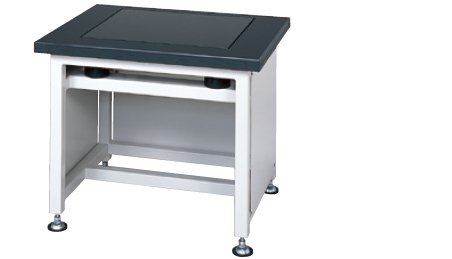
A spring-and-damper arrangement is not a default upgrade for every balance. One reference construction has a 600 x 550 mm balance loading area, a coil spring and silicone-oil damper, and a published maximum instrument load of 50 kg. Those figures belong to that construction only. A project requiring a different instrument mass, platform area or support response needs its own selected arrangement rather than a copied value from a different table type.
Mass, material and support elements are separate decisions
The outer worktop and the dedicated balance platform may be made from different materials because they solve different problems. A synthetic-resin top with PP edging can provide a cleanable surrounding work surface, while an inset steel plate provides a defined balance location. A 38 mm granite top can add mass and a continuous stone surface. Stainless steel can be used for an open support frame where durable, cleanable construction and floor access are priorities. None of these material choices automatically defines the passive support method or the allowable loading.
| Design Element | Role in the Selected Construction | Available Reference | Buyer Check |
|---|---|---|---|
| Dedicated balance platform | Provides the defined instrument location | 450 x 450 x 12 mm steel plate in the reference cabinet configuration; 600 x 550 mm balance area in the spring/damper reference configuration | Balance footprint, feet position, mass, lid clearance and space for weights or draft shield |
| Outer worktop | Provides surrounding working area and finishes the table layout | 30 mm synthetic-resin top with PP edging, or a 38 mm natural granite top in separate constructions | Cleaning chemicals, sample-handling routine, cutouts, edge protection and peripheral equipment |
| Passive support elements | Create the selected separation between the balance location and outer support structure | Eight rubber support points, four rubber adjuster feet, or a selected coil-spring and silicone-oil damper arrangement | Type of nearby vibration, instrument mass, maintenance access and selected support condition |
| Inner and outer support structure | Transfers the selected loads and organizes the work area | Independent inner steel frame, cabinet support or SUS304 square-pipe open frame | Storage, service access, corrosion/cleaning requirements and delivery constraints |
| Leveling arrangement | Allows the selected table to be set at the installed location | Adjustable feet; caster-plus-adjuster arrangement where selected | Floor variation, need to relocate and required re-leveling procedure |
| Load/performance condition | Defines the limits for the complete selected construction | Published values are configuration-specific; the spring/damper reference configuration lists a 50 kg maximum load | Total instrument mass, concentrated contact points, operator use and any required verification condition |
Performance boundary for a precision-weighing installation
An anti-vibration balance table can improve the physical support arrangement for the selected weighing station, but it cannot be specified from a single percentage, natural-frequency value or generic promise of balance accuracy. Passive-support behaviour changes with the selected table mass, platform size, support elements, instrument mass, contact condition and the type of vibration reaching the site. The instrument’s own installation instructions and any required balance qualification still apply.
For a reliable selection, identify whether the main concern is floor vibration, vibration from nearby equipment, operator movement, air currents, temperature variation, static, an unstable utility connection or a combination of these factors. Some of those conditions are addressed by table construction; some require a change in the room layout, HVAC operation, instrument placement or project procedure. The final anti-vibration balance table should state what construction is supplied and what performance or site condition, if any, must be checked after installation.
Applications and Product Fit
Laboratory weighing applications that need a defined support arrangement
An anti-vibration balance table is appropriate when a laboratory wants the weighing instrument to have a dedicated, level position with a separately defined passive support arrangement. Typical applications include analytical balances used for formulation and quality-control preparation, precision balances used for sample or reagent weighing, and microbalance locations where the instrument supplier’s placement requirements call for careful attention to support, surrounding activity and room conditions.
The product family can also suit laboratories that need usable bench area beside the balance. A cabinet-supported inset-platform layout leaves space for routine sample handling while keeping the balance position visually and structurally distinct. A full-granite configuration can be considered where a continuous stone surface is preferred. An open-frame table can be useful where access below the balance, floor cleaning or a stainless support structure is important. The right choice depends on the balance envelope and the operating environment, not only on whether the instrument is described as “sensitive.”
For high-resolution instruments, the selected table should be part of a larger location review. The laboratory should consider nearby door movement, foot traffic, pumps, centrifuges, mobile equipment, air outlets, temperature change, static-sensitive handling and cleaning operations. If the balance requires a particularly controlled environment, the instrument supplier’s instructions and the laboratory’s own qualification requirements remain the reference for the final location.
When another laboratory table is a better fit
A laboratory instrument table is often the better option when the main requirement is to support a larger analyser, chromatography system, computer, pump, chiller or other equipment package. That type of workstation is organized around distributed and concentrated equipment loading, service access, power, cable routing and optional upper structures. It may include useful support and adjustment features, but it should not be treated as a replacement for a selected isolated balance platform.
A laboratory wall bench is normally a better starting point for general sample preparation, perimeter work and day-to-day laboratory tasks where the main decision is worktop material, storage, utilities and room layout. It can be integrated into a larger laboratory furniture plan, but a wall bench shares its support structure with the surrounding run and does not automatically provide the separate balance platform and passive support arrangement described on this page.
Choose a stainless steel laboratory bench when the central requirement is a fully metal, durable and cleanable work surface, wet-service integration or corrosion-conscious material selection. A stainless worktable may be a suitable neighbor to a precision-weighing station, but its worktop, frame and cabinetry should be specified for the cleaning and process environment rather than assumed to provide balance isolation.
An anti-vibration balance table is also not automatically an optical table, an active-isolation platform, a weighing-room enclosure or a calibration service. Those products and services answer different technical questions. Select the balance table when the project needs a configurable passive support arrangement for a defined weighing location, then coordinate the remaining instrument and room requirements separately.
Site Planning, Installation and Quotation Inputs
Site conditions that affect a precision-weighing location
The best table construction cannot compensate for a poorly chosen balance location. Before a laboratory balance table is specified, identify the floor type, nearby foot traffic, doors, lifts, pumps, centrifuges, compressors, moving carts and equipment that may transmit vibration through the room. The location should also be reviewed for air outlets, open windows, temperature variation, direct sunlight, cleaning activities and static-sensitive work. These factors do not all act in the same way, but each can affect the suitability of a precision-weighing station.
Space around the table matters as much as the nominal footprint. The balance needs a stable operating position, while the user needs enough room for sample preparation, weights, draft-shield operation, routine cleaning and access to the rear or side of the instrument. Storage doors, drawers and nearby stools should be arranged so that they do not encourage repeated contact with the balance platform during weighing. Where more than one balance is planned, show the operating zones for both users rather than relying on a single overall table length.
Leveling, access and installation preparation
The selected anti-vibration balance table should be placed on a floor capable of accepting its installation load and set level with its adjustable feet or selected adjustment arrangement. A caster-plus-adjuster option can help with delivery or periodic repositioning, but the table should not be used for precision weighing while it is left on mobile support alone. Once it is in its operating location, lock or remove movement as specified, set the leveling points and check that the balance platform, outer work surface and instrument have the clearances shown on the approved drawing.
Delivery access should be checked before a heavy top, granite component, cabinet assembly or spring-and-damper construction is released. Door widths, elevators, corridors, floor transitions, lifting method and the final room route can determine whether the table is delivered assembled or in coordinated sections. If a stone top or heavy balance platform is separate from the frame during delivery, the installation sequence should avoid using the outer worktop as an uncontrolled lifting surface.
After the table and balance are installed, follow the balance supplier’s setup, warm-up, calibration and operating instructions. If the project calls for a particular isolation or weighing condition to be checked, the acceptance method, environmental conditions and responsible party should be stated before installation. A furniture drawing can define the selected construction and dimensions; it does not replace instrument commissioning.
Information required for a project-ready quotation
Provide the following information so that the proposed construction can be matched to the actual laboratory location:
- Balance or instrument model, overall footprint, mass, feet/contact locations and required operating clearance.
- Number of balance stations, whether they operate at the same time and whether the user needs a seated or standing work height.
- Preferred table width, depth and height, plus the room plan and delivery route where available.
- Nearby vibration conditions, floor information and the intended installed location.
- Requirement for an inset steel platform, full granite top, open stainless frame, cabinet support or selected spring/damper construction.
- Surface material, cleaning chemicals, storage, cable opening, power-access or service requirements.
- Any required platform load, performance check, project standard or instrument-placement instruction.
- Quantity, destination and requested delivery condition.
The quotation should identify the proposed overall dimensions, balance-platform construction, worktop and frame materials, passive support arrangement, leveling method, selected accessories and any remaining site items that need confirmation. Those defined fields, together with the approved drawing, describe the anti-vibration balance table to be supplied.
Related Laboratory Furniture
Choose a laboratory instrument table for larger analytical equipment and service routing, or a microscope table for optical work centered on viewing posture. A laboratory wall bench supports general perimeter work, a stainless steel laboratory bench supports selected cleanable all-metal layouts, and an adjustable-height laboratory bench addresses repeated ergonomic height changes rather than balance isolation.
Frequently Asked Questions
Does every anti-vibration balance table use a granite top?
No. Granite is one available worktop or mass option, not a compulsory material for every configuration. A cabinet-supported laboratory balance table may instead use a synthetic-resin outer top with a dedicated inset steel platform. An open-frame configuration can use granite on a stainless support structure, while a selected spring-and-damper arrangement uses its own defined platform and support construction. Choose the material and support path from the balance, cleaning conditions, available space and site requirements.
Can two balances share one wider table?
They can be planned on one coordinated table assembly, but a longer worktop alone does not create two independent balance stations. The project should define the footprint and mass of both instruments, whether they operate concurrently, the space needed by each user, and whether each balance needs its own platform and passive support arrangement. A divided cabinet, a separate platform layout or additional service space may be required to keep the two working positions practical.
Does a balance table guarantee measurement accuracy or a calibration result?
No. An anti-vibration balance table provides the selected physical support arrangement for the weighing location. Instrument accuracy, calibration, stabilization time and repeatability also depend on the balance, its setup, sample handling, air movement, temperature, static, floor conditions and other local factors. Follow the instrument supplier’s instructions and agree any project-specific verification method before the installation is accepted.
Are casters available for an anti-vibration balance table?
A caster-plus-adjuster arrangement can be selected for some layouts where the table must be moved for access or room reconfiguration. For normal precision weighing, the table should be returned to its specified location, stabilized and leveled through the selected adjustment points. Mobile support should not be treated as the final operating condition unless the approved configuration explicitly defines it.
Contact the Xicheng Engineering Team Today
Send the balance model, base footprint, instrument mass, desired table size, number of weighing stations and a simple room layout. Include any known floor movement, nearby equipment, surface-material preference, storage requirement and requirement for an inset platform, granite top or selected passive support arrangement. This allows the proposed anti-vibration balance table to be configured around the actual weighing location rather than around a generic furniture size.
Shenzhen Office: No. 34 Zhenxing Road (Shengtaian Heavy Industrial Park B), Loucun, Guangming New Dist, Shenzhen, Guangdong, China
WhatsApp: +86 18126478161
Engineering Mailbox: fanalax34@gmail.com