


Description
Key Specifications and First Selection
A laboratory glassware drying cabinet is chosen for the drying task, not merely for the cabinet volume. Cleaned glassware enters the chamber with a particular amount of residual water, a particular shape and a material-specific temperature limit. The drying cabinet then needs to provide enough shelf area, free air space, controlled heating, a moisture-release path and an electrical supply that fit that actual batch. The 780 L reference configuration below gives a coherent starting point for planning; it does not combine high-temperature, high-capacity or forced-air claims from unrelated cabinet families.
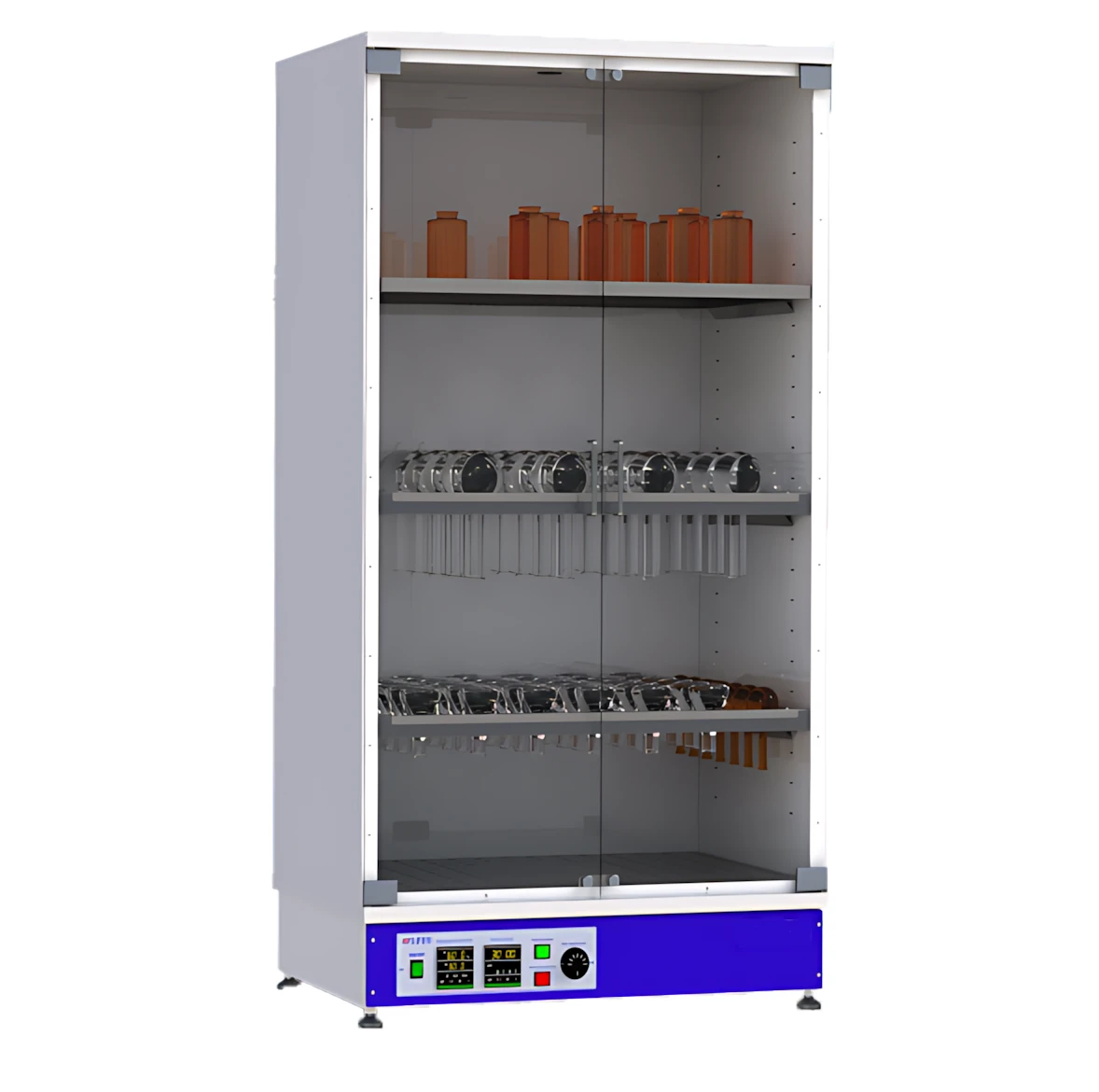
The locked reference configuration is a tall glass-door cabinet with 780 L working capacity, 900 x 580 x 1430 mm internal dimensions, 960 x 600 x 1612 mm external dimensions, three standard shelves, up to twelve shelf positions, 890 x 560 mm shelf dimensions, 220 V / 50 Hz / 16 A supply, 1,500 W maximum power and a 60°C maximum operating temperature. The cabinet is for low-temperature heated drying of suitable washed laboratory glassware. It does not claim sterilisation, de-pyrogenation, a fixed drying time, a universal shelf load or a guaranteed temperature-uniformity value.
| First decision | 780 L reference configuration | Buyer must confirm | Why the distinction matters |
|---|---|---|---|
| Working capacity | 780 L cabinet volume | Actual vessel count, geometry and loading pattern | Litres do not show usable shelf area or air space around vessels |
| Temperature and heat | Maximum 60°C; 1,500 W maximum power | Allowed temperature for glass, seals and accessories | Maximum temperature is not a sterilisation or cycle-time claim |
| Cabinet envelope | 960 x 600 x 1612 mm external | Delivery path, room position and maintenance space | Exterior dimensions do not define open-door or heat-clearance space |
| Shelf arrangement | Three standard shelves; up to twelve positions | Vessel height, support type and loading method | Shelf positions determine air movement and practical capacity |
Confirm the drying duty before choosing the cabinet
List the glassware types, their largest dimensions, the normal batch quantity, the initial water condition, required turnaround time and the highest permitted temperature for every item that enters the chamber. Glassware with plastic taps, stoppers, labels, coatings, sensors or seals cannot be treated as identical to plain borosilicate vessels. The same is true for narrow-necked flasks, inverted bottles and long cylinders: a cabinet can have sufficient nominal volume but still dry poorly when the shelf layout blocks drainage or leaves no path for heated air around the items.
Separate active drying from adjacent laboratory tasks
The cabinet provides an enclosed, temperature-controlled drying stage. A Glassware Drying Rack provides open passive drip drying; it is useful before cabinet loading when water must drain from inverted vessels. A PP Glassware Storage Cabinet provides enclosed storage after vessels are dry; it does not add heating or a controlled moisture-removal cycle. A Stainless Steel Laboratory Sink or PP Laboratory Sink is the wet-work station, not the drying chamber. Keeping these functions separate creates a usable wash, drain, dry and store sequence.
Information needed at the start of a project
Provide the vessel inventory, maximum item size, expected residual water after washing, batch frequency, intended temperature, required control and timer functions, available power, room ventilation condition, desired cabinet location, door openings and delivery path. Where process residues or unusual cleaners are present, state them before a cabinet is selected. The 780 L cabinet is a starting configuration; the chosen chamber, shelf arrangement and electrical scope must be confirmed for the actual duty.
Drying Scope and Performance Boundary
The laboratory glassware drying cabinet is an active drying appliance. It uses controlled electrical heating with a selected internal air-circulation and moisture-release arrangement to dry suitable washed laboratory glassware inside a closed chamber. Glass doors allow operators to check the load without immediately opening the chamber, while shelves support the arrangement of bottles, flasks, beakers and other vessels. The final cabinet may include selected controls, timers, shelf types and safety components, but each item must be confirmed for the ordered configuration rather than inferred from the word cabinet.
What the 60°C reference means
For the locked 780 L reference configuration, 60°C is the maximum operating temperature. It does not describe an adjustable lower limit, temperature uniformity, stability at every shelf level, warm-up time, cooldown time or the temperature reached by every glass item. Loaded performance changes with vessel mass, wall thickness, starting temperature, retained water, shelf pattern, door-opening frequency and room condition. A set point alone cannot prove that a specific batch is dry.
This maximum also does not transform the cabinet into a high-temperature laboratory oven. It cannot be used to claim sterilisation, de-pyrogenation, biological inactivation, calibration drying or any validated thermal treatment. Processes requiring those outcomes need equipment and procedures designed and documented for them. The cabinet should also not dry vessels containing flammable solvents, unknown volatile residues, pressurised contents or materials that are not confirmed for the selected temperature.
Heated cabinet versus a rack, store cabinet or washer
A laboratory glassware drying cabinet is not an open drying rack. A rack gives air access and a drip path but has no enclosed controlled heating cycle. It is not a PP storage cabinet because storage uses an enclosed shelf arrangement without an active heat duty. It is not a glassware washer because the cabinet does not wash or rinse items. It is not a vacuum dryer or desiccant storage enclosure because its operating principle is controlled heated air and moisture release rather than vacuum or humidity control.
These boundaries matter to selection and safety. An operator needs a clear handoff point from washing to draining, from draining to active drying and from drying to clean storage. If recently washed vessels are placed into the cabinet, they should be arranged so water can leave the vessel and air can reach its surfaces. If a process requires an open dripping stage, retain that step rather than asking a heated cabinet to compensate for unsuitable loading.
Configuration scope
The reference 780 L format provides three standard shelves and up to twelve available shelf positions. It does not make every possible shelf position a delivered shelf, and it does not define a universal shelf load. Cabinet construction, transparent door assembly, internal shelf type, controls, alarms, circulation assistance, wheel or fixed-foot arrangement and moisture-release details should be listed on the selected configuration. The same applies to electric supply: 220 V / 50 Hz / 16 A is the locked reference supply and must not be carried over to projects with a different local standard.
Capacity, Shelves and Glassware Loading
The phrase 780 L describes the reference cabinet’s chamber volume. It does not establish how many individual vessels can be loaded, whether each vessel can sit safely, or whether heated air can reach the wet surfaces. Practical capacity comes from shelf area, clear shelf spacing, vessel geometry, the amount of space left between items and the way each vessel is oriented. A tall measuring cylinder, a narrow flask, a wide beaker and a piece of glassware with a stopcock cannot be loaded according to one generic count-per-shelf rule.
The reference arrangement has an internal envelope of 900 x 580 x 1430 mm and shelf dimensions of 890 x 560 mm. Three shelves are supplied in the stated reference configuration, with up to twelve positions available. These fields support a loading review, but the required clear height between shelves comes from the vessels selected for each zone. Do not convert the listed shelf dimensions into a universal item count or a fixed shelf-load promise without the selected shelf, load distribution and support condition.
Lay out the load for air access and drainage
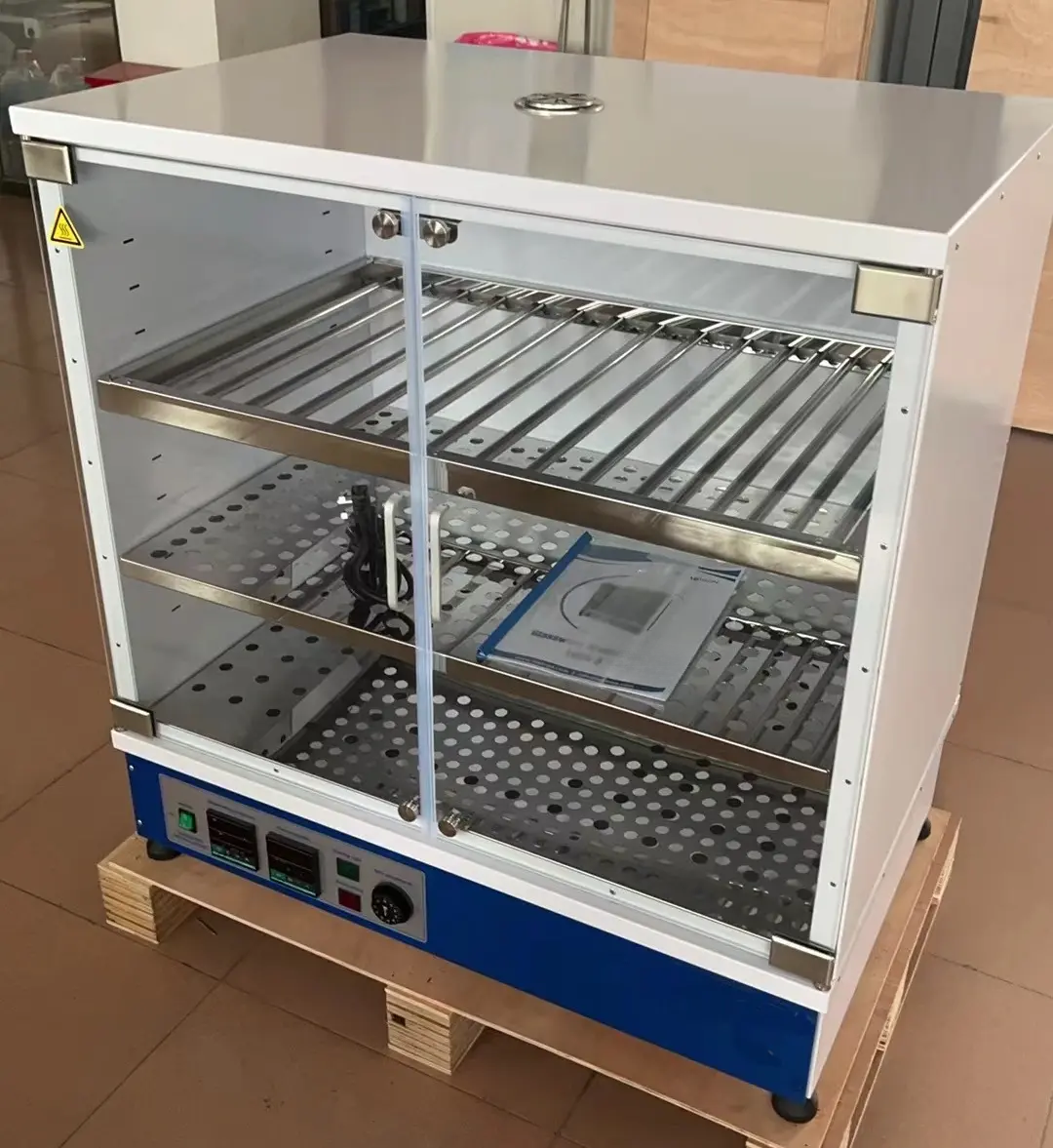
Place vessels so that drainage and air access remain possible. Inverted glassware can retain water if the neck or opening is blocked against a shelf, while items packed against one another can create local damp zones. A rod-type shelf can support certain inverted shapes differently from a mesh or perforated shelf. The correct arrangement is determined by the load: specify which shelf form is required, how items are supported, whether trays or holders are used and how fragile pieces are kept from touching during loading and unloading.
Capacity comparison without mixing models
The 780 L format is appropriate when a tall, floor-standing cabinet is needed. Smaller and larger laboratory glassware drying cabinets can be selected when their own capacity, temperature, fan arrangement, power supply and shelf set are confirmed as one configuration. The 780 L reference values must not be combined with a different model’s 70°C or 80°C maximum, fan-assistance statement, shelf load, touch display or power rating.
| Loading field | 780 L reference value | What must be scheduled | Selection result |
|---|---|---|---|
| Chamber volume | 780 L | Batch quantity and real vessel geometry | Confirm usable load, not nominal litre count only |
| Internal envelope | 900 x 580 x 1430 mm | Required clear height and placement method | Set shelf positions for the actual vessels |
| Shelf geometry | 890 x 560 mm shelf area | Rod, mesh or other selected shelf support | Match support surface to orientation and drainage |
| Supplied positions | 3 standard shelves; up to 12 positions | Delivered shelf count and height spacing | Confirm selected shelf package and access pattern |
Loading conditions to document
Describe whether the vessels enter wet, drained or nearly dry; whether they are inverted or upright; whether they carry stoppers, taps, labels or polymer parts; and whether the laboratory needs a batch record. State the heaviest individual item and any special support. This information is more useful than asking for a general shelf capacity because it identifies the actual mechanical and drying conditions. If the drying cycle must be repeatable, define a practical load pattern and do not change the shelf arrangement without reassessing the result.
Heating, Air Circulation and Moisture Release
The drying result depends on the full path from heat input to moist-air release. Electrical heating raises the temperature of the chamber and the air around the load. A selected circulation arrangement moves or distributes that air around the vessels. Moisture then needs a defined route away from the chamber, whether through a selected vent path or a configuration-specific release arrangement. Each part matters. Heating alone does not guarantee that trapped water inside a vessel will leave; a visible vent does not establish a quantified air-exchange rate; and a fan label should not be applied to a model that is supplied without fan assistance.
For the 780 L reference configuration, the documented maximum temperature is 60°C and maximum power is 1,500 W. No fan airflow, room air-change rate or temperature-uniformity figure is claimed here because those values must correspond to the selected cabinet and test conditions. The useful procurement question is therefore not simply whether there is a fan. It is how the selected configuration circulates air, where moisture exits, what room ventilation is available and how the actual glassware load will be arranged so that water does not remain hidden from the warmed air.
Do not turn a maximum temperature into a drying-time promise
Drying time varies with the amount of water on and inside the load, vessel shape, wall thickness, initial temperature, shelf spacing, air path, door-opening frequency and room conditions. A 60°C maximum can be suitable for a low-temperature glassware drying task, but it does not predict that every item will reach the same surface temperature or dry in the same interval. Establish the required cycle with the intended vessel set and operating method. When the process is critical, the laboratory should define acceptance checks for residual water rather than relying on an unqualified time statement.
Moisture release and room coordination
Water removed from glassware becomes moisture in the cabinet air and needs to be handled by the selected cabinet and the room. Review the intended location, the local ventilation condition, nearby electrical equipment, wall surfaces and any requirement to route moist air. Do not assume that every cabinet has a duct connection or that an opening can be connected to an extract system without engineering review. A connection, if selected, must consider temperature, condensate, pressure effects and access for inspection.
The cabinet should not be used for vessels that contain flammable solvent residue, volatile unknown chemicals or substances that could create an unsafe vapour when warmed. Heated drying is a different duty from chemical extraction. Where chemical residue is possible, the process owner must establish cleaning and safe handling before the glassware reaches the drying cabinet.
Air-path questions for the technical schedule
| Air and heat field | 780 L reference statement | Project confirmation needed | Resulting boundary |
|---|---|---|---|
| Maximum temperature | 60°C maximum | Required set point and heat-sensitive components | No sterilisation or high-temperature oven claim |
| Heating input | 1,500 W maximum | Available circuit and room heat-load allowance | Power is not a predicted drying-time value |
| Circulation | Selected configuration-specific air distribution | Whether fan assistance is supplied and needed | Do not assume fan status from another model |
| Moisture release | Selected cabinet release path | Room ventilation, any connection and condensate considerations | No universal duct or air-change claim |
Keep the air path serviceable
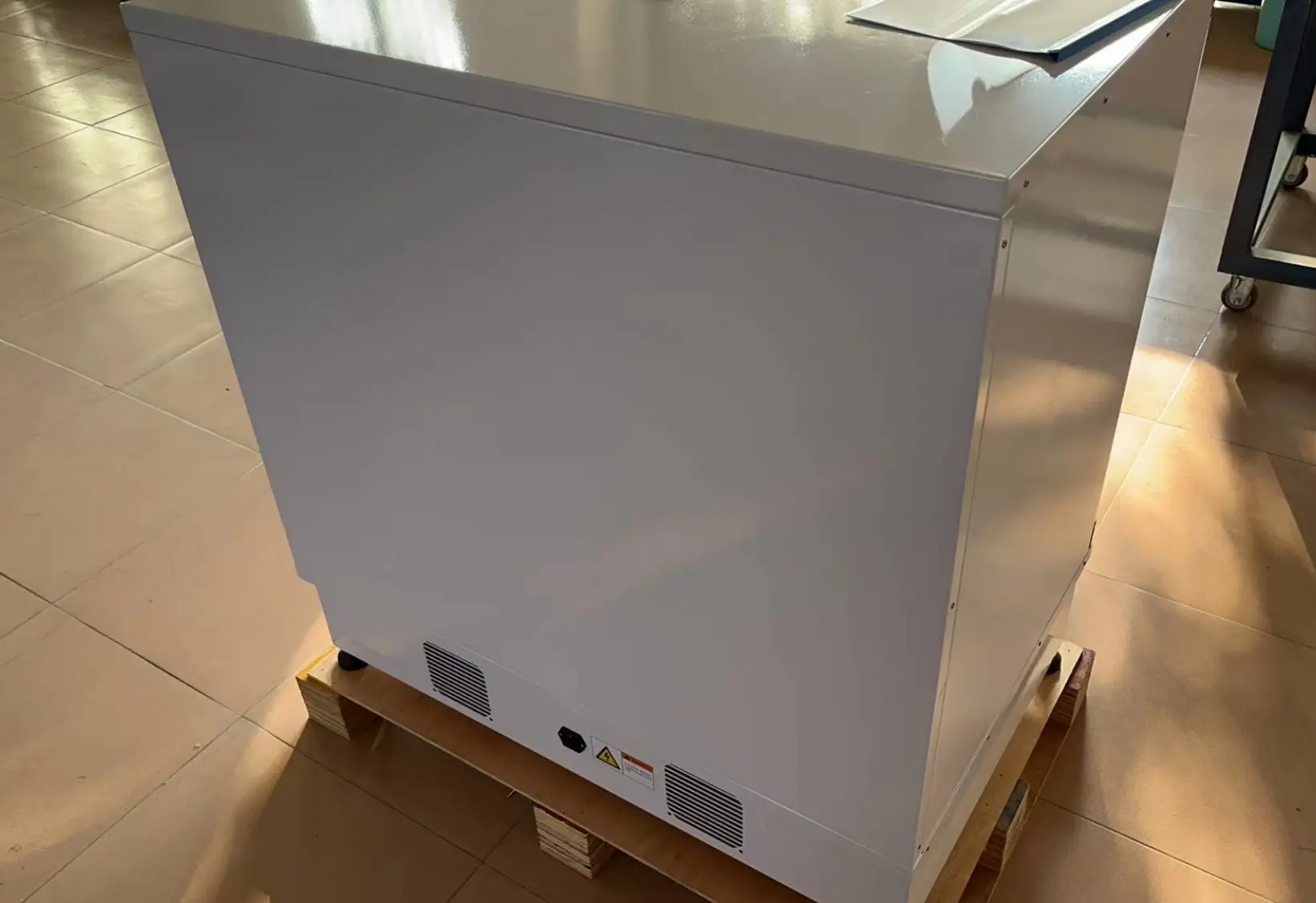
Leave access around the cabinet for cleaning, electrical isolation and inspection of the selected ventilation area. Do not block lower rear openings with a wall, packing materials or stored supplies. The final installation drawing should state the cabinet’s position, service side, clearance envelope and any selected connection. This is especially important in a compact wash-up room where sinks, racks and a drying cabinet may otherwise compete for the same ventilation and circulation space.
Controls, Electrical Supply and Safety Limits
The 780 L reference configuration is specified for 220 V, 50 Hz, 16 A supply with 1,500 W maximum power. These are electrical planning fields, not decorative specifications. The site must confirm supply voltage, frequency, circuit capacity, protective device, earthing, local plug or isolator requirement and the installation responsibility before the cabinet is delivered. Do not assume that a cabinet designed around this reference supply can be connected to another regional supply without a confirmed electrical configuration.
The selected control package can address temperature setting, timing, operating indication and applicable protective functions. The exact controller, display, alarm, timer range, over-temperature method and reset arrangement are configuration fields. A generic temperature controller does not automatically provide data logging, calibrated process records, remote alarms or validated safety performance. Those features should be specified only when they are required and supplied.
Temperature control and safety boundary
Temperature control is used to operate within the selected low-temperature drying duty. It does not prove uniformity across a loaded cabinet or eliminate the need to check the actual batch. An independent over-temperature protective function may be specified where applicable, but its set point, trip action, reset method and documentation must be identified for the chosen configuration. Safety controls protect against defined conditions; they do not convert the cabinet into equipment for flammable vapours, pressurised vessels or unsuitable materials.
Electrical and operating planning
Confirm four electrical and control items as one package: the local voltage, frequency, circuit and isolation method against the 220 V / 50 Hz / 16 A reference supply; circuit capacity and room heat-load allowance against the 1,500 W maximum; process set point and component temperature limits against the 60°C maximum; and the required display, timer, alarm, reset and record functions against the supplied control package. None of those fields should be inferred from a different cabinet model.
Operating sequence
An effective cycle begins with an appropriate load, not a control setting alone. Inspect glassware after washing, arrange it to drain and expose wet surfaces, choose the selected shelf position, set the approved operating condition and avoid frequent door opening. At the end of the cycle, allow an appropriate handling interval and use the laboratory’s own criteria to confirm that the load is ready for reuse or clean storage. Do not rely on a controller display as proof that every vessel is dry.
Before maintenance or cleaning, isolate power according to the site procedure, allow hot surfaces to cool and avoid directing water at electrical panels or ventilation openings. Any replacement part or electrical modification must match the selected cabinet configuration. The cabinet’s accessible service side should remain clear after installation.
Installation, Cleaning and Room Coordination
Position the laboratory glassware drying cabinet where the process can move logically from washing to draining, drying and storage without carrying hot or wet glassware through a congested route. A cabinet near a Stainless Steel Laboratory Sink or PP Laboratory Sink can reduce travel during wash-up, but it also requires attention to splash exposure, floor drainage, room humidity and service access. The cabinet should remain outside direct splash zones unless the complete installation is designed for that condition.
The 960 x 600 x 1612 mm external reference envelope is only the cabinet’s closed size. Review door swing, delivery route, ceiling clearance, rear and side service space, electrical connection, room heat load and the path for safe loading and unloading. Cabinets should stand on a stable level floor with the selected feet, wheels or restraint arrangement. If a mobile arrangement is selected, locking and movement procedures must be established; if a fixed arrangement is selected, access to electrical isolation and rear ventilation should still be retained.
Cleaning and loading access
The chamber, shelves and door surfaces require a cleaning routine appropriate to the laboratory. Remove broken glass promptly, keep drainage surfaces clear and avoid introducing unknown residues that may be warmed during a cycle. The cleaner used on the cabinet must be suitable for the selected materials, transparent door assembly, seals and controls. A warm cabinet should be allowed to cool before cleaning or service work.
Applications and Selection Boundary
The cabinet can be considered for teaching laboratories, analytical laboratories, quality-control rooms, development laboratories, preparation areas and laboratory wash-up support where suitable washed glassware requires an enclosed low-temperature drying stage. It is especially useful where a repeatable shelf layout and controlled temperature limit are more practical than leaving items on an open rack in a shared room.
It should not be selected as a substitute for a high-temperature drying oven, autoclave, steriliser, washer/dryer, vacuum dryer, desiccant storage cabinet or chemical fume enclosure. It is not intended to process vessels containing flammable solvent residue, unknown volatile material or components that cannot tolerate the selected temperature. The process owner should define the glassware condition before it enters the cabinet.
Project-ready input
The project input should combine the glassware load, drying task, electrical site and room condition. Provide vessel dimensions, quantity, material and support needs so that shelf type, pitch and practical batch arrangement can be selected. State starting water level, target condition and turnaround need so that the operating sequence can be reviewed. Confirm voltage, frequency, circuit, plug and isolation detail against the cabinet’s electrical package. Finally, provide ventilation condition, clearances, delivery route and cabinet location so that heat release, service access and placement can be planned together.
Related product roles
Use a Glassware Drying Rack for passive open draining before active drying where appropriate. Use a PP Glassware Storage Cabinet after the glassware is dry and ready for enclosed organization. These products can support one laboratory process but have different functions: the rack handles drip access, the drying cabinet provides controlled heated drying and the storage cabinet provides non-heated enclosed storage.
Frequently Asked Questions
Is this cabinet a laboratory oven or steriliser?
No. The 780 L reference configuration has a 60°C maximum operating temperature for low-temperature glassware drying. That field does not establish sterilisation, de-pyrogenation, high-temperature oven performance or a validated biological process.
What does the 780 L capacity mean in practice?
It is the reference chamber volume. The usable batch depends on vessel shape, shelf type, shelf spacing, orientation, drainage path and the air space left between items. Submit the actual vessel inventory before using the litre value as a capacity commitment.
Can every cabinet be described as fan assisted?
No. Fan assistance is model-specific. The selected cabinet configuration must identify its air-circulation arrangement; this page does not assign another model’s fan statement or airflow value to the 780 L reference configuration.
Can wet glassware be put into the cabinet immediately after washing?
Only when the loading procedure supports drainage and safe drying. Remove unsuitable residues, arrange vessels for air access, avoid blocked openings and retain an open draining step when necessary. The cabinet must not be used for vessels containing flammable solvent residue or unknown volatile materials.
What site data is needed for quotation?
Provide the glassware list, batch size, maximum item dimensions, intended set point, available electrical supply, room ventilation condition, installation location, door openings, delivery route and required controls. Include any site rule for electrical isolation, records or safety functions.
Contact the Xicheng Engineering Team Today
Send the glassware inventory, required batch size, target operating temperature, available electrical supply, room ventilation details and installation location. The engineering team will return a suitable drying-cabinet configuration discussion and pricing proposal within 24 hours.
Shenzhen Office: No. 34 Zhenxing Road (Shengtaian Heavy Industrial Park B), Loucun, Guangming New Dist, Shenzhen, Guangdong, China
WhatsApp: +86 18126478161
Engineering Mailbox: fanalax34@gmail.com