


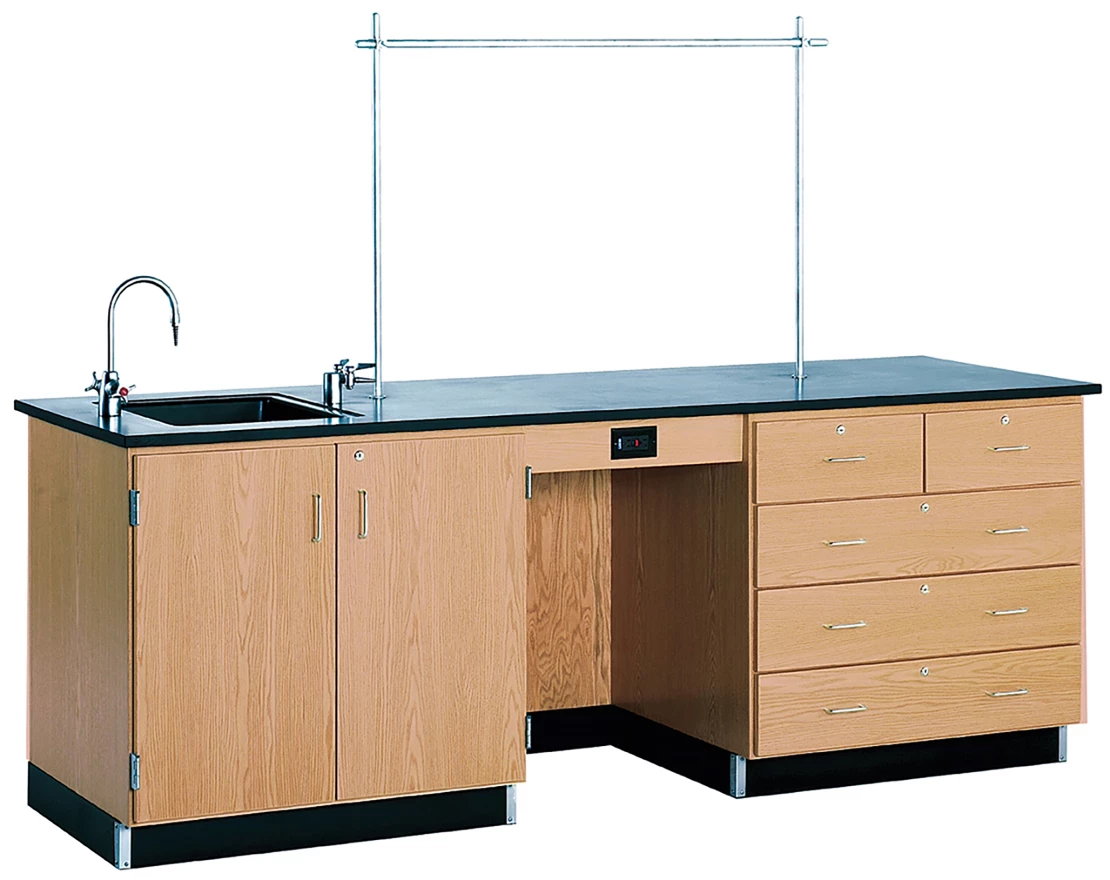
Description
Key Specifications and First Selection
A science demonstration table is organized around the instructor’s practical work and the class’s ability to see, rather than around repeated individual student positions. The first decision is whether the teaching room needs a fixed table with building services or a mobile demonstration center that operates with its own selected water and waste-water arrangement. Then define the lesson tasks, working height, worktop, sink, storage, apparatus support, power, gas and the route through which students view the demonstration.
| Selection field | Decision required | Why it changes the configuration | Confirmation before release |
|---|---|---|---|
| Fixed or mobile format | Building-connected table or self-contained mobile unit | Changes service routing, base, installation and maintenance scope | Room plan, movement requirement and utility availability |
| Demonstration activity | Wet chemistry, biology, physics, general science or preparation work | Determines worktop, sink, services, storage and protective planning | Lesson list, apparatus, cleaning and exposure conditions |
| Classroom visibility | Teacher position, student sightline and selected support accessories | Determines work height, table position and upright or mirror arrangement | Seating plan, viewing distance and teaching method |
| Service and storage package | Water, drainage, gas, electrical power, data, cabinets and drawers | Changes table construction and building interface requirements | Local standards, room services and controlled-storage needs |
Reference configurations and their limits
A fixed 96 x 30 x 36 inch instructor table occurs in one reference arrangement. A separate mobile demonstration center is 48 x 24 x 36 inches in another arrangement. Both support teacher-led science work, but their worktops, storage, water provision, drainage method and installation conditions are not interchangeable. These figures are planning references, not a combined standard size range for every science demonstration table.
Decisions to settle before comparing accessories
List the demonstrations that will take place at the table, including glassware, heat equipment, liquids, electrical apparatus and any required protective measures. Mark where the instructor stands, where students sit or stand, where the table is located, and whether the activity needs a sink, gas, power, data or a clear uninterrupted top. This first layout prevents a table from being selected by cabinet appearance while its actual teaching and service needs remain unresolved.
Teacher-centered working zone
The instructor needs enough clear surface to stage apparatus, perform the procedure, record observations and clean up without covering the student viewing area. A deep countertop or multiple cupboards can be useful, but they must not create an unreachable back zone or obstruct sightlines. Confirm the normal operating side, access to drawers and cabinets, and the position of controls before the worktop and base construction are fixed.
Fixed or Mobile Demonstration Layout
Fixed and mobile science demonstration tables solve different classroom problems. A fixed instructor station can integrate with the room’s planned water, drainage, gas, electrical and data services. A mobile unit can move between rooms or change the teaching layout, but it must manage its own water, waste-water, cable, castor and parking conditions. Select one route for the required application instead of combining both into a single implied configuration.
Fixed science demonstration tables
A fixed table is appropriate where the room plan identifies a permanent instructor position and the required services can be coordinated before installation. Its base may include drawers, lockable cabinets, a sink, selected taps, gas points, electrical power and apparatus supports. The worktop, service cut-outs and access panels should be designed together. Once a fixed unit is installed, the instructor’s work zone, student sightline and service locations become part of the room layout.
Mobile demonstration centers
A mobile configuration can support shared science rooms, flexible classroom layouts or temporary demonstration locations. It must be stable during use and controlled during movement. Braked castors, a suitable pushing position, protected cable routing, water and waste-water handling, storage-door retention and a defined parked location are all part of the selection. A mobile table should not be treated as a fixed wet laboratory station simply because it includes a sink.
Self-contained water compared with building connections
Some mobile configurations use a clean-water container, a hand pump or another selected pumping arrangement, and a separate container for used water. This allows hand-washing or selected wet activity without a permanent plumbing connection, but capacity, filling, emptying, cleaning and spill management must be planned. A fixed table can connect to building water and drainage where the project provides those interfaces. The two arrangements require different installation and daily operating procedures.
Work height and demonstration posture
Working height affects how comfortably the instructor can perform fine tasks and how well students can observe them. A standing demonstration, a seated preparation activity and a class using elevated seating do not necessarily need the same worktop height. Some configurations can include a selected height-adjustable section, but travel, load, pinch protection, control access and power-loss behavior must be confirmed for that arrangement. Do not describe every teacher demonstration table as height adjustable.
Classroom position and movement route
Place a fixed table where the instructor can supervise the room and where students can view the operation without crowding the work zone. For a mobile table, test the route through doors, corridors, ramps and storage areas with the actual unit dimensions and any raised accessories removed or secured. The selected location must preserve access to exits, emergency equipment and surrounding workstations.
Worktop, Services and Storage Selection
The worktop and service package should follow the planned demonstration activity. A table for dry physics apparatus may need a broad uninterrupted surface and accessible electrical power. A chemistry demonstration can need a selected worktop, sink, water, drainage, gas provision and cleaning access. These configurations should be specified for the teaching task rather than presented as a universal accessory list.
Worktop material and edge details
Epoxy resin, chemical-resistant laminate, phenolic, ceramic or another selected construction can be considered when it fits the actual exposure, cleaning method, equipment load, cut-outs and heat conditions. Confirm material, thickness, edge treatment, joints, splash containment and the procedure for cleaning after demonstrations. A named worktop material does not establish compatibility with every reagent or procedure.
Sink, water and drainage arrangement
A sink-equipped fixed demonstration table requires the sink material and position, tap type, drain route, trap, isolation and maintenance access to be coordinated with the room. On a mobile arrangement, a sink may instead be paired with a clean-water tank, hand pump and waste-water container. Confirm the selected water path before installation. A mobile water system should not inherit the permanent plumbing claims of a fixed configuration.
Gas, electrical power and data
Specify gas points, electrical outlets, circuit protection, low-voltage connections and data interfaces only where they are needed by the lesson plan. Define the applicable gas type, valve location, isolation procedure, socket format, voltage, current, cable path and electrical protection. All permanent site connections should be installed and checked according to the project requirements and local rules.
Cabinets, drawers and controlled storage
Lockable cabinets and drawers can keep apparatus, consumables and teaching tools within reach of the instructor. They do not automatically constitute compliant storage for hazardous chemicals. Confirm what will be stored, which side needs access, lock requirements, drawer size, cabinet ventilation where applicable and the clearance needed to open the selected units. Storage must not block plumbing access, shutoffs or the instructor’s normal working position.
Apparatus support and removable accessories
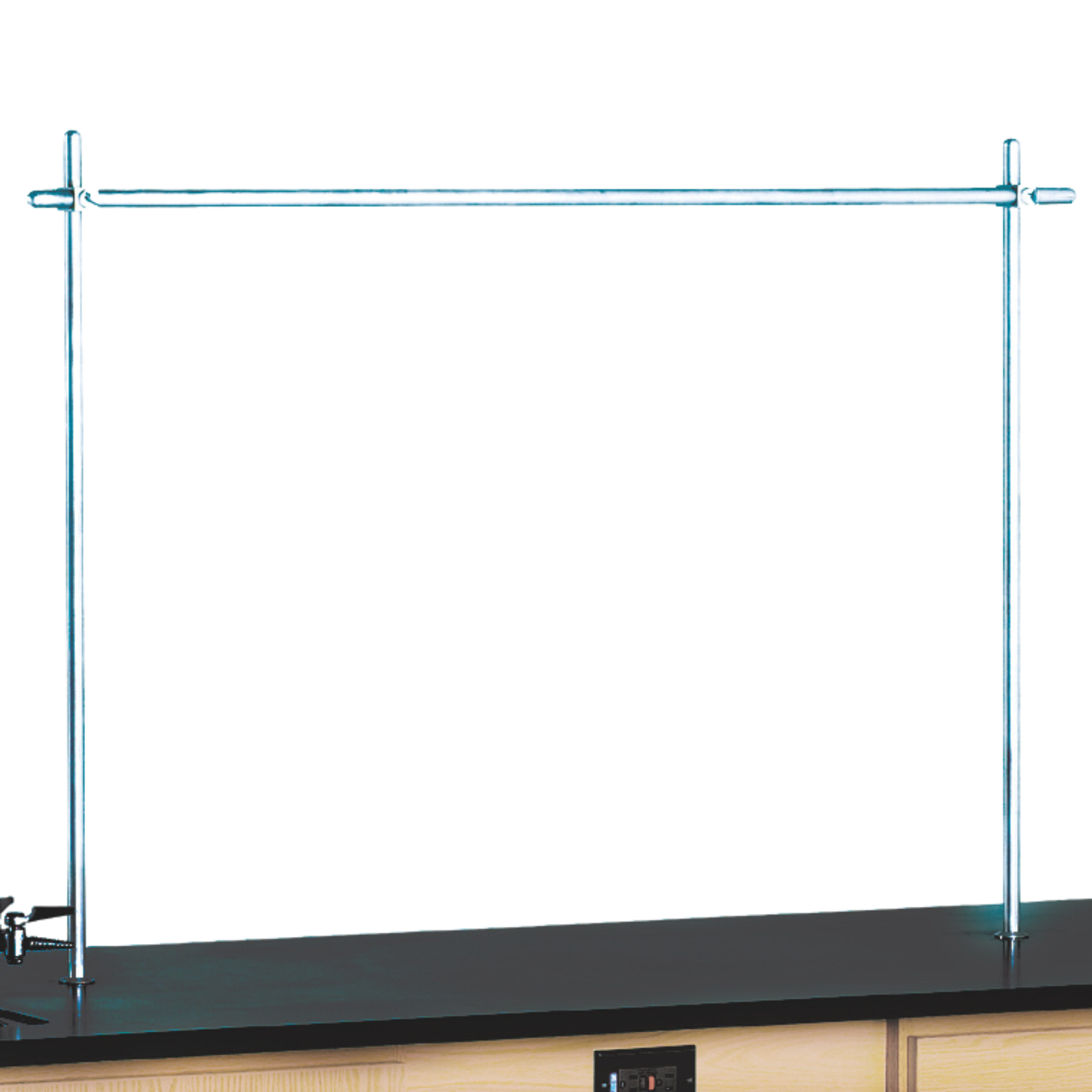
Uprights, crossbars, mirror supports, camera mounts, display arms and selected screens can make a demonstration easier for a full class to observe. Their load, attachment point, height and removal method must be coordinated with the worktop and table position. Treat these as selected accessories, not as default features on every science lab demonstration table.
Demonstration Visibility and Classroom Interface
The key difference between a teacher laboratory workstation and an ordinary bench is that the activity must be visible and manageable for a class. Student sightlines, instructor reach, table height, apparatus position and the chosen visual aid should be reviewed together. A large worktop by itself does not ensure that students at the rear of the room can observe a procedure safely and clearly.
Sightline from the student area
Locate the demonstration zone so that the instructor does not stand directly between students and the procedure. Review seated and standing viewpoints, particularly for low-level apparatus, glassware and small assemblies. Where the room includes stepped seating, projected camera output or a mirror, the table position and support height should reflect that setup. The final classroom layout should show the teacher position, student-facing side and access routes.
Uprights, crossbars and apparatus support
An upright and crossbar arrangement can support selected teaching apparatus, display tools or visual aids above the worktop. The support must be sized and fixed for the actual attached item. It should not reduce the instructor’s operating space or create a hazard when the table is moved. Confirm mounting points, height, reach, removal and whether the accessory remains attached during delivery or relocation.
Mirror, camera and display options
A mirror can help students see a procedure performed on a horizontal worktop, while a camera and display system can support larger rooms or detailed demonstrations. These options require separate selection of mounting, viewing angle, power, cable management and cleaning access. The table should provide the right physical support; the school or project team should confirm which visual method suits the teaching space and procedure.
Mobile water-system use and routine
For a self-contained mobile table, the water arrangement is part of the daily operating routine. Fill the clean-water container, check the pump or hand-operated mechanism, secure the hoses, monitor used-water capacity and empty the collection container according to the approved site procedure. The table must be parked and moved with containers secured and electrical cables managed. This routine is different from a building-connected sink station.

| Classroom interface | Selection question | Practical effect | Confirmation needed |
|---|---|---|---|
| Instructor position | Where does the teacher stand during the procedure? | Sets the operating side, reach zone and student-facing direction | Room plan, teaching method and nearby access route |
| Student visibility | How will the rear and side positions see the work? | Determines table location, work height, mirror, camera or display requirement | Seating layout, viewing distance and procedure detail |
| Apparatus support | Which items require an upright, crossbar or mount? | Determines fixing points, load path and clear work area | Attached equipment, mounting method and removal sequence |
| Mobile water routine | Is a self-contained sink used between rooms? | Determines filling, pumping, waste-water and transport procedure | Capacity, cleaning responsibility and parked location |
Separation from containment equipment
A science demonstration table can organize the instructor’s work surface and selected interfaces, but it does not provide chemical containment, fume extraction or safety performance by itself. Where an activity creates a hazardous vapor, dust, heat, pressure or splash risk, the required protective equipment and room measures must be selected separately. Do not use a mirror, screen, table top or cabinet as a replacement for suitable hazard control.
Applications and Product Boundary
A science demonstration table can support teacher-led demonstrations, lesson preparation, laboratory instruction, apparatus setup and selected wet or dry practical activity in schools, colleges and science teaching rooms. The configuration must reflect what the teacher does at the table and what the class needs to observe. It is not a replacement name for a student workstation, a general desk, a laboratory cart or a safety enclosure.
Chemistry and wet science demonstrations
Chemistry teaching can need a compatible worktop, sink, water, drainage, selected gas provision, electrical protection and controlled access to apparatus. The demonstration table should be configured around the specific lesson and local room services. Chemical use, cleaning and waste handling must be addressed in the course and site procedures rather than assumed from the presence of a sink or storage cabinet.
Biology, physics and general science
Biology and general science demonstrations may prioritize a clear worktop, wash-up access, storage, display support and teacher visibility. Physics activities can require power access, equipment staging and a stable surface. These uses can share a teacher-centered table format, but their service, worktop and accessory selections may differ. The approved configuration should state the actual interfaces and accessories instead of listing every possible option.
Relationship to student and room furniture
Use a science lab workstation when the main requirement is repeated positions for pairs or small student groups. A laboratory wall bench or laboratory island bench can serve wider room work zones once the access side and service direction are defined. Select a laboratory chair or laboratory stool only after the chosen work height, teaching posture and clearance have been checked.
Fixed station versus mobile teaching equipment
Choose a fixed teacher workstation where the room has a stable instructor location and the required building services. Choose a mobile demonstration table when room flexibility, shared use or movement between locations outweighs permanent service connections. A mobile version may include selected storage and self-contained water, but it should not be used to claim the service capacity of a fixed laboratory installation.
What this page does not define
The final room ventilation, electrical distribution, gas installation, drainage design, emergency equipment location, safety procedure and classroom capacity are not determined by the table page. Nor does a general worktop description prove suitability for every chemical, heat condition or apparatus load. The confirmed table configuration identifies only the selected geometry, worktop, storage, sink, service interfaces and accessories.
Installation, Commissioning and RFQ
Install a fixed or mobile teacher laboratory workstation only after the actual teaching layout and configuration have been confirmed. A fixed table with a sink and service interfaces requires a different delivery, connection and handover process from a mobile self-contained demonstration center. The room should be prepared for the selected configuration, not for a generic classroom table.
Delivery access and table positioning
Check delivery access through doors, lifts, corridors and turns before the final table length, depth and accessories are released. Position a fixed unit from the approved room layout, keeping the instructor work zone, class viewing area, aisle clearance, exits and emergency equipment accessible. For a mobile table, check its transport route, turning space, castor brakes and parked location with the selected accessories secured.
Fixed-service installation
Level and secure the selected base, then install the worktop, sink, cabinets and service connections in the approved sequence. Water, drainage, gas, electrical power and data should be connected only by the appropriate qualified trades and to the confirmed interfaces. Keep shutoffs, electrical enclosures, traps and access panels reachable for inspection and repair. Do not add a site substitute fitting without checking the table construction and project requirement.
Mobile configuration setup
Before moving a mobile unit into service, confirm the castor brakes, handles, storage-door retention, water container placement, pump operation, waste-water container, cable protection and the method for securing any upright or visual accessory. Move the table only with loose apparatus removed or properly restrained. Park it on a suitable level surface before students enter the demonstration area.
Commissioning with a real lesson setup
Commissioning should include a representative instructor position, selected apparatus, chairs or stools where applicable, and the intended class viewing direction. Check worktop stability, drawer and cabinet operation, sink drainage or mobile water operation, service shutoffs, electrical outlets, cable routing, access to emergency routes and any selected mirror or camera support. This is more useful than checking the table when it is empty.
Information required for a project-ready quotation
| Required input | Why it is needed | Typical configuration decision | Deliverable to confirm |
|---|---|---|---|
| Teaching activity and apparatus | Establishes worktop, sink, services and support requirement | Wet, dry, fixed or mobile demonstration arrangement | Proposed worktop, service and apparatus-support scope |
| Classroom plan and viewing direction | Establishes table position and teacher operation zone | Straight, curved or selected teacher-facing layout | Footprint, location, student sightline and access allowance |
| Utility information | Prevents incompatible water, drainage, gas or power connection | Building-connected or self-contained water system | Connection requirements, isolation points and unresolved items |
| Delivery and installation scope | Determines movement, assembly and commissioning method | Fixed installed station or mobile delivered unit | Delivery, installation, handover and training scope |
Final configuration control
The final quotation should identify the selected table arrangement, nominal dimensions for that arrangement, worktop, base, sink, storage, water method, drainage, gas, electrical power, data, visual accessories, delivery scope and outstanding site confirmations. This prevents fixed and mobile reference configurations from being interpreted as one universal product specification.
Maintaining the demonstration area
At the end of each lesson, return loose apparatus, clear the worktop, secure storage, check the selected water arrangement and restore the approved instructor zone. Inspect cabinet hardware, castor brakes, service fittings, worktop joints and accessory fasteners at suitable intervals. A maintained demonstration station remains easier to set up, safer to approach and clearer for the next class to observe.
Configuration changes after room approval
If the room plan, class arrangement or lesson scope changes after the table has been scheduled, review the selected configuration again before altering the unit. Moving a sink, adding a gas point, changing the worktop cut-out, installing a camera arm or converting a fixed table into a mobile layout can affect structure, service access and daily operation. Record the change against the approved table arrangement so the delivered teacher demonstration table remains coherent rather than becoming an accumulation of unrelated accessories.
Preparing the room for teaching use
Before the first demonstration, confirm that the selected teacher work zone remains clear when students are seated, bags are stored and nearby furniture is occupied. Keep the demonstration surface free of unplanned equipment, verify that utility controls can be reached, and make sure a mobile unit has adequate braking and clearance at its parked position. These simple checks help the selected configuration work as an instructor station rather than merely as a storage cabinet with a countertop.
Frequently Asked Questions
What is the difference between a science demonstration table and a student workstation?
A science demonstration table is centered on teacher-led practical work and class visibility. A student workstation is planned around multiple student positions, shared work area and group access. The two formats can use similar materials, but their layouts and service requirements are different.
Can a science demonstration table include a sink and gas connection?
Yes, where the selected fixed configuration and room design require them. Confirm sink material, taps, drainage, gas type, isolation, worktop, electrical protection and installation requirements before the final table is released.
Can a mobile table have water without fixed plumbing?
Selected mobile configurations can use a clean-water container, hand pump or another approved pumping method, with separate used-water collection. Capacity, cleaning, filling, emptying, transport and parking procedures must be confirmed for the selected configuration.
How can students see a detailed demonstration?
Plan the instructor position, table location, work height and student sightlines first. A selected mirror, camera, display, upright or crossbar can then support the required teaching method. Each visual accessory needs its own mounting and power arrangement where applicable.
What should be supplied for a quotation?
Provide the room plan, lesson activities, apparatus list, fixed or mobile preference, target dimensions, worktop requirement, sink and utility scope, storage requirement, visual accessories, delivery access, destination and required installation scope.
Contact the Xicheng Engineering Team Today
Send the classroom plan, teacher demonstration activities, preferred fixed or mobile arrangement, required worktop, sink, utility interfaces, storage and visual-support requirements. The Xicheng Engineering Team can return a configuration proposal and quotation for the selected science demonstration table.
Shenzhen Office: No. 34 Zhenxing Road (Shengtaian Heavy Industrial Park B), Loucun, Guangming New Dist, Shenzhen, Guangdong, China
WhatsApp: +86 18126478161
Engineering Mailbox: fanalax34@gmail.com