


Description
Rectangular air volume control air-air damper selection Summary
This product uses a manually positioned rotating blade to add resistance and balance a rectangular duct branch. It is made to project dimensions rather than selected from a universal stock-size chart.
Choose This Product Family When
- The branch is rectangular and a fixed field-balanced blade position is acceptable.
- PP, flame-retardant PP, galvanized steel or stainless steel can be reviewed against the actual air stream.
- The balancing team can access and lock the external operator.
- The project can approve a dimensioned fabrication drawing before manufacture.
Key Product-Family Data
- Mechanism: manual rotating blade for branch resistance adjustment.
- Shape: made-to-order rectangular body.
- Materials: PP/flame-retardant PP, galvanized steel or stainless steel.
- Dimensions: width, height and depth confirmed by project drawing.
- Connection: project-specific rectangular interface.
The PDF does not publish one universal rectangular size, airflow, pressure-drop, leakage or torque table. Those fields must be returned for the proposed tag when they affect fan selection, installation or acceptance.
Do Not Select It for Another Duty
This page does not establish automatic airflow control, constant-air-volume compensation, reverse-flow closure, tight shutoff, fire/smoke performance or certified isolation. Each of those duties requires a separately documented product and acceptance method.
Information Required for Quotation
Provide airflow, available pressure, actual duct width/height, connection drawing, material requirement, air-stream chemistry and temperature, orientation, handle side, balancing objective, quantity and destination. The returned schedule should identify body depth, blade/shaft materials, connection, operator, service clearance and applicable operating limits.
Key Specifications
| Specification | PDF-Confirmed Family Data | Project Confirmation |
|---|---|---|
| Product type | Manual rectangular air volume control damper | Balancing or throttling objective |
| Mechanism | Rotating blade with manual operator | Blade, shaft, stops and lock |
| Plastic body family | PP or flame-retardant PP | Grade and complete exposed-component schedule |
| Metal body families | Galvanized steel or stainless steel | Grade/coating, finish and fabrication |
| Width and height | Made to project drawing | Actual inside/outside dimensions |
| Body depth | Project-specific | Connection and service clearance |
| Connection | Project-specific rectangular interface | Flange, sleeve or fabricated mating detail |
| Airflow/pressure drop | No universal table published | Selected geometry and blade setting |
| Leakage/shutoff | No universal class published | State test pressure and acceptance criterion |
| Final definition | Non-standard configurable product | Approved schedule and drawing govern |
Why the Dimensions Remain Project-Specific
Rectangular duct systems vary in width, height, wall construction, flange geometry and available access. A round-air damper diameter or competitor’s stock-size table cannot establish a buildable XICHENG rectangular assembly.
Fields Required Before Fabrication
Confirm airflow, pressure, width, height, depth, body/blade/shaft materials, operator side, orientation, connection, support, service clearance and any leakage or acceptance requirement.
How Manual Rectangular Airflow Control Works
A manual rectangular air damper controls branch resistance through blade angle. Understanding that limited mechanical function prevents it from being mistaken for an automatic airflow-control valve.
Blade Angle Changes Branch Resistance
With the blade nearer the open position, more of the rectangular duct area remains available to the air stream. Rotating the blade toward closed reduces the free opening, disturbs the flow and increases resistance. The resulting airflow depends on the complete system: fan pressure, duct losses, other branch positions and downstream equipment all remain part of the operating point.
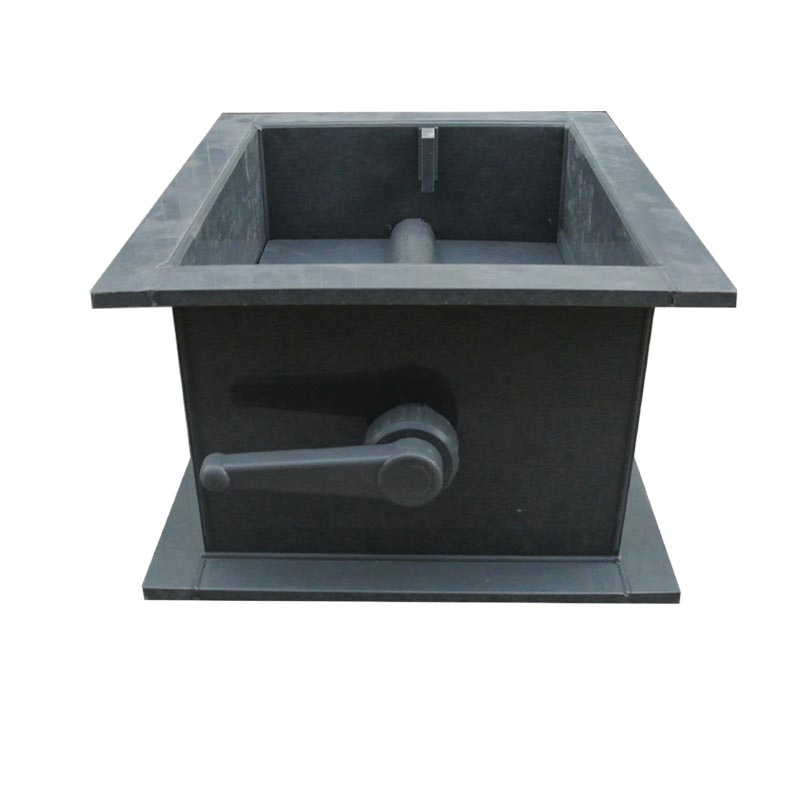
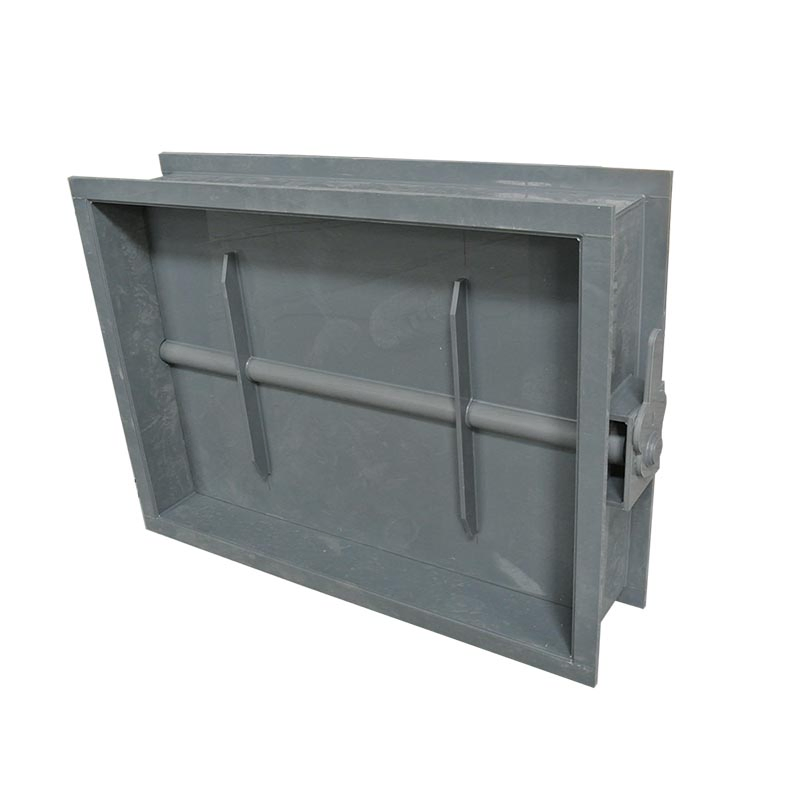
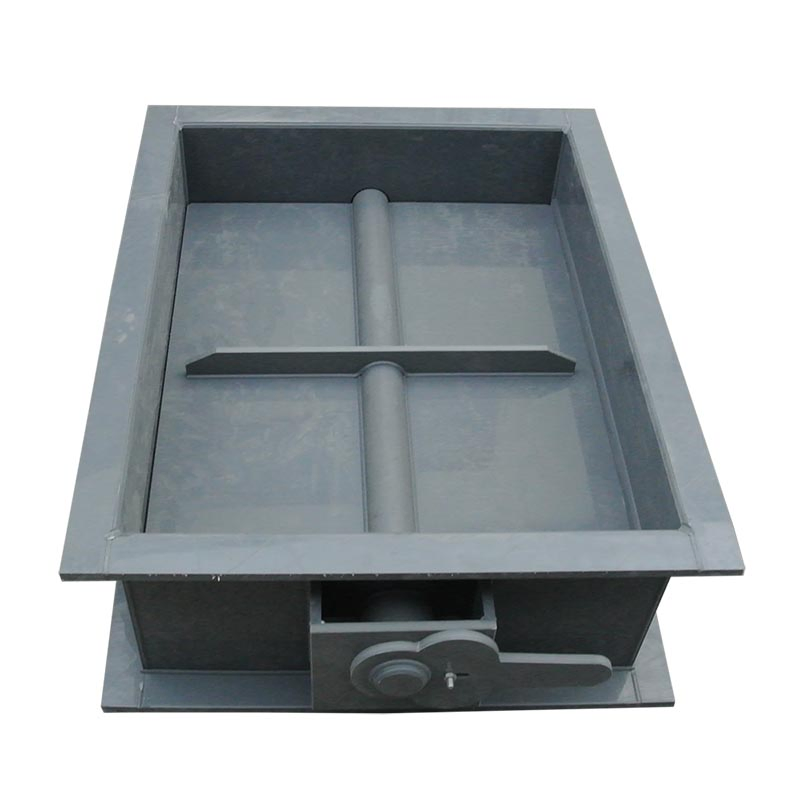
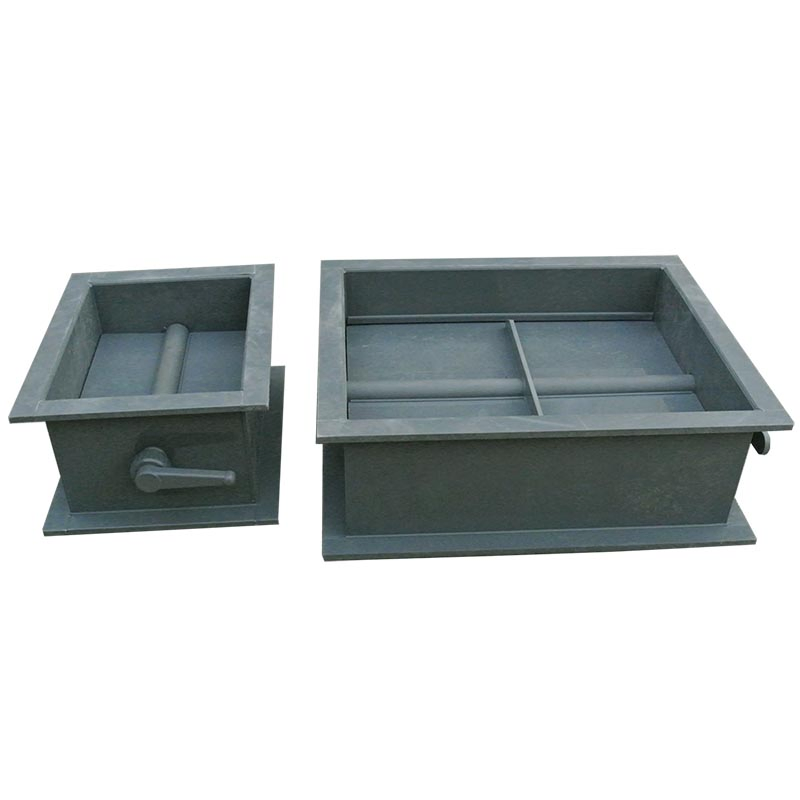
The pictured XICHENG configurations use a fabricated rectangular blade mounted on a shaft across the body. The external handle rotates that shaft. Final blade reinforcement, edge clearance and shaft support depend on the custom width and height and must be shown on the drawing.
Manual Setting and Position Locking
During testing and balancing, a technician measures branch airflow, moves the handle and repeats the measurement until the target condition is reached. The selected position is then secured using the supplied locking arrangement and recorded for future inspection. A visual handle angle is useful as a reference, but measured airflow remains the acceptance value.
The RFQ should specify whether a position scale, stop, lock or tamper-resistant feature is required. These details affect the external mechanism and service access. They should not be assumed from product photographs, because a custom handle and body size can require a different operating envelope.
Why the Air Damper Does Not Maintain Constant Airflow
Once the handle is fixed, the blade does not respond when duct pressure changes. If a fan changes speed, a filter loads, a scrubber adds resistance or another branch opens, airflow through the fixed air damper may move away from the original balancing value. The product is therefore a manual balancing air damper, not a mechanical CAV regulator or closed-loop VAV device.
A stable manual setting works best where the system operating mode is predictable and periodic rebalance is acceptable. A laboratory branch that must track sash position, room offset or an airflow setpoint needs a sensor, controller and modulating product selected for that control task.
Pressure Drop and Leakage Boundaries
Every regulating position creates pressure loss, but no universal curve is published for all XICHENG rectangular air damper configurations. The loss changes with duct dimensions, blade geometry, angle, airflow and nearby transitions. If fan selection depends on it, request configuration-specific data or define a project acceptance test.
A near-closed blade also does not prove airtight isolation. Edge clearances, shaft penetrations, body geometry and pressure direction affect leakage. Use a quantified leakage requirement only when the project provides the test pressure and method and XICHENG accepts that requirement for the proposed construction.
PP, Flame-Retardant PP and Metal Options
The catalog identifies PP/flame-retardant PP, galvanized-steel and stainless-steel rectangular air damper families. Material selection must cover body, blade, shaft, stops, fasteners and any seals exposed to the air stream.
PP and Flame-Retardant PP
These non-metallic rectangular bodies can be reviewed for compatible laboratory or process exhaust. Confirm resin grade, sheet construction, blade and shaft materials, fabrication method, temperature, condensate and cleaning exposure before approval.
Galvanized Steel
Galvanized construction can be reviewed for compatible ventilation duties. The project schedule must define coating, cut edges, weld treatment, blade/shaft materials and exposure to condensation or cleaning chemicals.
Stainless Steel
Specify stainless grade and finish rather than using a generic label. Review welds, crevices, shaft, hardware and actual chemical exposure. Stainless steel is not universally compatible with every laboratory exhaust stream.
Complete Component Review
The approved bill of materials should make different exposed materials visible. A suitable body material does not prove that the blade, shaft, bearing or hardware will provide the same service life.
Custom Dimensions and Duct Connections
Width, Height and Body Depth
Provide actual duct width and height, not only a nominal description. Body depth, blade arrangement and shaft support must be reviewed with airflow, available pressure and access. Larger aspect ratios or blade spans may require reinforcement or multiple blades.
Project-Specific Rectangular Interface
The approved drawing should define flange, sleeve or other fabricated mating detail, including actual dimensions, fasteners or joint method and the boundary between factory and field work.
Operator Side and Service Envelope
Show the required handle side, blade travel, nearby walls, insulation, supports and access panels. The operator must remain reachable for balancing and inspection after the surrounding system is complete.
Retrofit Measurements
For retrofit work, measure the existing opening at several points and provide photographs or a field sketch. Record drawings may not represent a duct that has moved, been repaired or was originally fabricated to a custom detail.
Laboratory and Corrosive Exhaust Applications
The air damper is a candidate for rectangular gas-duct branches that need a fixed manual balancing position. Application fit still depends on material compatibility, available pressure, access and the consequence of changing system operation after balancing.
| Candidate Application | Manual damper Role | Conditions to Confirm |
|---|---|---|
| Laboratory general exhaust | Sets the design branch airflow during balancing | Airflow target, fan mode, available pressure and future system changes |
| Fume hood exhaust branch | Adds fixed branch resistance where a manual setting is permitted | Containment method, sash operating mode and whether variable control is required |
| Local equipment exhaust | Balances extraction from a fixed-use connection | Equipment duty, capture requirement, chemistry and access |
| Chemical process duct | Regulates a compatible corrosive-exhaust branch | Chemicals, temperature, condensate, deposits and component materials |
| Scrubber branch or bypass | Establishes a commissioned manual flow split | Fan/scrubber modes, pressure variation and whether commanded isolation is needed |
| Retrofit rectangular duct | Provides a custom balancing point in an existing opening | Field dimensions, connection, support, handle clearance and rebalance plan |
These are candidate uses, not automatic approvals. A manual setting is useful only when the operating mode used for balancing represents the service condition that must be maintained.
Laboratory General Exhaust Balancing
In a stable general-exhaust system, the rectangular air damper can help distribute airflow among branches during commissioning. The technician should measure actual airflow and record the final position. Changes to fan speed, filters, ductwork or other branches can require rebalancing.
Fume Hood and Local Exhaust Branches
A fixed-opening air damper may be used only where the hood or local exhaust design permits manual balancing. It does not respond to sash movement or protect face velocity when system pressure changes. Projects requiring variable hood control should evaluate a measured airflow-control package instead.
Chemical Process and Scrubber Ductwork
PP or flame-retardant PP construction can be reviewed for process exhaust and scrubber-connected ducts, but local conditions at the air damper matter. Mist, condensate and deposits near treatment equipment can differ from conditions farther upstream and can obstruct blade movement.
A scrubber bypass or one-duty/one-standby arrangement may also need commanded isolation or reverse-flow prevention. A manual volume-control air damper should not be assigned those functions without a separate operating and acceptance review.
Applications Requiring Another Air Damper Type
Use another product when the branch must close automatically, prevent reverse flow, track a variable airflow setpoint or satisfy a fire/smoke or certified isolation requirement. The adjacent Round air volume control damper is relevant when the duct is round rather than rectangular.
Rectangular Air-air damper selection Procedure
Define the Airflow and Balancing Objective
Start with the airflow required at the branch and the system mode in which it must be achieved. State whether the air damper will be adjusted once during commissioning, periodically rebalanced or used for occasional manual switching. If automatic response is required, stop and select another control architecture.
Record Available Pressure and Allowable Resistance
Provide the pressure available at minimum and design airflow and identify the maximum resistance that can be assigned to the air damper. A branch with little pressure margin may not tolerate a heavily throttled blade. Where pressure drop affects fan selection, request a configuration-specific review rather than using a generic competitor curve.
Confirm Material and Component Exposure
Compare PP/flame-retardant PP, galvanized steel and stainless steel against chemicals, concentrations, temperature, moisture, condensate and cleaning exposure. Extend the review to blade, shaft, stops and hardware. State any non-metallic-component requirement explicitly.
Coordinate Size, Connection and Access
Submit actual duct width, height, wall thickness and a connection sketch. Show flow direction, duct orientation, handle side and adjacent obstructions. Confirm that the fabricated body can be supported without distortion and that the handle remains accessible after installation.
Define Position, Leakage and Acceptance Records
Decide how the balanced position will be indicated, locked and recorded. If a near-closed position is expected to limit flow, determine whether a leakage requirement is necessary. State the pressure and test method instead of using words such as “tight” or “sealed” without a measurable condition.
The completed selection should allow the quotation to identify one material, one set of dimensions, one interface, one blade/shaft arrangement and one acceptance scope for each tag. Unresolved fields should remain visible until the approval drawing is signed.
Fit, Not-Fit and Alternative Products
Good Fit for Manual Branch Balancing
This family is a logical fit when the duct is rectangular, the required position can remain fixed between balancing visits, the system provides enough pressure for the selected setting and one published body material can be matched to the air stream.
When a Round Air Damper Is More Appropriate
Use a round product when the duct connection is circular and a molded or fabricated round body provides the direct interface. Avoid adding unnecessary round-to-rectangular transitions merely to use a rectangular air damper. The round manual air volume control damper covers that neighboring purchase task.
When Motorized or Measured Airflow Control Is Required
Select a motorized damper when a controller or operator must change the blade remotely. Select a measured CAV/VAV solution when the objective is to maintain or vary actual airflow despite pressure changes. XICHENG’s CAV Venturi Air Valve, VAV Venturi Air Valve and VAV Butterfly damper address different airflow-control tasks and must be selected from their own performance data.
Isolation and Life-Safety Exclusions
Do not use this page as evidence for airtight isolation, fire resistance, smoke control, blast protection or explosion-proof certification. Those duties require documented products, test standards and system integration beyond a manually positioned balancing air damper.
Installation, Balancing and Maintenance
Airflow Direction and Duct Orientation
Install the air damper in the direction and orientation shown on the approved drawing. Although a manual blade can regulate flow in either direction in principle, shaft loading, handle access and nearby flow disturbance still depend on the actual arrangement. Mark the service airflow direction before the duct is closed in.
Connection, Support and Handle Clearance
Align the mating rectangular duct without pulling the air-air damper body into shape. Complete the approved fabricated connection using procedures suitable for the selected material. Provide supports on both sides when duct weight, a transition or connected equipment could load the body.
Cycle the handle through its full movement before surrounding services are installed. Confirm access to the lock, scale or stop and leave space to inspect the shaft and blade. An accessible handle is part of the balancing function, not an optional convenience.
Field Balancing and Position Recording
Begin with the blade in a known position and the ventilation system operating in the specified balancing mode. Measure airflow using the project method, adjust in small steps and allow the system to stabilize after each change. Check interacting branches because throttling one path can redistribute airflow elsewhere.
When the target is reached, secure the mechanism and record the measured airflow, fan/system mode and final handle position. Label the tag so a later inspection can distinguish the approved setting from accidental movement. A handle angle without the corresponding measured condition is not a complete balancing record.
Inspection, Cleaning and Rebalancing
Inspect joints, body alignment, blade clearance, shaft movement and the external handle. Look for chemical attack, coating damage, deposits, cracking, distortion or movement of the lock. Clean using a method compatible with the selected material and process residue.
Recheck airflow after fan changes, duct modifications, treatment-equipment changes or evidence of blade movement. If the handle becomes difficult to move, isolate the system according to site procedures and identify deposits, blade contact, shaft misalignment or body distortion before applying more force.
Custom Construction and Quotation Deliverables
Drawing-Based Fabrication
Each rectangular air damper should be fabricated from an approved tag schedule and drawing. The drawing coordinates the actual duct opening with body depth, blade and shaft arrangement, connection, handle side, movement clearance and supports. Material selection and performance requirements remain attached to that same tag.
Tag-by-Tag RFQ Checklist
| RFQ Field | Buyer Input | XICHENG Quotation Output |
|---|---|---|
| Tag and duty | Tag, service description, quantity and balancing objective | Quoted configuration and quantity by tag |
| Airflow | Minimum/design airflow and specified balancing mode | Proposed clear opening and applicable review notes |
| Pressure | Available pressure and allowable air damper resistance | Accepted design condition and any required performance confirmation |
| Duct interface | Actual W x H, wall thickness and mating sketch | Overall, clear-opening, body-depth and connection dimensions |
| Installation | Orientation, airflow direction, handle side, support and access limits | Approved orientation, handle envelope and support notes |
| Material exposure | Chemicals, concentration, temperature, moisture, condensate and deposits | Proposed body and exposed-component material schedule |
| Control and leakage | Position indication/locking needs and any quantified leakage criterion | Supplied manual mechanism and accepted test or stated limitation |
| Documents and delivery | Drawing, declarations, inspection/test records, destination and schedule | Included documentation, packaging, exclusions, price and delivery basis |
What the XICHENG Quotation Should Return
The quotation should identify one buildable configuration for each tag: PP/flame-retardant PP, galvanized-steel or stainless-steel construction; width, height, body depth, connection, blade and shaft arrangement, handle side, locking features, orientation, design conditions, acceptance scope, documentation, exclusions and commercial price.
Production should begin only after buyer and XICHENG approve the same drawing and tag schedule. Those documents provide the reference for fabrication, incoming inspection, installation and field balancing. Any unresolved field should remain marked for technical review rather than replaced by a generic family statement.
Frequently Asked Questions
Is this air damper manually operated?
Yes. This page describes a manual rectangular air volume control damper for fixed branch balancing. A motorized or measured-airflow control duty requires another configured product.
Which materials are available?
The PDF identifies PP/flame-retardant PP, galvanized-steel and stainless-steel rectangular air damper families. Final grade, finish and complete exposed-component construction are confirmed per tag.
Is PVC listed for this rectangular family?
No. The PDF lists PVC in round manual and motorized damper families, but not in the manual rectangular family. This page therefore does not present PVC as a PDF-confirmed rectangular option.
Which widths and heights are available?
The catalog does not publish one universal width-by-height schedule. Provide actual duct dimensions, airflow, pressure and connection drawing so XICHENG can return a buildable configuration.
Does the air damper maintain constant airflow?
No. It adds a fixed, adjustable resistance. A balancing technician must measure airflow and lock the operator at the accepted setting.
Can it provide tight shutoff?
No universal leakage class is published for this family. If isolation or a defined leakage limit is required, state the test pressure and acceptance criterion and obtain a separately documented solution.
What connection is supplied?
The rectangular interface is project-specific. The approved drawing must define flange, sleeve or other fabricated mating geometry and the boundary between factory and field work.
What information is needed for quotation?
Provide airflow, available pressure, actual width and height, connection drawing, selected material, air-stream conditions, orientation, handle side, balancing objective, quantity and destination.
Contact the Xicheng Engineering Team Today
Send each rectangular air damper tag with the required airflow, available pressure, actual duct width and height, connection drawing, installation orientation, handle side, air-stream chemistry, temperature, deposits, balancing and acceptance requirements. We will review the applicable PP/flame-retardant PP or metal construction and provide a coordinated technical proposal and pricing within 24 hours.
Shenzhen Office: No. 34 Zhenxing Road (Shengtaian Heavy Industrial Park B), Loucun, Guangming New Dist, Shenzhen, Guangdong, China
WhatsApp: +86 181 2647 8161
Engineering Mailbox: fanalax34@gmail.com