

+86 181 2647 8161

Shenzhen Office
COFCO Cloud View Plaza, Hexhuikou Community, Matian Subdistrict, Guangming District, Shenzhen City, Guangdong Province, China
Laboratory Safety Storage Cabinets
Filter by price
Showing the single result
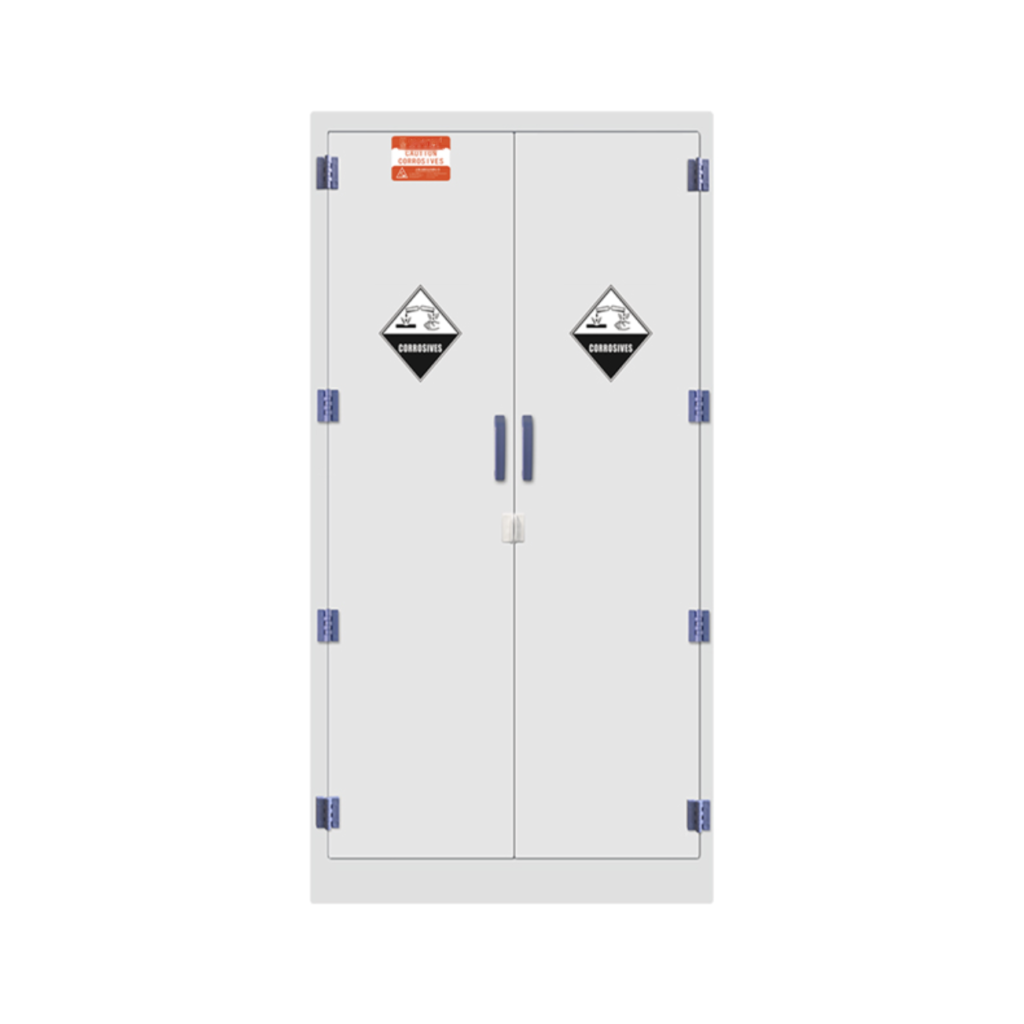
Laboratory Safety Storage Cabinets for Defined Chemical Hazards Safety storage cabinets separate selected laboratory chemicals from general storage and help organize containment, access, and spill-management measures around a documented inventory. The current range includes the PP acid and corrosive chemical storage cabinet with a corrosion-resistant enclosure and spill-sump arrangement. Suitability depends on the named chemicals, concentrations, containers, quantities, and applicable facility requirements.
Select the Cabinet from the Chemical Inventory Review compatibility for the cabinet body, shelves, hinges, fasteners, tray, seals, and any exposed accessories. Define required segregation between acids, bases, oxidizers, and incompatible substances rather than placing them together because they share a general corrosive label. Record the largest container, total stored volume, shelf load, access frequency, lock requirements, labeling, and spill-response procedure.
Confirm Installation and Compliance Requirements Provide the room location, cabinet dimensions, ventilation strategy if required, exhaust connection details, make-up air considerations, anchoring method, floor condition, nearby ignition sources, emergency access, and local code or institutional requirements. Do not connect a cabinet to exhaust without confirming that the cabinet design and facility strategy permit it.
A PP corrosive cabinet is not automatically a flammable-liquid cabinet, gas-cylinder cabinet, toxic-material cabinet, or controlled-substance cabinet. Use Laboratory Storage Cabinets for approved nonhazardous contents and Laboratory Casework for general bench and room storage. Final configuration should be reviewed against the project chemical inventory and local authority requirements.